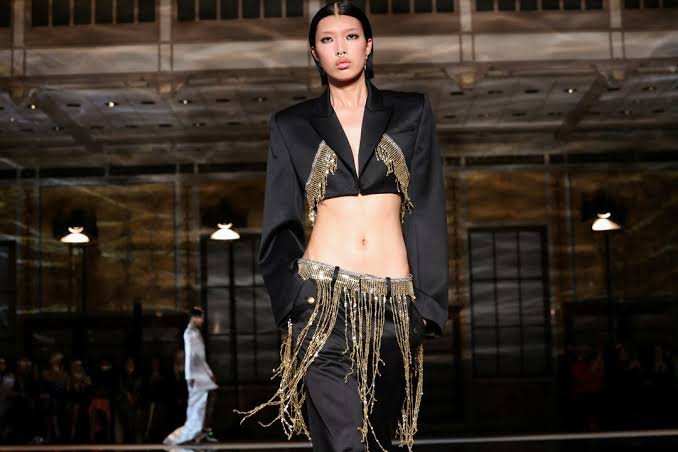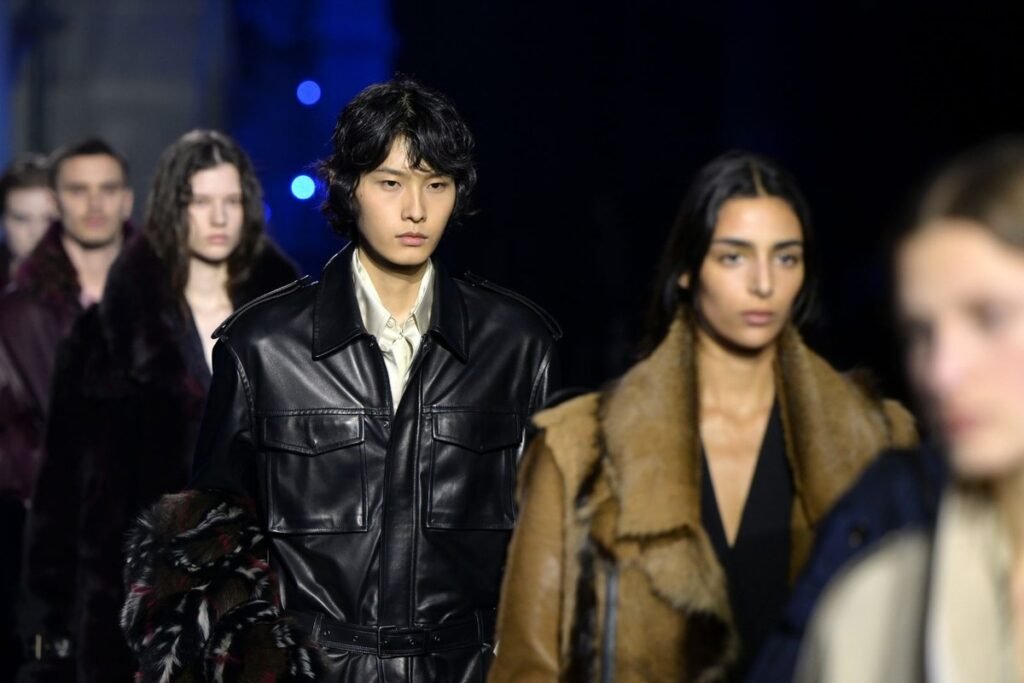
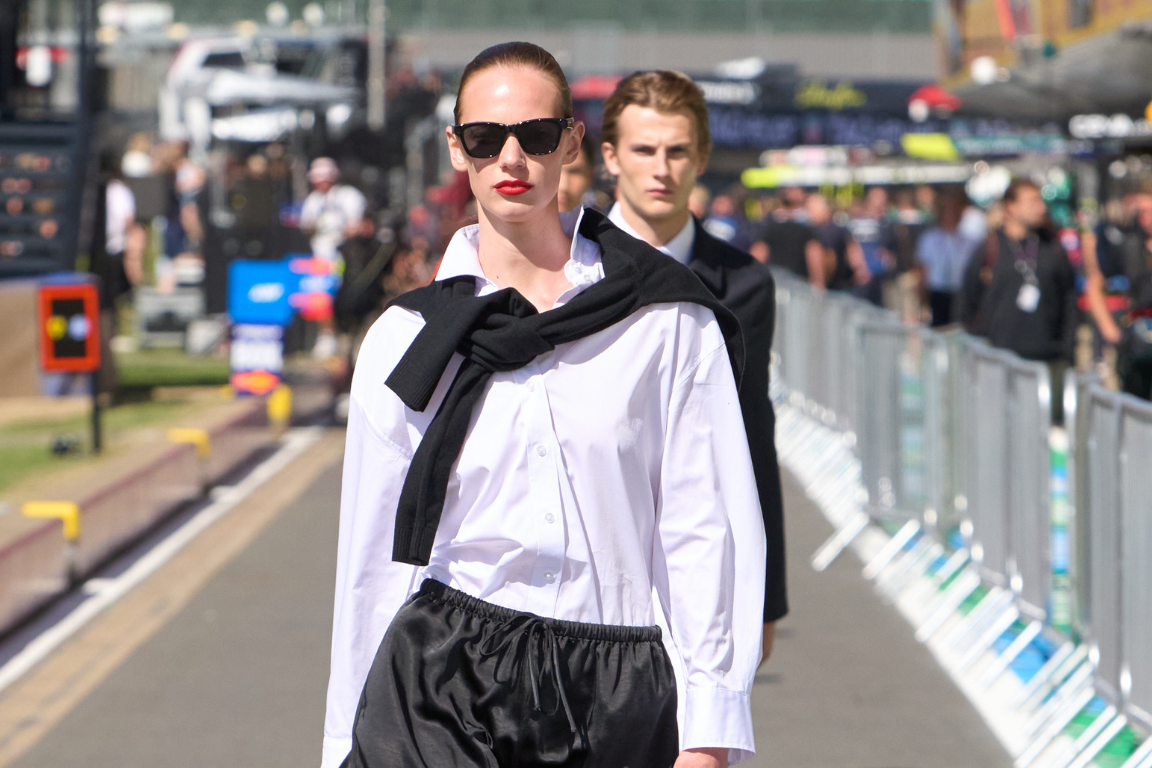
For a company that has dressed Britain for a century, Marks & Spencer’s absence from London Fashion Week felt increasingly absurd. Now, Marks & Spencer’s inaugural London Fashion Week presentation marks a seismic shift in how the industry views accessibility, and more importantly, how accessible fashion views itself. The brand that pioneered affordable quality, that made knickers and school uniforms as iconic as any luxury label could be, finally takes its place on the industry’s most visible stage.
The cultural weight here cannot be overstated. London Fashion Week has long treated the high street as a separate ecosystem, something to be observed from a distance rather than celebrated within its own hierarchy. Luxury and emerging designers get the spotlight; the stores where actual British people buy actual clothes get a footnote. M&S’s arrival challenges that gatekeeping directly. The brand doesn’t need LFW validation in any commercial sense, it moves enough volume to dictate its own narrative. But showing on this stage, during this moment, signals something deeper: that well-made, well-priced clothing made by a storied British institution deserves to sit at the same table as anyone else. It’s a statement about what fashion actually means beyond hype cycles and exclusivity theatre.
The runway debut won’t change M&S’s bottom line in any immediate sense, but it fundamentally reframes the conversation about what belongs on fashion’s biggest stages. Marks & Spencer’s London Fashion Week appearance proves that a century of doing the unglamorous work, making well-made, well-priced clothing for millions, is just as worthy of recognition as rarity or exclusivity theatre. In showing up to this moment, M&S isn’t seeking validation. It’s demanding that the industry finally acknowledge what British people have always known: that fashion’s future depends on accessibility, not gatekeeping.