
Set within Mexico’s coastal landscape, the project blends architecture, agriculture and shared experience.
A Pavilion Rooted in Nature and Function
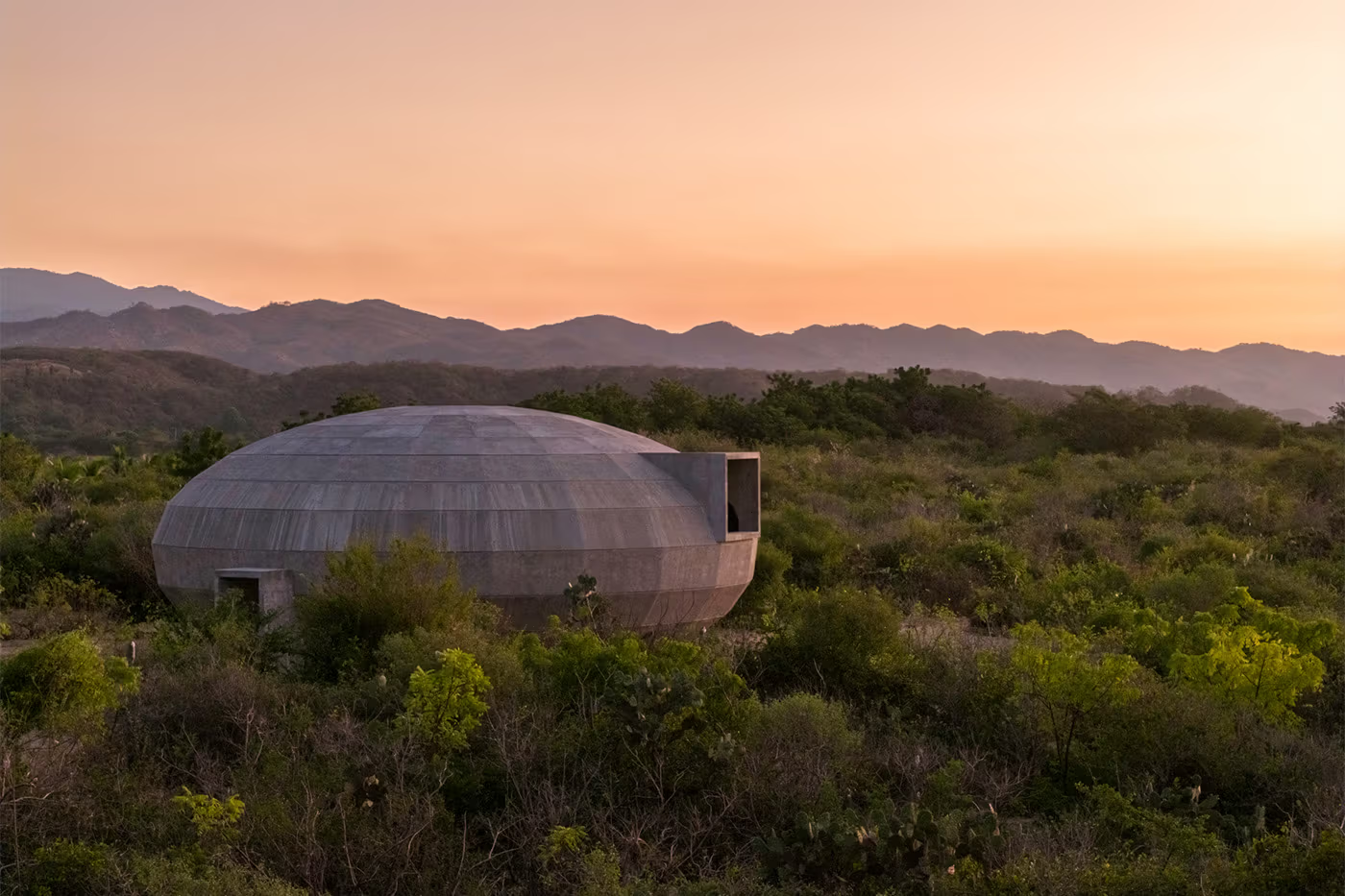
OMA has unveiled its Mushroom Pavilion at Fundación Casa Wabi in Puerto Escondido, marking the firm’s first built project in Mexico. Designed by Shohei Shigematsu, the structure sits within a vast coastal landscape, positioned between the mountains and the sea.
The pavilion is conceived as both a working space for mushroom cultivation and a gathering place for the local community. Its sculptural, ellipsoidal form is carefully shaped to support both functions, merging agricultural purpose with architectural expression.
A Sculptural Interior Designed for Growth
Inside, the pavilion is organized into three key zones dedicated to fruiting, incubation and storage, all arranged around a central communal area. This layout reinforces the idea of cultivation as a shared, visible process rather than a hidden one.
The stepped interior acts like an amphitheater, holding terracotta pots crafted by local artisans. These tiers allow visitors to observe the full lifecycle of mushroom growth, transforming the space into both a functional system and an educational environment.
A circular opening at the top brings natural light into the cave like interior, while perimeter openings provide ventilation. Elevated viewpoints frame the surrounding landscape, strengthening the connection between the pavilion and its environment.
Material, Atmosphere and Long Term Vision
The structure is built from poured in place concrete, textured with burlap to interact with the site’s mineral rich water. Over time, the pavilion is designed to weather and change, allowing its surface to evolve naturally.
Its curved base minimizes impact on the ground, preserving native vegetation and reinforcing a sensitive approach to the landscape. More than just a building, the pavilion reflects a broader vision where architecture supports both ecological processes and community exchange.