The luxury world is holding its breath as the new creative director reshapes the most iconic house in fashion.
The Weight of the House
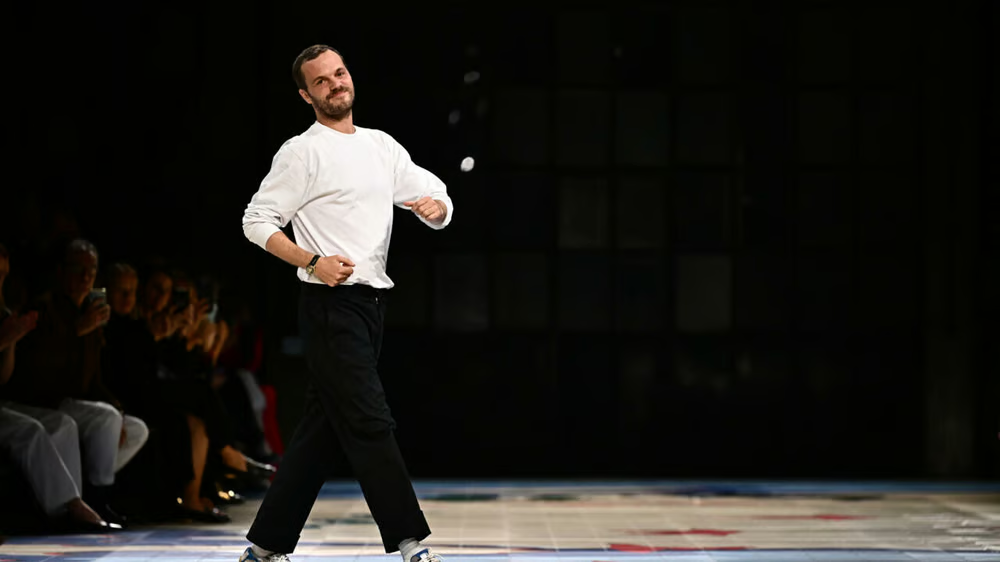
Matthieu Blazy’s appointment as Creative Director of Chanel is not just another executive shuffle in the luxury revolving door. This is the keyholder moment, the one where a singular vision either honors or disrupts one of fashion’s most sacred franchises. Blazy arrives at a house built on interlocking Cs and a founder myth so potent that every collection since Coco’s death has had to reckon with her ghost. He is the architect tasked with moving Chanel forward without dismantling what made it untouchable.
What makes this particular appointment seismic is the cultural moment it lands in. The luxury market is fractured between maximalist excess and minimalist restraint, between heritage-obsessed collectors and Gen-Z consumers who couldn’t care less what Vogue says. Blazy enters not just as a creative director but as a strategist who must unlock growth, inspire loyalty, and do something many thought impossible: make Chanel feel urgent again.
Coming From Bottega Veneta
Blazy’s previous post at Bottega Veneta established him as a modernist who respects craft without becoming a museum piece. At BV, he rebuilt the brand’s narrative around understated luxury, tactile quality, and a kind of quiet confidence that plays well in boardrooms and Instagram feeds alike. His Bottega codes were sparse, intelligent, and utterly of this moment, which is exactly why the luxury industry expected him to land somewhere with less baggage.
Chanel is not that place. The house generates roughly 15 billion euros in annual revenue for parent company Arnault Luxury Goods, making it one of the most valuable fashion properties on earth. Walking into that weight is different from stewarding a brand with modernist credentials already in place. Blazy must prove he can channel Chanel’s codes, not abandon them, while still pushing against the particular inertia that comes with a 100-plus-year legacy.
The Market Is Pricing His Every Move
The luxury sector has been closely monitoring Blazy’s transition, treating his debut collections like earnings reports. Industry analysts recognize that Chanel’s trajectory directly impacts luxury sentiment at large. A successful creative reset could signal that heritage houses can evolve without losing customers. A misstep invites the argument that even the strongest brands cannot survive generational shift, that authenticity and innovation cannot coexist in the post-logocentric luxury world.
This scrutiny extends beyond fashion press. Wealth managers, hedge funds, and portfolio strategists are watching to see whether Blazy can move merchandise, retain the core clientele of trophy-bag buyers, and simultaneously attract the demographic that has made streetwear and emerging designers the story of the last decade. His decisions about silhouette, color, material, and brand vocabulary will be parsed for signals about the health of the entire luxury ecosystem.
What’s at Stake
Blazy inherits a house that built its empire on recognizable codes: the tweed jacket, the quilted bag, the camellia motif, the No. 5 fragrance. These are not just design elements. They are semantic systems that allow a consumer to read luxury as luxury. His challenge is to honor this visual language while proving that Chanel can be contemporary, surprising, and necessary to a customer under 40.
The pressure is real, but Blazy’s track record suggests he understands the assignment. His work has always walked the line between heritage respect and forward momentum. At Bottega, he proved that minimalism could be luxurious without being cold. At Chanel, he must prove that maximalism can be relevant without feeling nostalgic. The entire luxury fashion calendar is essentially on pause until we see his answer.
What Comes Next
Blazy’s debut collection will function as a kind of cultural referendum. Does Chanel continue to feel like an inheritance, or does it become aspirational again for a new generation? Can a house built on Coco’s revolution find a way to be revolutionary once more, or is it destined to become the ultimate archive of luxury codes past? These questions are not academic. They will determine not only Chanel’s market position over the next five years but also whether the entire luxury sector can successfully navigate the shift from heritage to innovation that defines our moment.
Sources: https://monocle.com/fashion/luxury-fashion-industry-2026/, context on luxury fashion market dynamics and industry significance