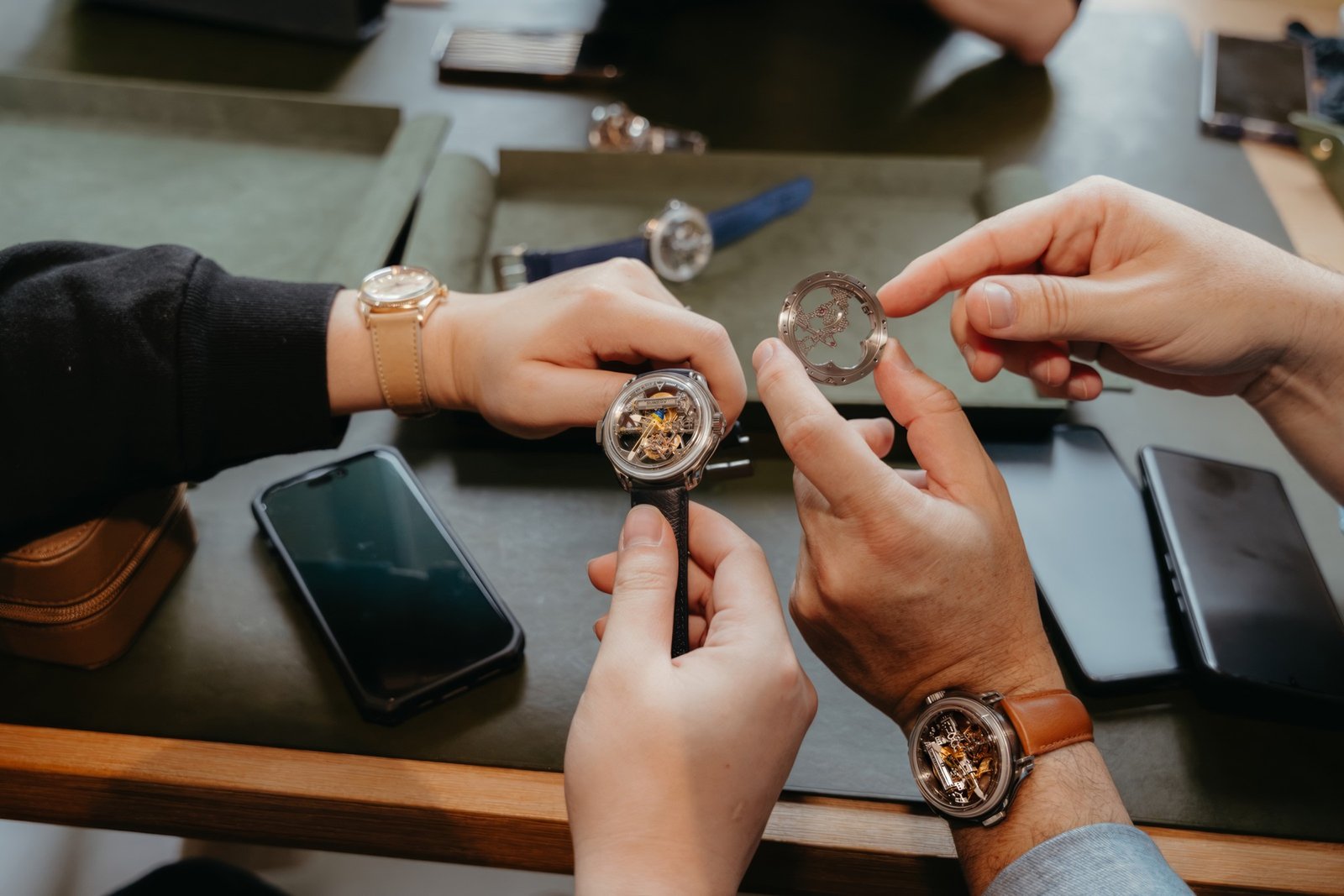
Iamwatch 2026: Asia’s largest independent watch fair returns for its second edition with free public admission, 70 dealers, and over 5,000 vintage and modern timepieces.
The Hour Glass is bringing independent watchmaking back to the center of the conversation in November. IAMWATCH 2026, the second edition of the independent watchmaking fair, arrives November 12 with four days of programming that positions itself as a corrective to the usual brand-dominated watch calendar. The public days, running November 13 through 15, are free to attend with advance registration, and that accessibility is intentional. This is not a trade-only fortress or a showroom disguised as an event. It’s a genuine buy-and-sell marketplace where collectors, dealers, and watchmakers meet on roughly equal footing.
IAMWATCH 2026: The Scale and Scope of Independent Watchmaking
IAMWATCH brings together around 70 dealers from the United Kingdom, European Union, and United States, collectively bringing over 5,000 vintage, pre-owned, and modern watches under one roof. That volume transforms the fair from a curated experience into something closer to a treasure hunt. Collectors aren’t being guided through a narrative by marketing teams. Instead, they’re navigating genuine discovery, sifting through inventory from multiple dealers with competing stock and pricing. The mix of vintage, pre-owned, and contemporary pieces means the fair operates as a living record of watchmaking across decades. A reference dial Rolex sits next to a micro-brand’s independent movement. A dead-stock 1980s Seiko shares table space with a 2024 limited edition. That friction between eras and scales is where the real energy lives.
The distinction between this event and the calendar’s traditional big-brand fairs matters. Watches and Wonders, now running Monday to Sunday with weekend public days, welcomes names like Breitling, Universal Genève, Gallet, and Damiani. That’s industry establishment radio. The Munich fair, tracing back to its first iteration in February 1974, serves manufacturers, retailers, craftsmen, and service providers across the entire value chain. It’s infrastructure-focused. Baselworld, meanwhile, has been reconstituted as a trade fair for watches, jewellery, and gemstones organized by MCH Group and Informa Markets, running the same week as Watches and Wonders in Geneva. These are institutional events with institutional logic. IAMWATCH operates from a different principle: let collectors and independents drive the narrative.
What Independents Are Actually Building Right Now
The second edition of IAMWATCH carries weight partly because the first edition worked. In 2025, the inaugural fair drew 50 or more exhibitors and 900 or more attendees, and generated 15 or more exclusive launches according to Oracle Time, the publication covering the event. That’s not massive scale, but it’s legitimate momentum. People showed up. They bought watches. Independents committed resources to create pieces specifically for the show. That cycle of investment and reciprocal attention is how a fair becomes essential rather than optional.
Oracle Time’s own show, which returns for its second edition over two days, operates from a similar playbook. Hands-on time with independent and established brands, show-only special editions, a silent auction, and live dial-art sessions create an environment where the watch itself, and the person making it, remain the focus. That’s the opposite of the streamed keynote, the brand ambassador posting from the VIP lounge, the influencer content farm. Attendees are buying direct from makers. They’re watching someone paint a dial in real time. They’re bidding on something that doesn’t exist anywhere else.
The Collector’s Calendar Reshuffles Itself
The emergence of IAMWATCH and similar collector-led events marks a quiet reshuffling of what collectors actually care about. The Watch Collectors Club now runs three distinct regional fairs: a Manchester collector-focused day described as the United Kingdom’s largest watch fair, a third Scottish show at Hampden Park bringing more than 40 United Kingdom and European brands from Bremont and Doxa to Scottish names like Anordain and Paulin, and a British Watchmaking celebration organized by the Alliance of British Watch and Clock Makers in its fourth edition. These events explicitly embrace limited special editions made just for the show. Past exhibitors have included Bremont and Christopher Ward. That’s brands respecting the collector’s time and attention by doing something new rather than recycling a booth.
Bristol has rebooted its own show after a pause, now at Paintworks, shining a light on watchmaking talent from Bristol and the West of England. The format is direct sales from independents. No intermediary. No retail markup. That’s not nostalgia for some imagined pre-internet time. It’s recognition that collectors want friction eliminated, not multiplied. They want the maker’s margin, not the distributor’s. They want stories told by the person who actually made the watch.
IAMWATCH’s return in November arrives in a calendar that’s finally making space for this kind of event. The big brand fairs aren’t going anywhere. Geneva’s industry week is packed. Basel is reconstituting itself. But the collector’s year now includes dedicated days for independent watchmaking, for micro-brands, for buying pre-owned inventory in volume, for direct sales with no retail layer. IAMWATCH, with its free public admission and 5,000-watch inventory across 70 dealers, is the place where that collector-first logic reaches its fullest expression. Show up, register in advance, and hunt.