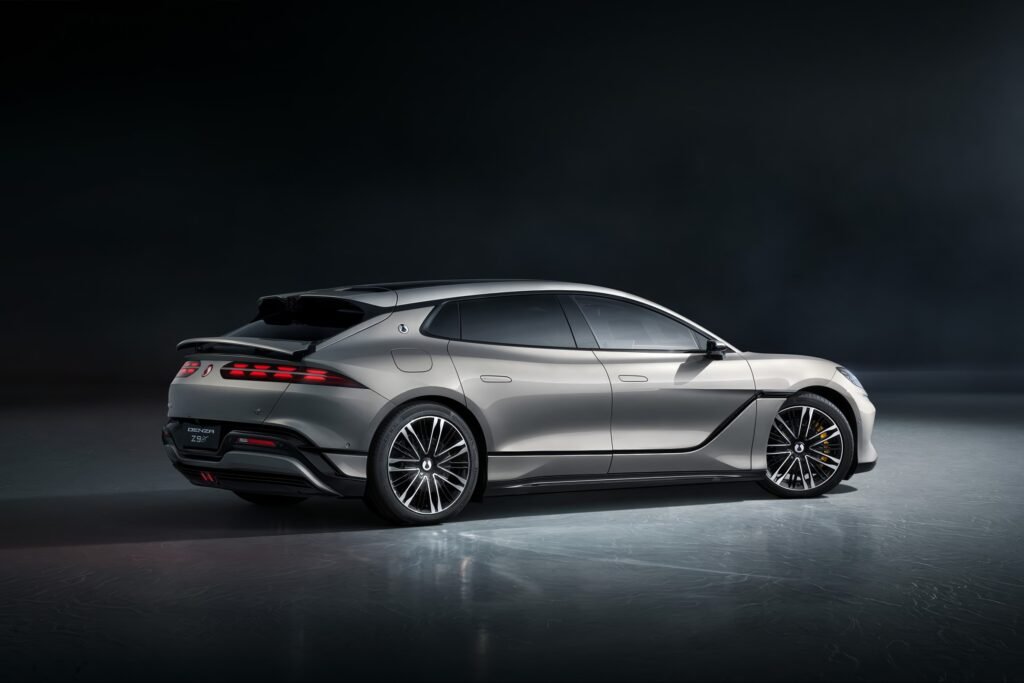
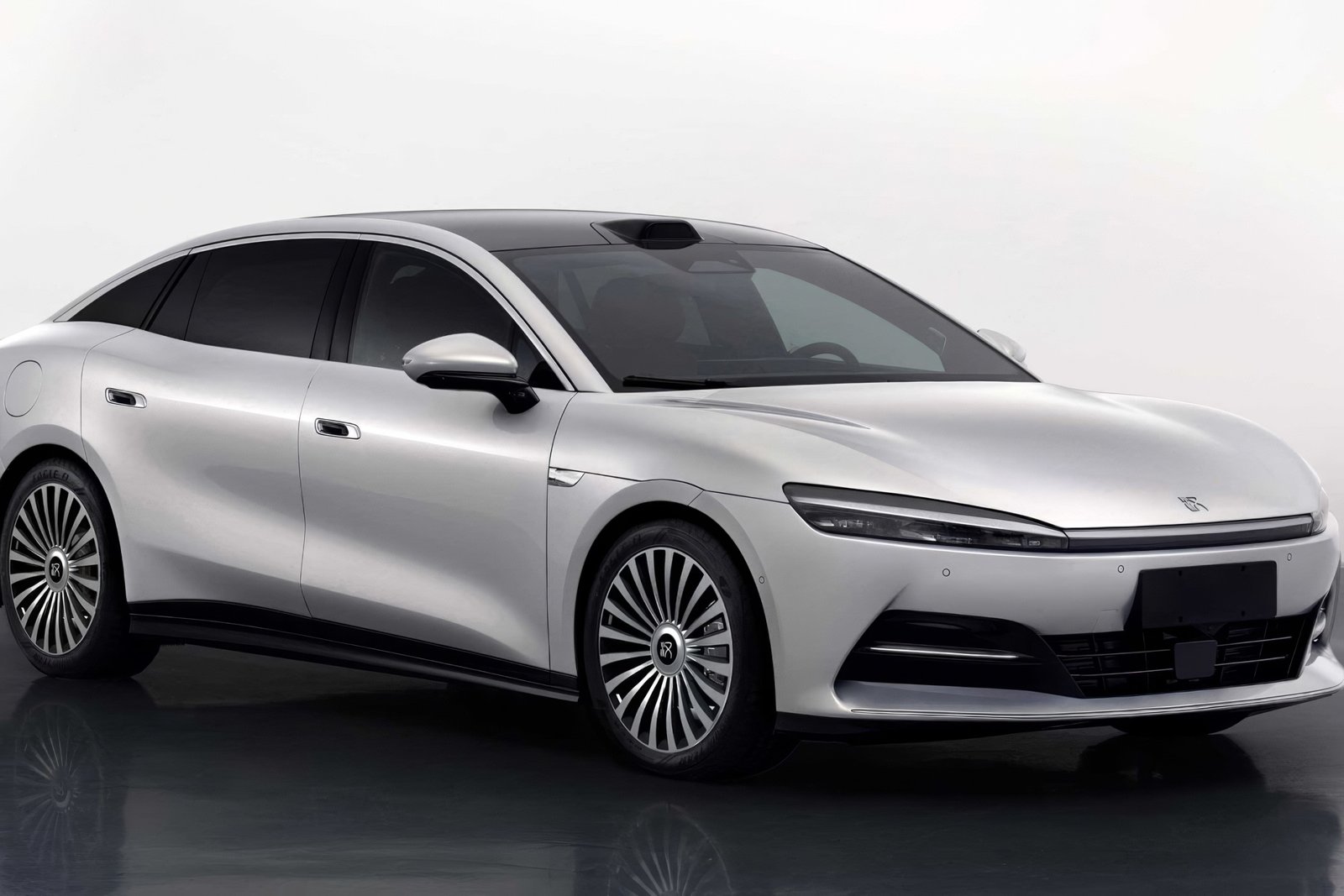
Byd Han Sedan: The automaker’s struggling flagship gets a major redesign with more power and size, but the numbers suggest the real battle is just beginning.
The BYD Han sedan is about to unveil a problem it can’t quite solve with horsepower. The next-generation model, set to debut at the Guangzhou Auto Show between November 27 and December 6, arrives as the company’s most aggressive attempt yet to resuscitate one of its most prestigious sedans. But the timing tells a darker story than any press release. The Han nameplate, once a symbol of BYD’s ambitions to dominate China’s mass-market EV space, has collapsed so thoroughly that even a complete redesign feels like a desperate last stand.
Lu Tian, general manager of BYD’s Dynasty sales division, announced the debut on Weibo on November 2, describing it as “a model highly requested by customers,” though he stopped short of naming the Han outright. The vehicle emerged in regulatory filings from China’s Ministry of Industry and Information Technology on October 16, revealing a sedan that’s substantially different from what came before. The new Han stretches to 5,156 mm in length and 1,969 mm in width, with a 3,030 mm wheelbase. Compared to the Han EV flash charging edition launched in April, that’s 161 mm longer with a wheelbase stretched by 110 mm. This isn’t a refresh. It’s a full-scale reimagining.
What BYD is offering inside that elongated frame matters more than the dimensions alone. The regulatory filings detail three battery-electric variants and one plug-in hybrid, all configured for five seats. The pure EV options span from modest to ludicrous. Single-motor rear-wheel-drive variants produce either 245 kW (329 hp) or 300 kW of output. The dual-motor all-wheel-drive setup combines 200 kW at the front with 320 kW at the rear for a combined peak of 520 kW, positioning this middle-market sedan well into performance territory. The plug-in hybrid pairs a 1.5-liter turbocharged engine with a 200 kW motor, hedging bets for buyers not yet ready to fully commit to electric propulsion. It’s a technical arsenal designed to appeal to almost every corner of the market.
Why the BYD Han Sedan’s Technical Arsenal Can’t Stop the Bleeding
None of it has stopped the bleeding. Han sales fell 52.11 percent year-over-year in October, moving just 6,566 vehicles, according to data compiled by CnEVPost. The month-to-month uptick of 159.63 percent from September offers a sliver of hope, but the year-to-date collapse is unmistakable. Through the first ten months of 2024, cumulative Han sales totaled 50,890 vehicles, down 67.39 percent compared to the same period last year. Those figures aren’t margins or fluctuations. They’re evidence of a fundamental loss of customer confidence in a model that was supposed to anchor BYD’s sedan strategy.
The timing of this redesign gains additional weight when measured against BYD’s other ambitions. In October alone, the entire Dynasty lineup sold 203,040 vehicles, up 13.6 percent year-over-year and exceeding 200,000 units in a single month for the first time in 2024. The Han’s implosion isn’t dragging down the entire division because other models, particularly SUVs, are compensating. BYD is banking hard on this pattern to continue with the imminent launch of the third-generation Tang, a large five-seat SUV that debuted at the Chengdu Auto Show in August. Lu indicated that display vehicles have already begun arriving at dealerships, with the actual sale beginning this quarter. The Tang represents where BYD’s real growth momentum lives. The Han redesign, by contrast, reads as necessary damage control on a nameplate that’s lost its cultural and commercial currency.
The Han’s Place in a Shifting Hierarchy
What complicates BYD’s positioning is that it recently launched the Da Han on October 13, a larger sedan measuring 5,256 mm in length with a 3,130 mm wheelbase and starting prices at 235,900 yuan, roughly $35,110 USD. The Da Han occupies a position higher in the lineup than the redesigned Han, creating a scenario where BYD now offers two competing sedan platforms. The Da Han’s greater length and higher starting price segment it as a luxury play. The new Han, despite its size and power increases, targets a different psychological and economic tier below it.
This is where the story becomes less about engineering and more about market psychology. The new Han has the specs to be competitive. The power outputs, battery options, and hybrid configurations check boxes against rivals from Nio, Xpeng, and even traditional automakers pivoting to electrification. But a sedan nameplate that’s lost two-thirds of its annual sales volume doesn’t resurrect itself through better specifications alone. BYD is betting that the Guangzhou Auto Show platform, the country’s premier year-end automotive venue, combined with a substantially redesigned product, can reset customer perception. The opening day reserved for media provides the kind of attention and coverage machine necessary to make that reset real.
What remains uncertain is whether even a complete generational leap can arrest the decline of a model whose sales trajectory suggests a deeper problem than product engineering could address. The Han’s collapse wasn’t caused by inadequate horsepower or insufficient battery capacity. It was outpaced by customer preferences shifting toward SUVs and toward competing sedan offerings with stronger brand momentum. A larger frame and more power might convert some buyers back into the fold. But the math from October and the year-to-date figures suggest BYD is playing catch-up on a segment that may have already made its decision about what it wants.