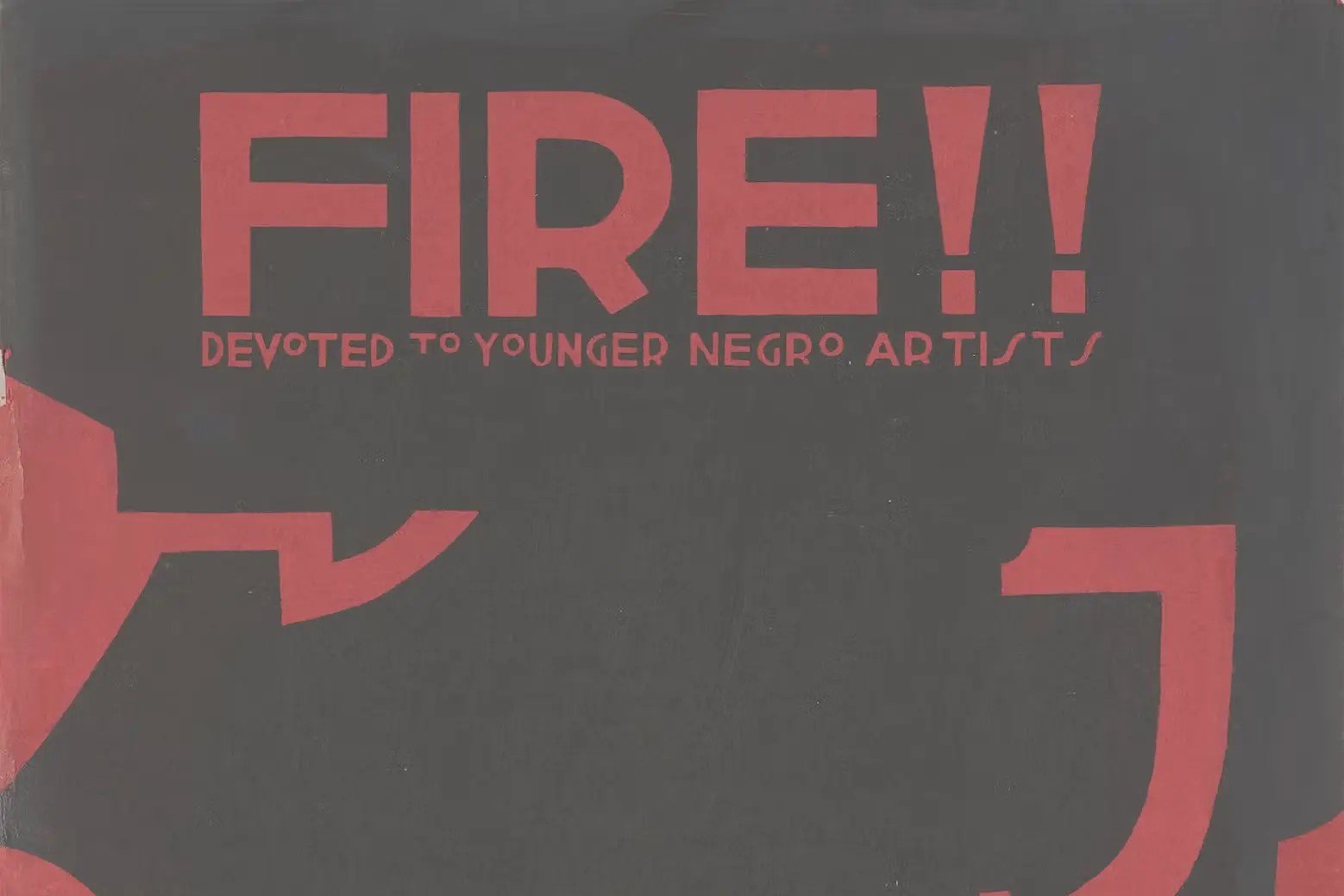
Fire!! Magazine: A century after its controversial single issue, the landmark experimental journal finally steps into institutional validation.
In November 1926, a magazine bound in orange and black paper appeared on the desks of New York literary gatekeepers, and the Harlem Renaissance was never quite the same. Fire!! lasted exactly one issue before burning out, but that single publication packed enough formal risk, sexual candor, and artistic defiance to earn it a mythology that has only deepened with time. Now, as the centennial anniversary arrives, an exhibition titled “Fire!! and the Harlem Renaissance” opens November 12, finally giving institutional weight to a project that spent a hundred years circulating as underground legend among scholars and writers who understood what it represented: the moment when Black experimental literature stopped asking permission.
The magazine was the brainchild of a collective that included Wallace Thurman, Zora Neale Hurston, Aaron Douglas, Bruce Nugent, and others who were already frustrated with the establishment gatekeepers of the Harlem Renaissance, the older generation of intellectuals who wanted Black art to prove something to white audiences. Fire!! rejected that entire premise. Its pages featured risqué stories about queer life and working-class experience, modernist visual design that borrowed from constructivism and cubism, and a refusal to apologize for any of it. The magazine cost fifty cents in 1926, which was significant money at the time, yet it sold poorly. The single issue was so controversial that Thurman later joked the entire print run caught fire in a warehouse (it probably didn’t, but the legend stuck). That single catastrophe made Fire!! legendary.
What typically gets lost in the standard cultural history is that Fire!! magazine succeeded not despite its brevity but because of it. One issue meant total artistic coherence, no compromise, no apologies, a purity of vision that no longer print run could dilute. A century later, as the exhibition opens this November, Fire!! magazine finally receives the institutional recognition it deserves, cementing its place as the moment Black experimental literature stopped asking permission.