In a culture addicted to speed and perfection, film photography feels less like nostalgia and more like resistance.
The Return of Film Is Not a Trend
Over the past few years, photography culture has shifted in a noticeable way. Film cameras, camcorders, and disposables have reappeared at parties, on city streets, inside studios, and tucked into everyday bags. Online, images have softened. The hyper clean aesthetic that once dominated now feels less absolute. Developers across the city echo the same observation: more people are walking into shops, curious about film, and sales are rising. For stores that have survived multiple technological revolutions, this renewed interest signals something deeper than a passing fad.
The revival of film does not feel ironic or novelty driven. It feels psychological. We are living in a time obsessed with clarity. Cameras are sharper than ever. Everything is rendered in 4K or 8K, optimized and polished. Social platforms reward flawlessness and instant consumption. While there is undeniable pleasure in that level of precision, constant perfection can numb the senses. When every image is immaculate and immediate, texture and uncertainty begin to feel rare. Film offers both.
Slowness as a Form of Presence
Growing up in New York City, memory and movement have always felt inseparable. The city unfolds in unscripted, fleeting moments. Shooting film was never an ideological choice at first. It was intuitive. Film slowed everything down. It demanded patience, intention, and presence with both the subject and the environment.
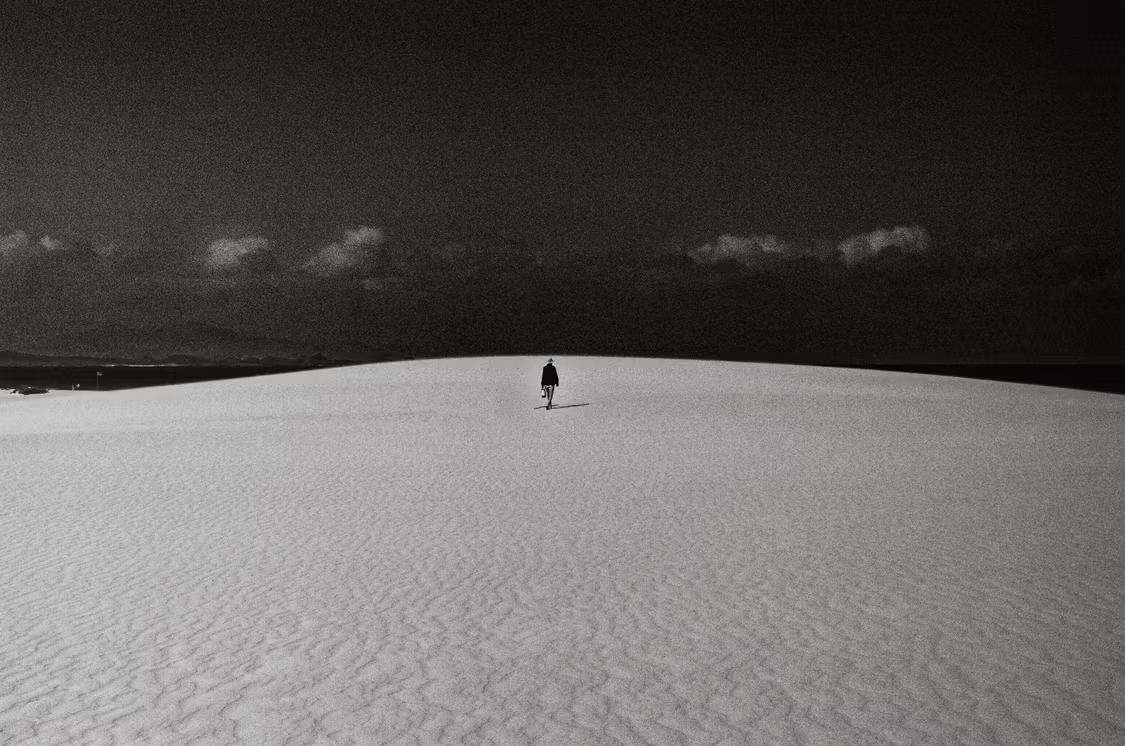
Grain, blur, and missed focus stopped being mistakes and started becoming lessons. They introduced emotional texture. As a street photographer, that unpredictability felt honest. The medium mirrored the city itself, imperfect, fleeting, and alive. In a landscape oversaturated with imagery, the limitations of film create meaning. You cannot endlessly reshoot until something works. You must decide.
Imperfection as Quiet Rebellion
It is easy to label this return to analog as nostalgia. But for many, it is not about longing for a past most never experienced. It is about resisting speed, over optimization, and the constant pressure to produce something new. Shooting on film introduces delay. You do not see the image immediately. You sit with the memory first. You connect it to how it felt before you see how it looks.
There is something quietly radical in that pause. You cannot overshoot your way into meaning. Speed demands reaction. Slowness demands choice. Each frame carries weight. Choosing softness in a culture that worships sharpness becomes a way to protect intimacy and hesitation. Digital still has its place. This is not about purity or rejection. It is about balance. In a world obsessed with resolution, choosing grain becomes a way to hold onto the presence of a moment before it is flattened into content.