
An inaugural showcase in Qatar signals a pivotal moment for the regional and international contemporary art landscape.
A New Chapter for Art Basel
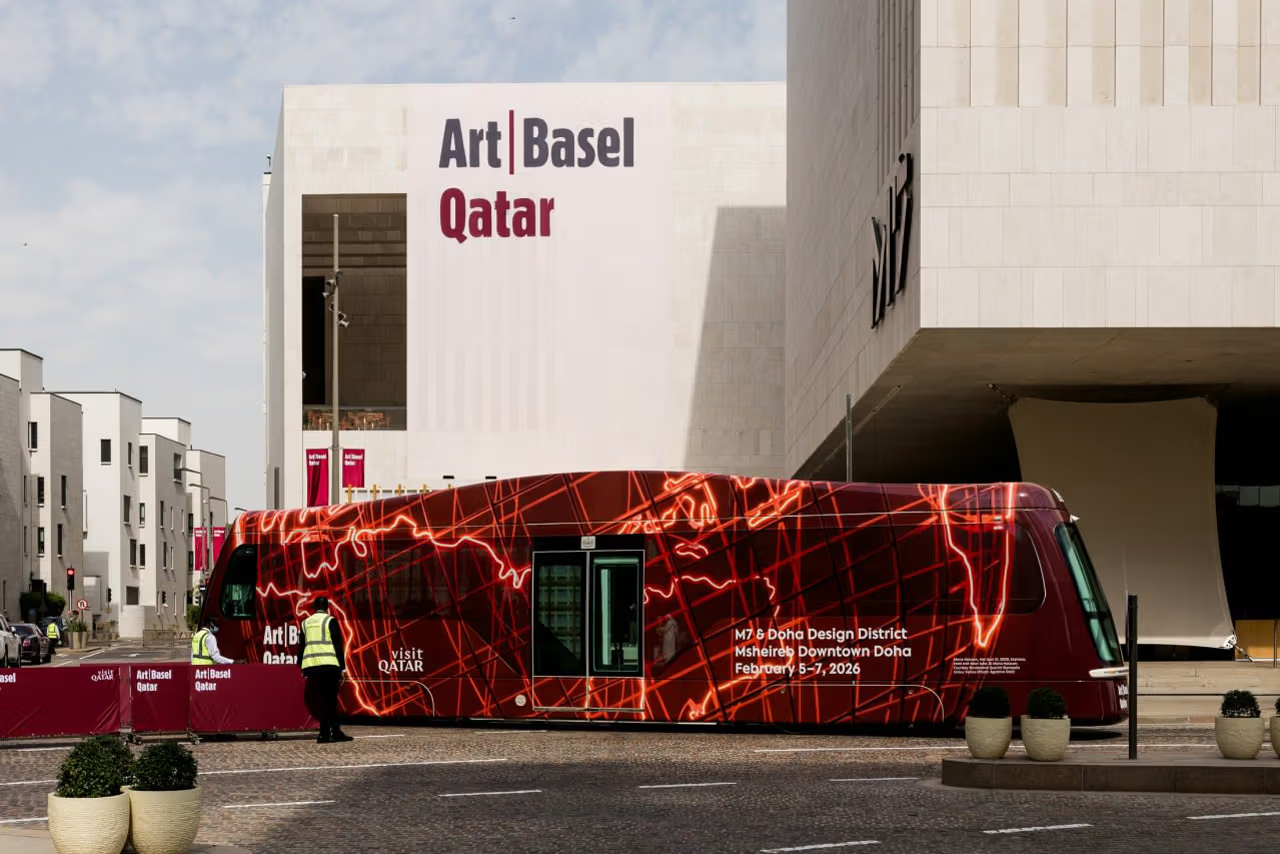
Art Basel’s debut in Doha marked a significant evolution for the world renowned fair, extending its influence beyond established hubs such as Miami Beach, Hong Kong, Paris, and Basel. The week long event drew more than 17,000 visitors, underscoring both market curiosity and institutional confidence in Qatar’s rapidly developing cultural ecosystem.
Opening the program, Qatar Museums chairperson Sheikha Al Mayassa Bint Hamad Bin Khalifa Al Thani headlined a Conversations series panel alongside LUMA founder Maja Hoffmann and Serpentine artistic director Hans Ulrich Obrist. Titled Leaders of Change, the discussion centered on how emerging cultural platforms reshape creative economies, exploring the role of patronage, institutional responsibility, and long term sustainability within global art infrastructures.
Spotlight on Regional Voices and Public Installations
Central to the fair’s curatorial direction was a pronounced emphasis on MENASA and diasporic artists. Solo exhibitions unfolded across Msheireb Downtown Doha, anchored by venues including M7 Cultural Forum and the Doha Design District. The open format fostered accessibility while presenting a spectrum of contemporary practices, ranging from Aiza Ahmed’s textural relief works to contributions from MARWAN and Meriem Bennani.
Art Basel’s integration into Doha’s architectural landscape proved equally consequential. Nine large scale commissions activated public spaces throughout Msheireb, transforming the district into an immersive cultural environment. Highlights included Rayyane Tabet’s palm frond pavilion What Dreams May Come, which recontextualized vernacular materials within a heritage courtyard, and Sumayya Vally’s Assembly of Lovers, a dynamic installation engaging Barahat Square through shifting spatial relationships.
Complementing the visual program, Hassan Khan delivered an immersive music performance during the preview night, reinforcing the fair’s interdisciplinary ambitions and expanding the experiential dimension of the event.
Technology, Light, and Cultural Resonance
Among the week’s most discussed moments was Jenny Holzer’s monumental drone based projection staged against the Museum of Islamic Art. Employing her signature text driven practice, Holzer illuminated the night sky with poetry by Mahmoud Darwish, creating a convergence of language, technology, and site specific symbolism. The work became a focal point for visitors and critics alike, demonstrating the growing role of digital mediums within public art presentations.
Reflecting on the fair’s inaugural Qatar edition, Art Basel CEO Noah Horowitz emphasized the strategic importance of the initiative, noting that the event established foundational support for regional artists while nurturing long term market development. The depth of engagement reported by participating galleries and the broader energy across Doha signaled strong momentum for future iterations.