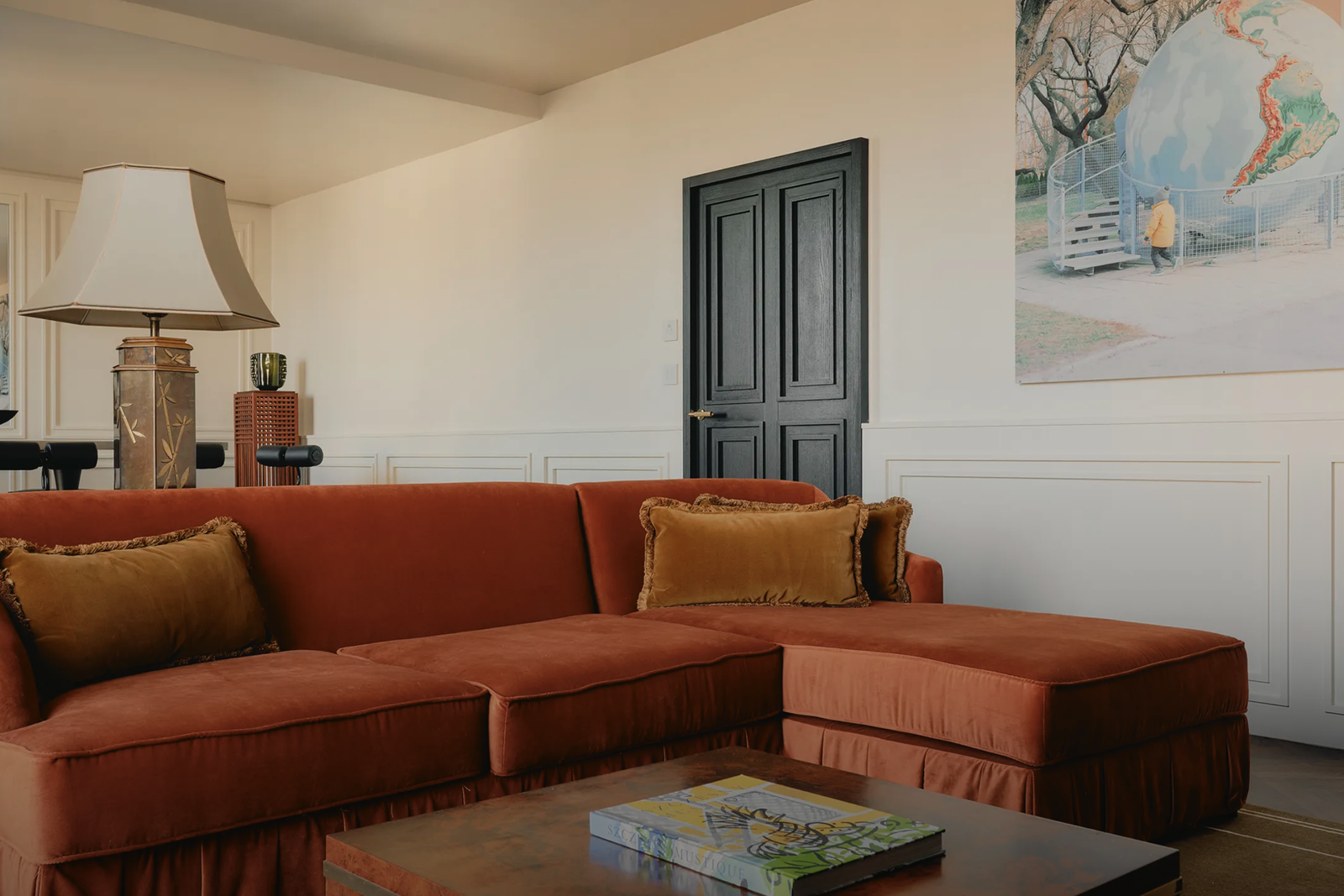
Designer Tatjana von Stein reimagines a brutalist 1970s structure as a maximalist playground where Munich’s belle époque grandeur collides with neon-soaked new-wave nights.
Walk into The Dean Munich and you’re not in a conventional hotel lobby. The 281-room property, housed in a former residential block that screamed 1970s austerity, now throbs with competing aesthetics that somehow cohere: soaring Art Nouveau ornaments sit alongside hot pink upholstery; gilt-framed mirrors hang above industrial concrete; a color palette swings from jewel tones to electric accents that wouldn’t look out of place in a Berlin techno club circa 1984. Designer Tatjana von Stein didn’t soften the bones of the building. She amplified them, treating the rigid modernist shell as a canvas for something more provocative than the careful luxury hotel formula typically demands.
The juxtaposition isn’t accidental. Munich’s 19th-century design heritage, all sinuous lines and ornamental excess, meets the city’s contemporary club energy in guest rooms where vintage touches compete with slick contemporary comfort. Bathrooms gleam with chrome and marble. Corridors feel deliberately theatrical, each hallway a different color story. The approach rejects the monochromatic minimalism that has calcified through hospitality for two decades, betting instead that travelers want atmosphere, risk, personality. The Dean doesn’t whisper. It performs.
Opening a major hotel property in Munich signals something deeper about how the city sees itself: not as a heritage museum, but as a place where imperial elegance and underground energy can occupy the same room. The building itself, once just another aging residential block, finds a second life as a cultural statement. Whether the market follows von Stein’s maximalist vision remains to be seen, but the property arrives unapologetically committed to its vision: beauty is better when it makes you slightly uncomfortable.