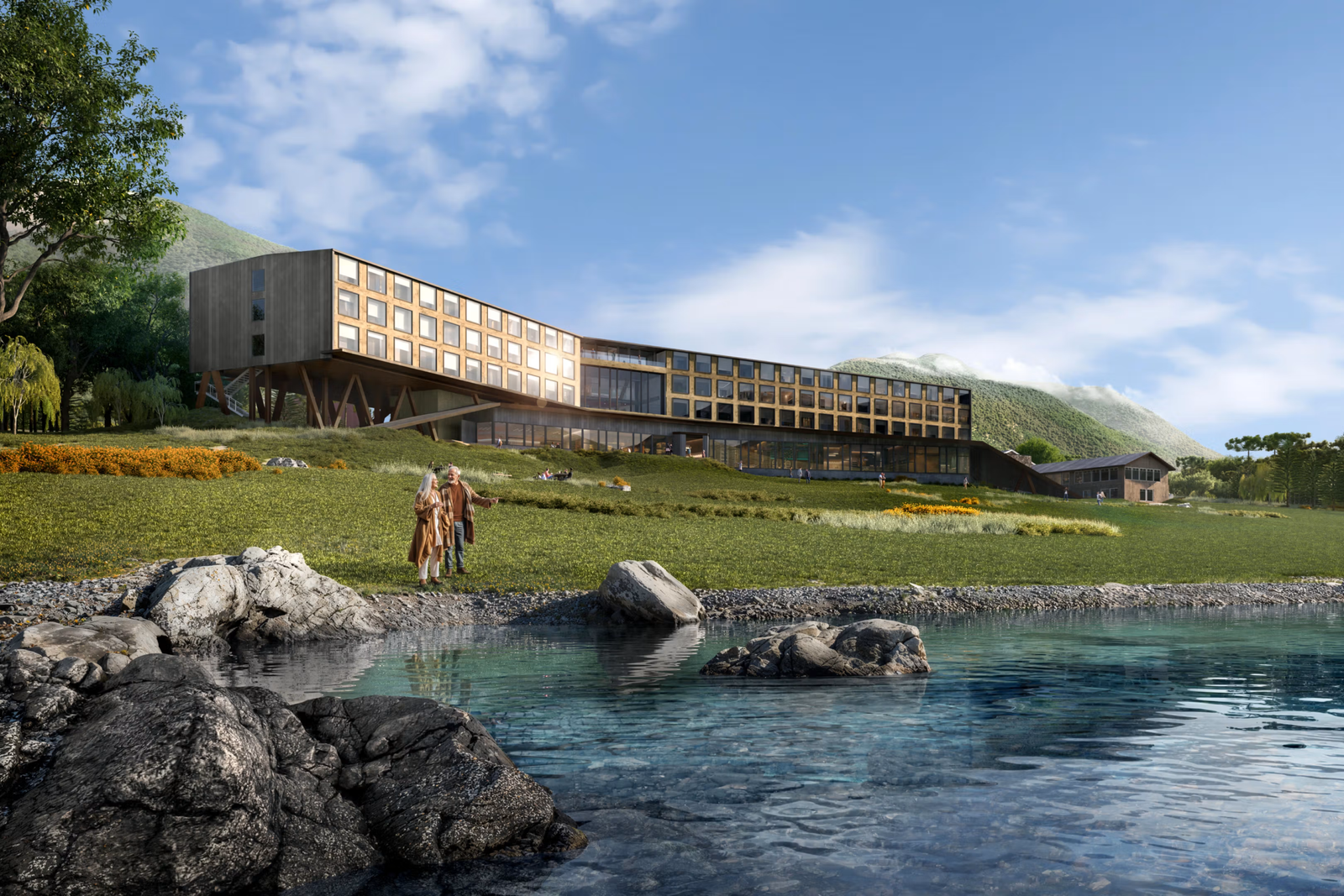
The Cormorant At 55° South: Silversea’s new outpost in Puerto Williams is designed as the ultimate launchpad for Antarctic expeditions, sitting at the southernmost tip of South America.
There’s a reason most luxury hotels sit in cities. They need infrastructure, clientele, and the occasional functioning road. The Cormorant at 55° South abandons all three. Opening this October in Puerto Williams, Chile, it claims a title that sounds almost made up: the world’s most remote luxury hotel. The property isn’t a crisis bunker or a research station playing dress-up. It’s a deliberate move to position itself as the singular gateway between civilization and Antarctica, built specifically to serve travelers who see the continent not as a cruise ship checkbox but as a serious expedition destination.
Silversea, the luxury expedition cruise line, is behind the project, which makes immediate sense. Their business model already orbits around moving wealthy travelers to places most people will never go. The Cormorant becomes the land-based equivalent, a place to decompress before or after crossing the Drake Passage, a body of water famous enough for being deadly that it has its own mythology among polar explorers. Puerto Williams itself sits at 55 degrees south latitude, roughly 500 kilometers north of the Antarctic Peninsula, making it the actual southernmost city in the world (Ushuaia, its more famous neighbor, markets itself that way but doesn’t quite qualify). From there, the hotel will operate as the embarkation point for Silversea’s Antarctic cruises, transforming what could have been dead time into a curated experience.
The hotel’s architecture and service philosophy reflect this specific purpose. It’s built to feel both luxurious and functional, avoiding the trap of dropping marble columns and thread counts into a landscape that doesn’t need them. Instead, the design respects the environment while offering genuine comfort to travelers acclimating to extreme conditions. The Cormorant at 55° South transforms what could have been dead time into a curated experience, positioning itself as the essential waypoint for serious polar explorers.