
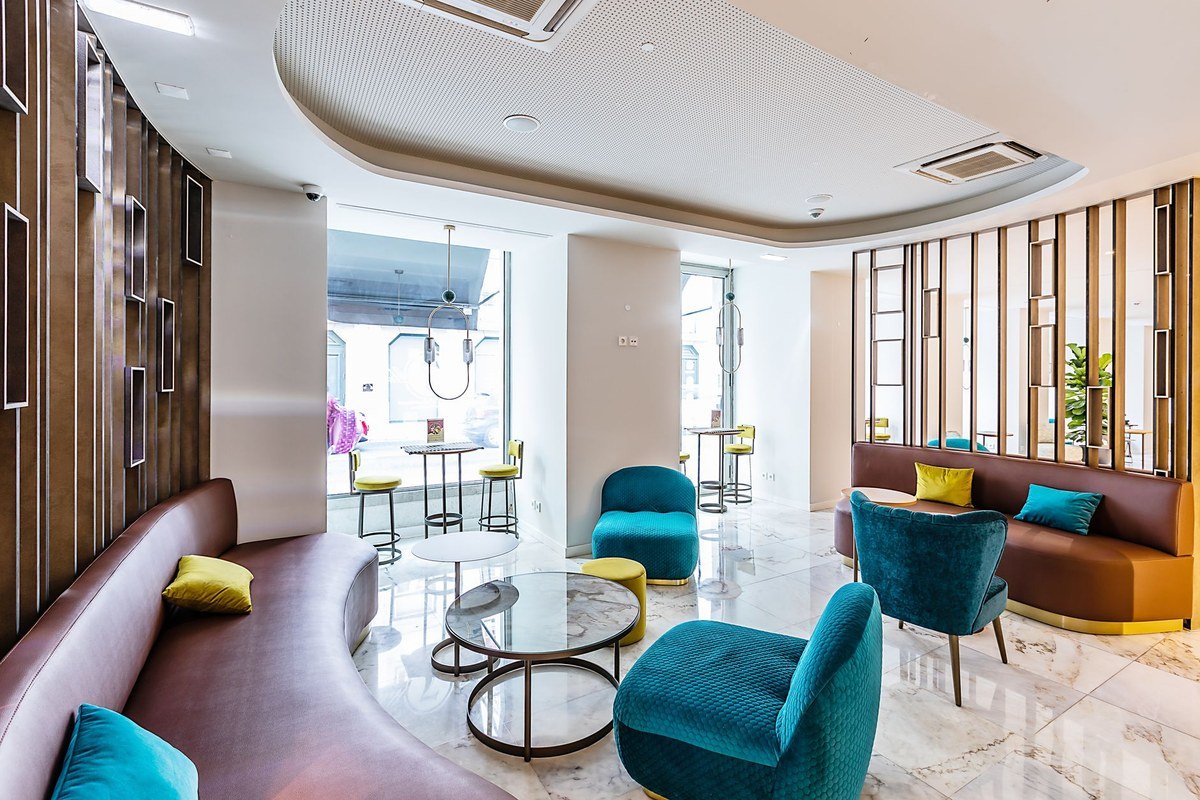
Leonardo Hotels Lisbon: A painstakingly restored 18th-century monastery in Baixa becomes the Italian luxury group’s first Portuguese address, proving that respect for heritage and modern comfort don’t have to be enemies.
There’s a particular kind of audacity required to open a hotel inside a working monastery from the 1700s without turning it into a theme-park caricature of itself. Leonardo Hotels’ inaugural Portuguese property, Corpus Christi Lisboa, manages the trick by seeming to barely touch the place at all. Set in Baixa, Lisbon’s oldest and most architecturally dense neighborhood, the hotel occupies a structure that survived centuries of urban reinvention while maintaining its spiritual gravity. The restoration work is invisible in the way only meticulous renovation can be, which means guests arrive in a space that feels lived-in by history rather than decorated with it.
Leonardo’s choice of Lisbon, and specifically this particular monument, reads as deliberately anti-trend. While other luxury operators chase rooftop bars in post-industrial zones and design-forward anonymity, the Italian group opted for a location where the building itself is the draw. Baixa’s street grid, laid out after the 1755 earthquake with mathematical precision, gives the neighborhood an austere beauty that rewards slow walking. A monastery converted to hospitality here doesn’t compete with the architecture; it extends it. The hotel becomes a point on a longer itinerary through the quarter rather than a destination that demands its own gravity.
The restraint in execution matters culturally, too. Lisbon’s tourism boom has been aggressive enough that every new luxury opening gets measured against the risk of accelerating gentrification. A Leonardo Hotels property that anchors itself to a sacred building, that reads as preservation rather than extraction, shifts that conversation. It’s not a perfect solution to tourism’s friction with local life, but it’s a signal that at least some operators understand that the most interesting hospitality strategy isn’t about competing with the city, it’s about deepening it.