
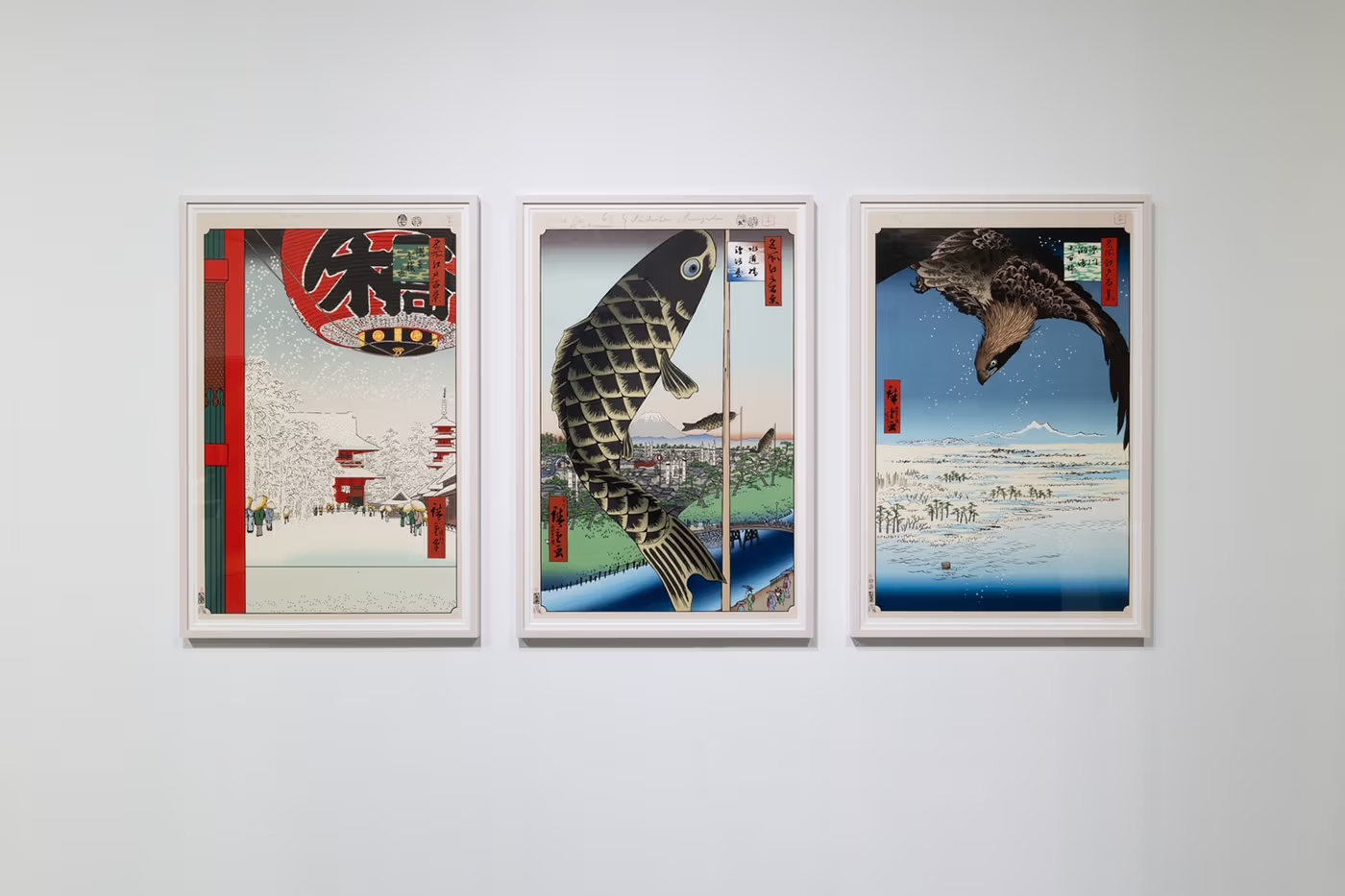
The artist brings his long running exploration of Japonisme back to Japan, closing a global loop of influence and reinterpretation.
A Tokyo Return for JAPONISME
Takashi Murakami has opened his exhibition JAPONISME → Cognitive Revolution: Learning from Hiroshige at Kaikai Kiki Gallery Motoazabu in Tokyo, where it will remain on view through January 29, 2026. The presentation builds on a version first shown at Gagosian New York earlier this year, expanding it for a Japanese audience with a focused and cohesive selection of works.
The exhibition centers on editioned prints derived from Murakami’s recent paintings, allowing visitors to experience the project in its entirety. By staging the show in Tokyo, Murakami shifts the conversation back to its cultural origin point, positioning Japan not just as a source of inspiration but as an active participant in the dialogue around modern and contemporary art.
Reimagining Hiroshige Through a Contemporary Lens
At the core of the exhibition are Murakami’s reinterpretations of Utagawa Hiroshige’s One Hundred Famous Views of Edo. These works fuse Edo period landscape compositions with Murakami’s unmistakable pop visual language, including his signature characters and bold graphic elements.
Key pieces reference iconic scenes such as Suidō Bridge and Surugadai and Asakusa Ricefields and Torinomachi Festival. Murakami carefully layers contemporary motifs onto these historic views, creating works that feel both reverent and disruptive. The result highlights how Hiroshige’s compositions continue to resonate, not as static historical artifacts, but as living frameworks that invite reinvention.
Japonisme as a Cognitive Shift
Rather than framing Japonisme as a simple case of stylistic influence, Murakami presents it as a cognitive revolution that reshaped the trajectory of Western art. He argues that Hiroshige and his contemporaries played a foundational role in the emergence of modern movements such as abstraction and Cubism.
By presenting this body of work in Japan, Murakami brings the narrative full circle. The exhibition underscores his ongoing interest in cultural exchange, translation, and transformation, while reinforcing his role as a bridge between tradition and contemporary practice. In Tokyo, JAPONISME feels less like a retrospective statement and more like an active, ongoing conversation about how art history continues to evolve across time and geography.