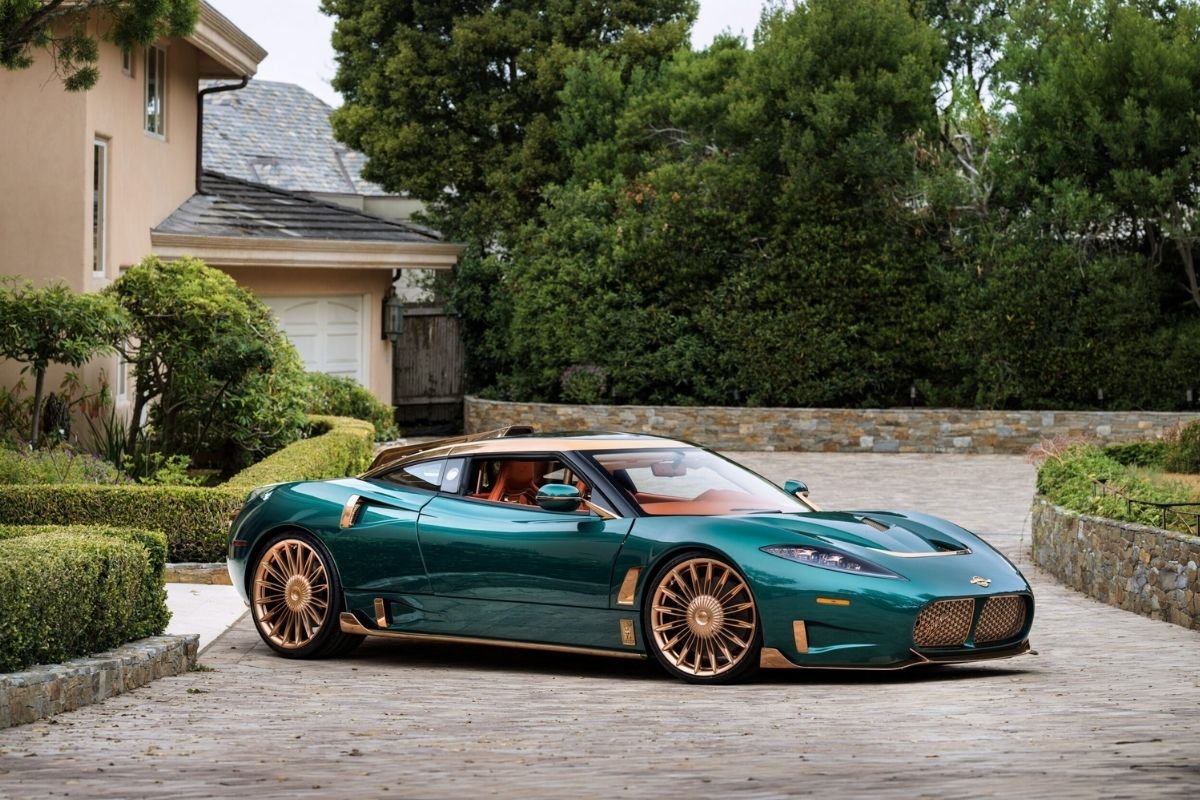
Spyker C8 Preliator: Victor Muller’s Dutch hypercar manufacturer claws back from bankruptcy with a raw, uncompromising turbocharged machine.
Victor Muller never stopped believing Spyker would rise again. After years of courtroom defeats, liquidation threats, and the kind of corporate death spiral that would have killed most independent car brands, the Dutch manufacturer has emerged with the Spyker C8 Preliator, a car that reads less like a calculated market move and more like a middle finger wrapped in carbon fiber. Eight hundred horsepower from a twin-turbocharged V8 paired to a manual transmission in 2026 is not a compromise play for mass appeal. It’s a statement of intent.
The Preliator exists in a cultural moment when supercars are drowning in computers, when electric torque and autonomous safety systems have become table stakes, when steering feel is something people read about in forums instead of experience in their hands. Spyker is charging the opposite direction entirely. This is a car for drivers who believe the machine should answer to them, not the other way around. The manual gearbox alone positions it as a rebel artifact in an industry that treats hydraulic precision like a museum piece. The interior bristles with analog switches and mechanical feedback. Every input requires commitment. There’s no nanny state, no driving mode that turns the car into a compliant highway cruiser. You’re either all the way in, or you shouldn’t be in the car.
What makes the Spyker C8 Preliator‘s return so culturally potent is the trajectory that precedes it. Spyker didn’t stumble into irrelevance through complacency or failed products. The brand collapsed under the weight of ambition, legal entanglement, and the kind of perfectionism that doesn’t always translate to profitability. Muller fought through the wreckage. The C8 Preliator carries that weight. It’s not just a supercar. It’s a resurrection powered by refusal to accept.