
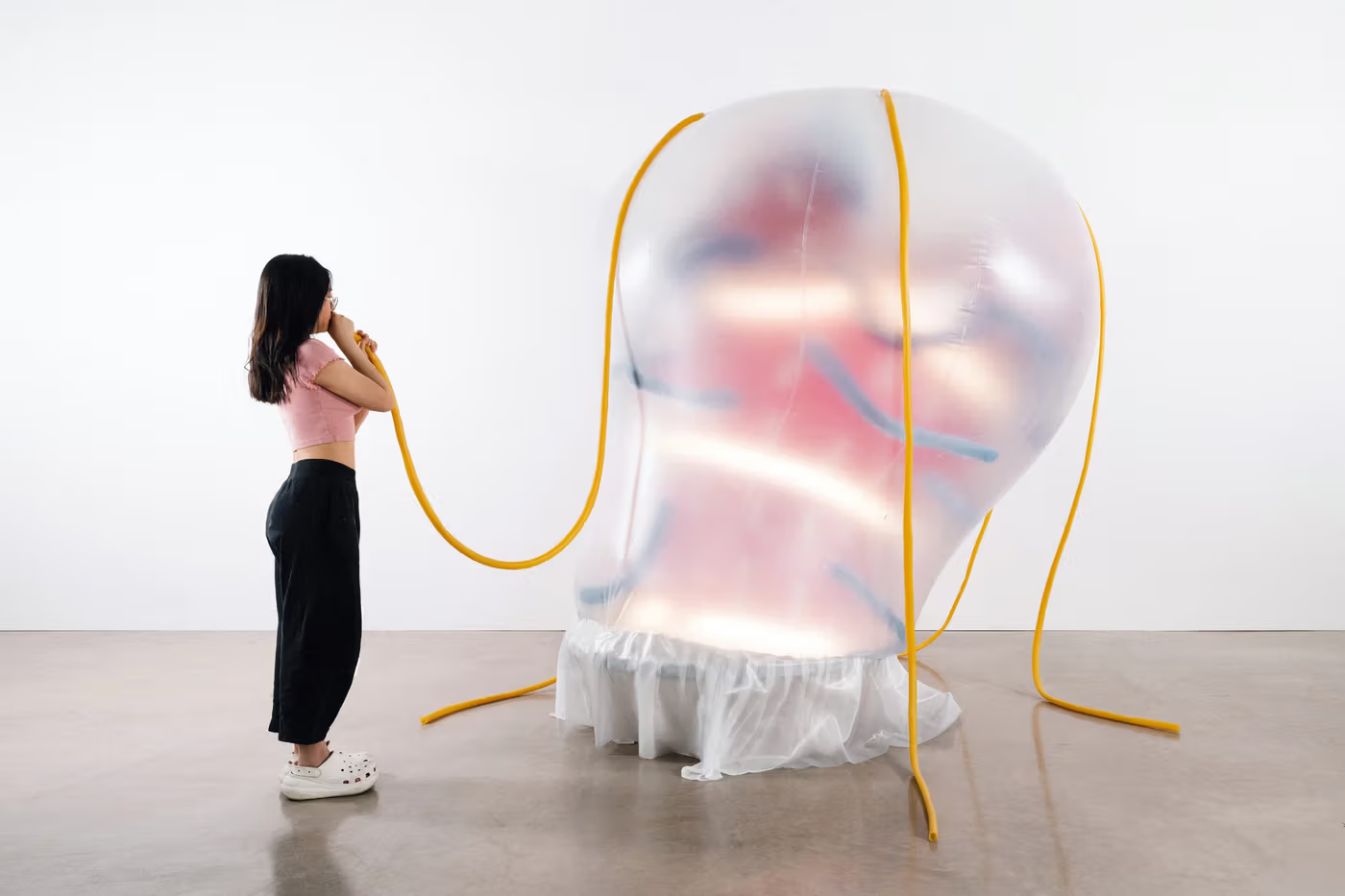
Playful, strange and quietly subversive, the artist’s work challenges the rigid systems of modern life.
A Practice Between Play and Discomfort
London-based artist Rong Bao creates immersive environments that blur the line between sculpture, space and the body. Her signature “soft sculptures” — often inflatable, organic and slightly alien — are designed to provoke both curiosity and unease.
Rather than delivering direct messages, Bao focuses on sensory experience, inviting viewers to feel first and think later. Her installations often resemble playgrounds, but beneath the surface lies a critique of contemporary life — from overconsumption to society’s obsession with speed and productivity.
From Classical Training to Experimental Forms
Bao’s journey began in traditional art forms. Trained rigorously in oil painting and drawing from a young age, she later transitioned into sculpture during her studies at the China Academy of Art and the School of the Art Institute of Chicago, before completing her MA at London’s Royal College of Art.
Her shift toward sculpture wasn’t planned — it evolved naturally through experimentation, repetition and audience interaction. That evolution paid off quickly: at just 28, she became the first Chinese woman to hold a solo exhibition at London’s Saatchi Gallery.
Softness as a Form of Power
Bao’s work lives in contrasts — tender yet unsettling, humorous yet critical. By using soft, inflatable materials, she creates pieces that feel approachable and non-threatening, even as they subtly disrupt familiar environments.
This “softness” is intentional. It acts as a counterpoint to the rigid, efficiency-driven systems that shape everyday life. Her sculptures don’t confront viewers aggressively — instead, they disarm, inviting reflection through play.
Art as an Experience, Not an Answer
For Bao, art isn’t about clear explanations or fixed meanings. It’s about creating moments — situations where audiences can engage emotionally before intellectually.
Her process reflects this openness: starting with sketches and digital models, testing materials, then scaling up with fabricators. Some works come together quickly, while others take over a year, depending on complexity and experimentation.
Ultimately, Bao sees art as something completed only through interaction. It begins with a personal spark, but it finds meaning when people step into it, question it and experience it for themselves.