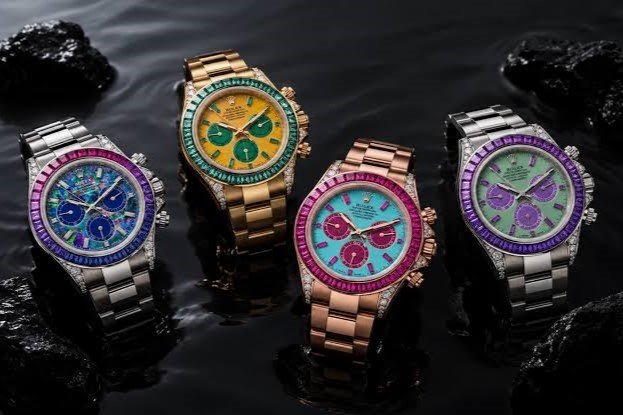
Rolex dropped four piece-unique Daytona references at auction this week, and the timing tells you everything about where luxury watches live right now. These aren’t limited editions or regional variants. These are singular objects, each one never to be replicated, each one a conversation with Rolex’s own design language that ended the moment it left the factory floor. The Geneva Watch Days circuit had barely cooled before collectors were positioned in bidding rooms, ready to pursue watches that most of the brand’s core audience will never even see in person.
The Daytona occupies a strange territory in contemporary luxury. It’s simultaneously the most accessible icon in Rolex’s catalog (everyone knows the name) and one of the hardest watches to actually acquire at retail. The steel models sit on waiting lists measured in years. Grey-market prices hover in territories that make entry-level luxury cars look practical. Yet the brand continues to release variants, collaborations, and customizations that fracture the narrative. A one-of-a-kind Daytona doesn’t solve the scarcity problem. It weaponizes it. It’s not a watch you can wear into a room and expect recognition from civilians. It’s a watch you acquire to prove you’ve arrived at a stratum where even Rolex’s own scarcity mechanisms have become negotiable.
What’s genuinely interesting here isn’t that Rolex created these pieces. It’s that they’re hitting auction now, during a period when the entire watch market is recalibrating. Grey-market premiums have compressed in the last 18 months as supply chains normalized and hype receded into something resembling actual demand. The Rolex Daytona auction signals a shift: even at the apex of luxury watchmaking, scarcity alone no longer guarantees the margins collectors once enjoyed. These four singular pieces represent both the pinnacle of the brand’s design language and a moment when Rolex’s own scarcity mechanisms have become negotiable.