Rocawear River Island: The Roc-owned label makes its clearest UK retail play yet, signaling renewed ambition for a brand that defined late-90s streetwear.
Rocawear x River Island marks a pivotal moment for Jay-Z’s streetwear imprint. The collaboration, set for the autumn-winter 2026 season, marks the first time Rocawear has secured this kind of mainstream UK placement, and it arrives at a moment when nostalgia for early-2000s New York rap vernacular has moved from TikTok soundbite into actual retail strategy.
The deal isn’t accidental positioning. River Island has been quietly aggressive about its edit strategy lately, layering collaborations and capsule collections into its buying model in ways that smaller independents can’t match. The Lorna Luxe edit proved the formula works: niche creator, clear design voice, runway-adjacent but accessible price point. Rocawear on a high-street chain is the same bet, scaled up. But where Lorna Luxe felt like emerging designer discovery, Rocawear trades on something heavier: a brand identity so tied to a specific moment in hip-hop history that wearing it now reads as a statement about taste, not just trend-chasing.
Rocawear and River Island: What the Collaboration Actually Represents
Jay-Z launched Rocawear in 1999 with co-founders Damon Dash and Kareem Burke, building it on the back of the Roc-A-Fella Records roster and New York’s mid-90s boom-bap golden age. Unlike other hip-hop brands of that era, Rocawear stayed relatively true to its aesthetic: structured silhouettes, jewel tones, oversized but intentional tailoring. It was rap-adjacent without being costume. By the early 2000s, it had moved into wholesale and international distribution. But licensing deals and ownership shuffles, including Iconix Brand Group’s acquisition in 2007, gradually untethered the brand from its original cultural vector. By the 2010s, Rocawear had become a department store footnote, outshined by Supreme, Stüssy, and the whole post-skateboard generation.
What’s changed is context. The late-90s and early-2000s rap aesthetic is no longer retro. It’s canon. Brands like ERL, Denim Tears, and even Pharrell’s Billionaire Boys Club have proven there’s real money in designing from that reference point, but with contemporary construction and storytelling. Rocawear has the original IP. The River Island move suggests someone at the brand’s management level finally understands that original IP, coupled with genuine high-street distribution, might actually move units again.
River Island’s Retail Play
River Island isn’t Selfridges or SSENSE. It’s not positioning Rocawear as luxury rediscovery. This is a mass-market move, the kind that gets pieces in stores across the UK and online to anyone with a student discount code. That’s actually smart for Rocawear’s position right now. The brand doesn’t need critical revalidation or some precious limited-edition moment. It needs to be visible, wearable, and priced where teenagers and twenty-somethings actually shop. River Island’s collaboration strategy has been increasingly canny about this. The Lorna Luxe edit worked because it gave the chain editorial credibility without alienating its core customer base. Rocawear does the same thing at a completely different cultural register.
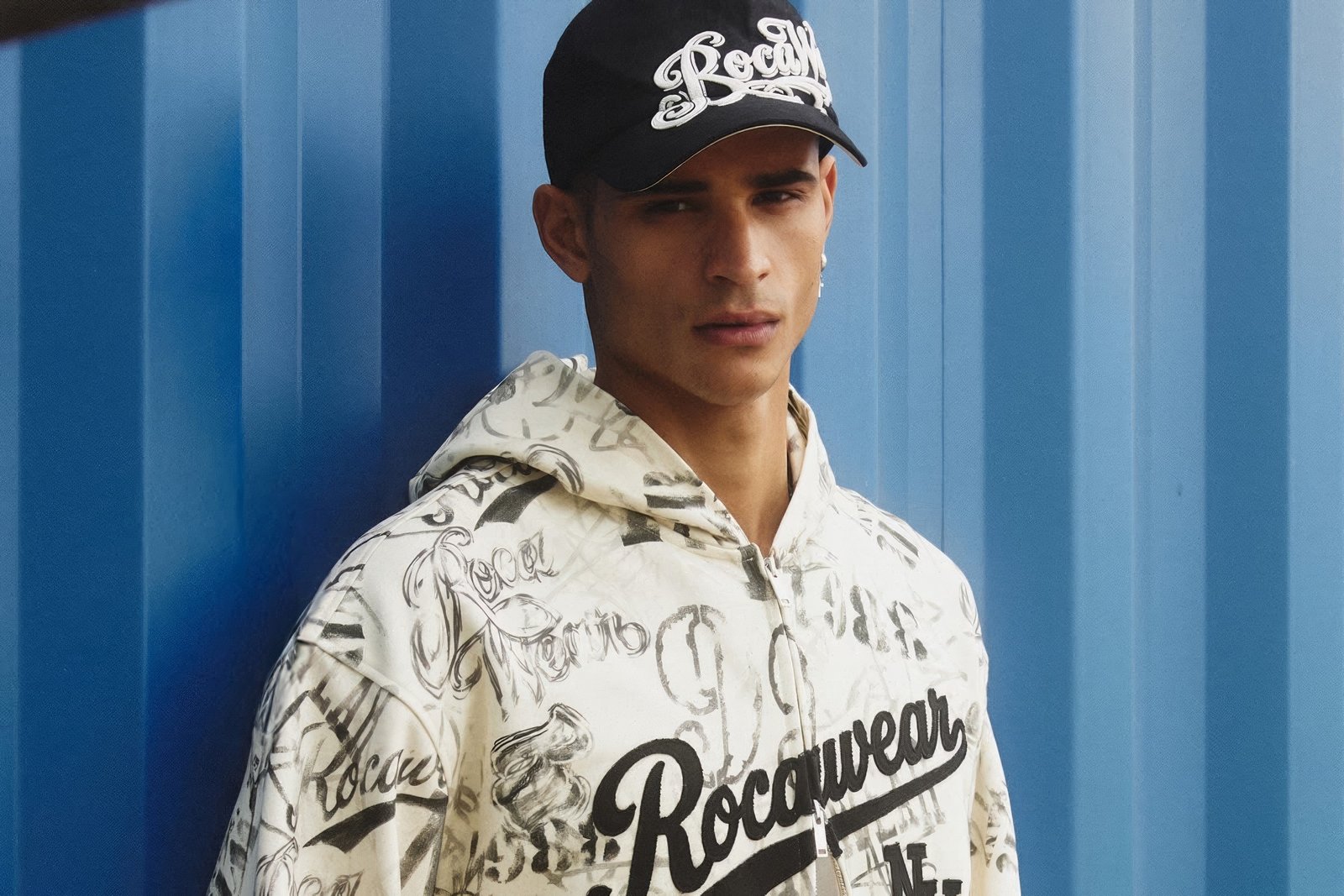
The AW26 timing also matters. That’s autumn-winter, which means heavier fabrics, layering, the kind of silhouette work that Rocawear actually does well. If the collection leans into structured outerwear, technical knits, and the kind of tailored casualwear that defined the brand in its strongest era, this could feel less like nostalgia merchandise and more like a genuine design conversation between two brands that understand workwear and street function differently.
What Actually Happens Next
The real test is execution. Collaborative capsules with heritage brands often fail because the creative direction gets watered down somewhere between the brand’s vision and the retailer’s fit model. Will this feel like Rocawear samples filtered through River Island’s house voice, or will it actually capture something of the original brand’s DNA? The details will matter: fabric weight, pocket placement, silhouette proportions. A oversized hoodie from Rocawear should feel architecturally different from a River Island house hoodie, not just have a different graphic printed on it.
The real test is execution. The Rocawear x River Island collaboration will succeed only if the creative direction avoids being watered down somewhere between the brand’s vision and the retailer’s fit model. If this collection leans into structured outerwear, technical knits, and the kind of tailored casualwear that defined Rocawear in its strongest era, it could feel less like nostalgia merchandise and more like a genuine design conversation between two brands that understand workwear and street function differently.