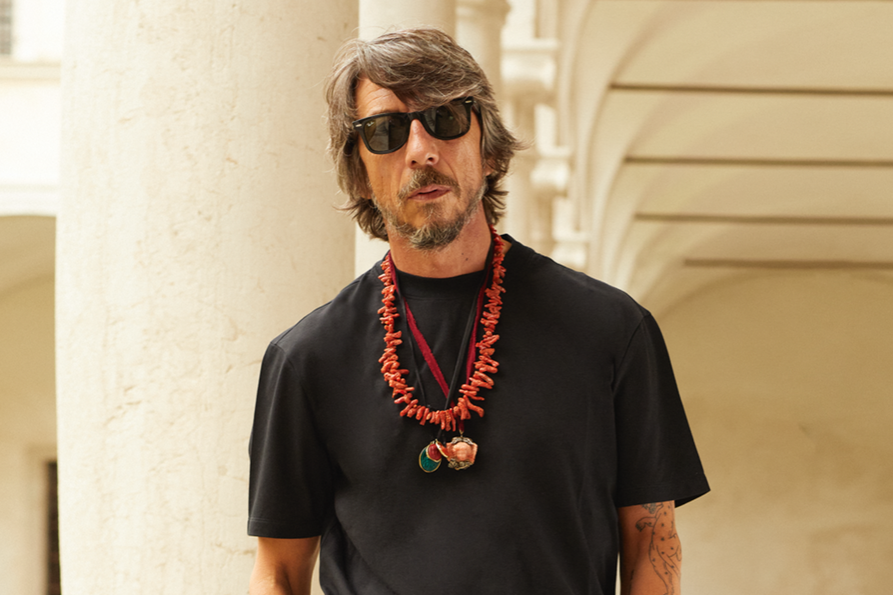
Pierpaolo Piccioli Balenciaga: The former Valentino mastermind’s first full collection at Balenciaga reshapes the house’s DNA on the industry’s biggest stage.
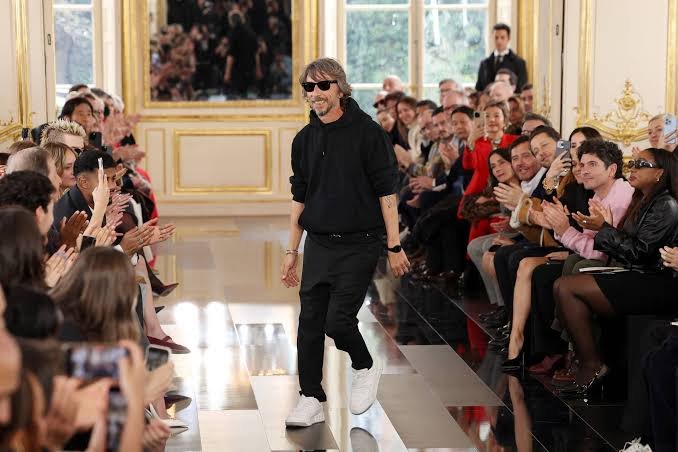
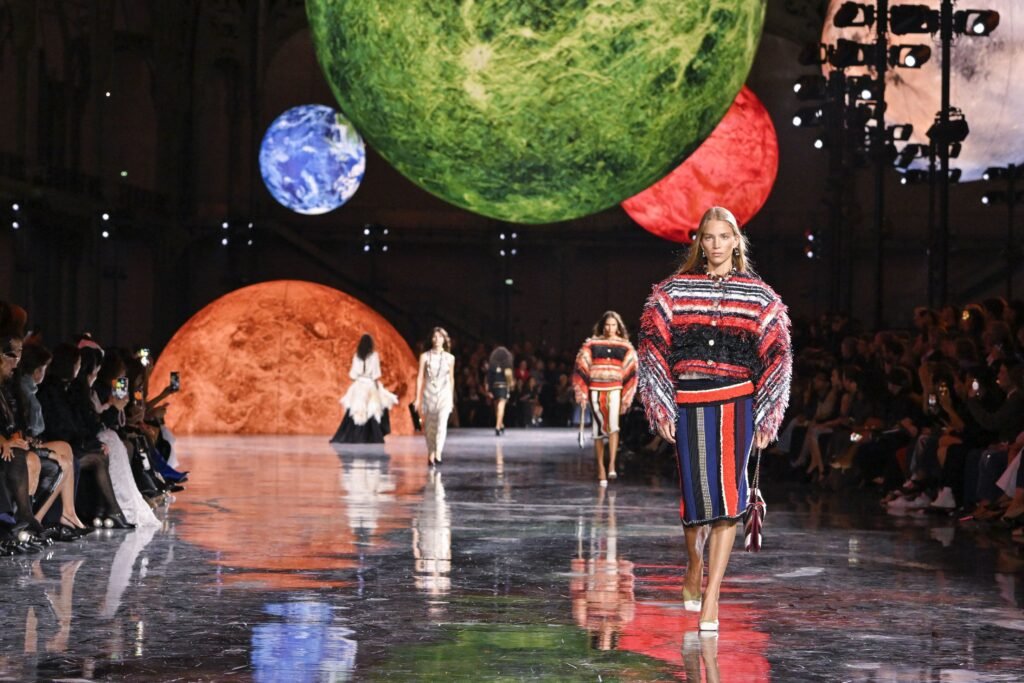
Pierpaolo Piccioli delivered Balenciaga’s opening statement for Spring/Summer 27 on the final slot of Paris Fashion Week’s opening day, and the timing wasn’t accidental. After thirty years steering Valentino toward baroque maximalism and romantic decadence, Piccioli inherited one of fashion’s most structurally rigid houses, one built on Cristóbal Balenciaga’s architectural precision and Demna Gvasalia’s dystopian swagger. Walking into that tension, on that stage, required either conviction or recklessness. The collection suggested Piccioli brought both.
This wasn’t a soft handover or a tonal reset wrapped in safe gestures. The collection dismantled expectations about what Balenciaga’s silhouette could accommodate. Where the house had always favored severe geometry and exaggerated volume as statement, Piccioli introduced sinuous draping, unexpected transparency, and a sensuality that felt foreign to Balenciaga’s recent vocabulary. The color palette shifted toward warmer earth tones and blush hues alongside the expected blacks and grays. Fabrication became the story, layering techniques, unexpected texture combinations, and material contrasts that suggested restraint rather than provocation. This was a collection that trusted whisper over shout.
The risk calculus here deserves real attention. Balenciaga’s customer base, built over decades of expecting a certain brand of bold excess, now faces a designer whose entire philosophy centers on earned minimalism and emotional nuance. The house’s commercial machinery, tuned for logomania and celebrity endorsement cycles, will need to reconcile with Pierpaolo Piccioli’s slower-burn aesthetic philosophy. His Valentino years proved he could sustain a loyal client base, but Valentino’s clientele expected romance. Balenciaga’s expects architecture, and Piccioli just proved it could get both.