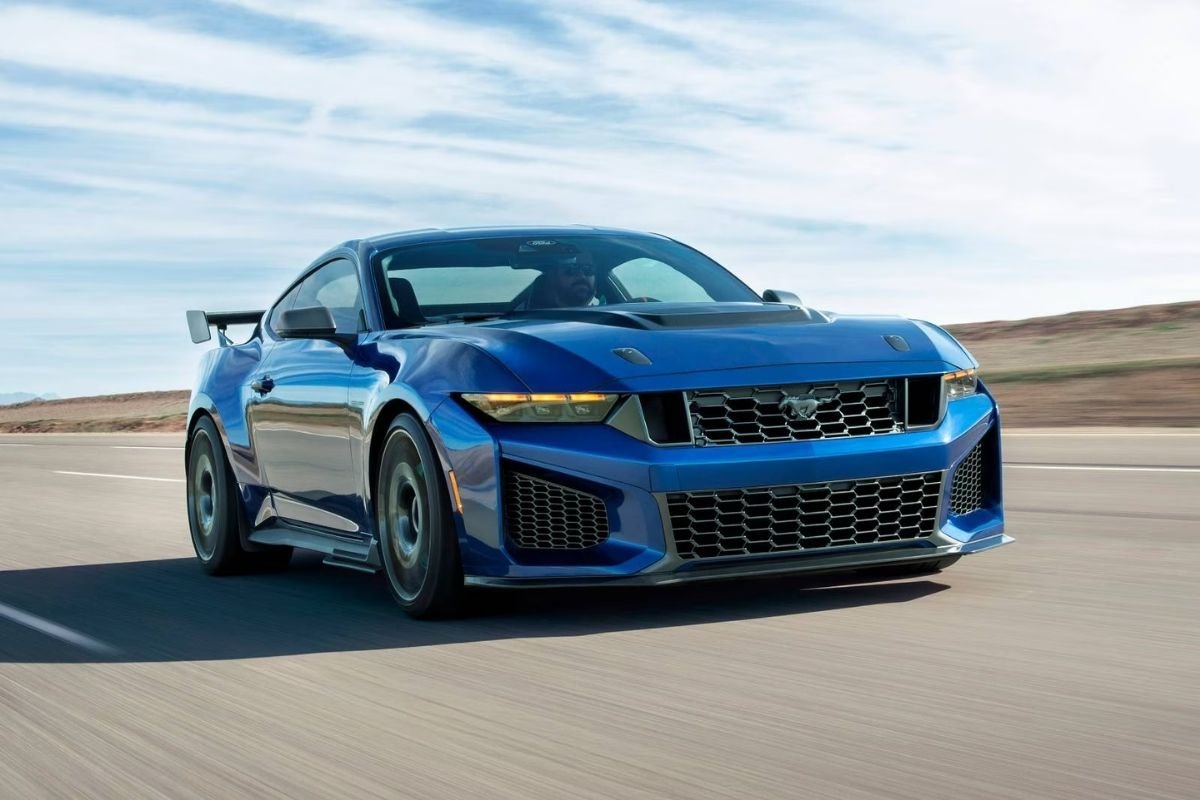
Mustang Dark Horse Convertible: Ford finally gives the Dark Horse treatment to a convertible, completing the modern muscle car’s most aggressive family yet.
The Mustang Dark Horse convertible has arrived to close a gap that was starting to feel less like strategy and more like oversight. This new open-air variant isn’t just a soft-top slapped onto existing engineering, it represents a deliberate commitment from Ford to proving that raw American performance doesn’t require a roof. Over the last year, the hardtop Dark Horse established itself as the company’s answer to a question nobody asked but everyone wanted answered: what if we made the pony car genuinely track-focused and visually unhinged?
What makes this move culturally significant isn’t the mechanical redundancy. It’s the visual aggression Ford has decided to carry forward into convertible territory, a segment that has historically defaulted to luxury softness and refinement theater. The Dark Horse aesthetic, with its aggressive stance, blacked-out trim, and purposeful aggression, translates to fabric-down motoring in a way that feels genuinely novel. You don’t see many factory convertibles designed to look like they’re ready to hunt something on a road course. The engineering and suspension tuning that made the hardtop version competitive gets the same treatment here, meaning this isn’t a compromise play for buyers who simply refuse to live with fixed roofs. This is a convertible that doesn’t apologize for wanting to go fast.
The broader significance sits in how Ford has weaponized Dark Horse as a family rather than a one-off provocation. By extending the nameplate across body styles, the company signals that the Mustang Dark Horse convertible isn’t a gimmick built around a single configuration. The hardtop was the proof of concept. The convertible is the statement: Dark Horse is now a full commitment to a specific vision of American performance that refuses to pretend speed and style are mutually exclusive.