The museum’s sweeping new exhibition explores how postcolonial African architects reimagined civic space and national identity through radical design.
MoMA has opened “Architects of Liberation,” a major exhibition charting the vision and influence of West African modernists who shaped their nations in the decades following independence. The show positions these designers not as regional figures but as essential voices in global architectural discourse, their work driven by urgent questions about public space, collective identity, and the built environment’s role in forging new societies.
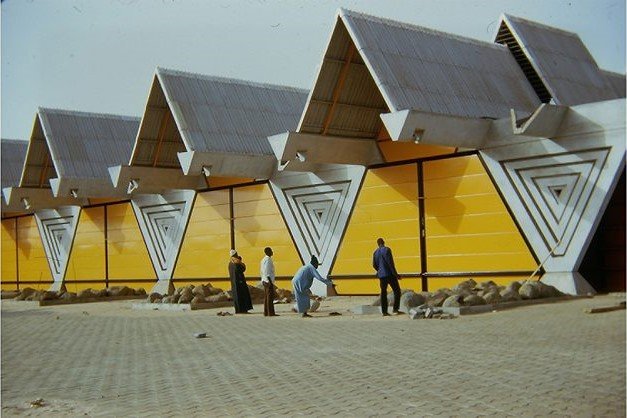
The exhibition moves beyond the typical art-historical framing of African modernism as borrowed from European idioms. Instead, it examines how architects across West Africa developed distinctly local modernisms, responding to climate, available materials, and the political imperatives of nascent states. Their civic projects, government buildings, markets, universities, cultural centers, functioned as spatial manifestos, embedding ideals of democracy, accessibility, and pan-African solidarity into concrete and steel.
By elevating these figures and their work to MoMA’s main galleries, the institution signals a fundamental shift in how Western museums are reconsidering the architecture canon. The exhibition challenges the long-standing assumption that modernism was a transatlantic conversation, revealing instead a complex global network where West African architects were active theorists and innovators, not merely interpreters of imported styles. Their legacies remain visible across the region’s cities, though many structures have faced neglect or unsympathetic renovation, making this institutional recognition both historical reckoning and urgent preservation statement.