A Paris interior architect transforms four 16th-century Engadin buildings into Chesa Marchetta, where Old Masters paintings hang above fireplace mantels and guests sleep in rooms designed like gallery wings.
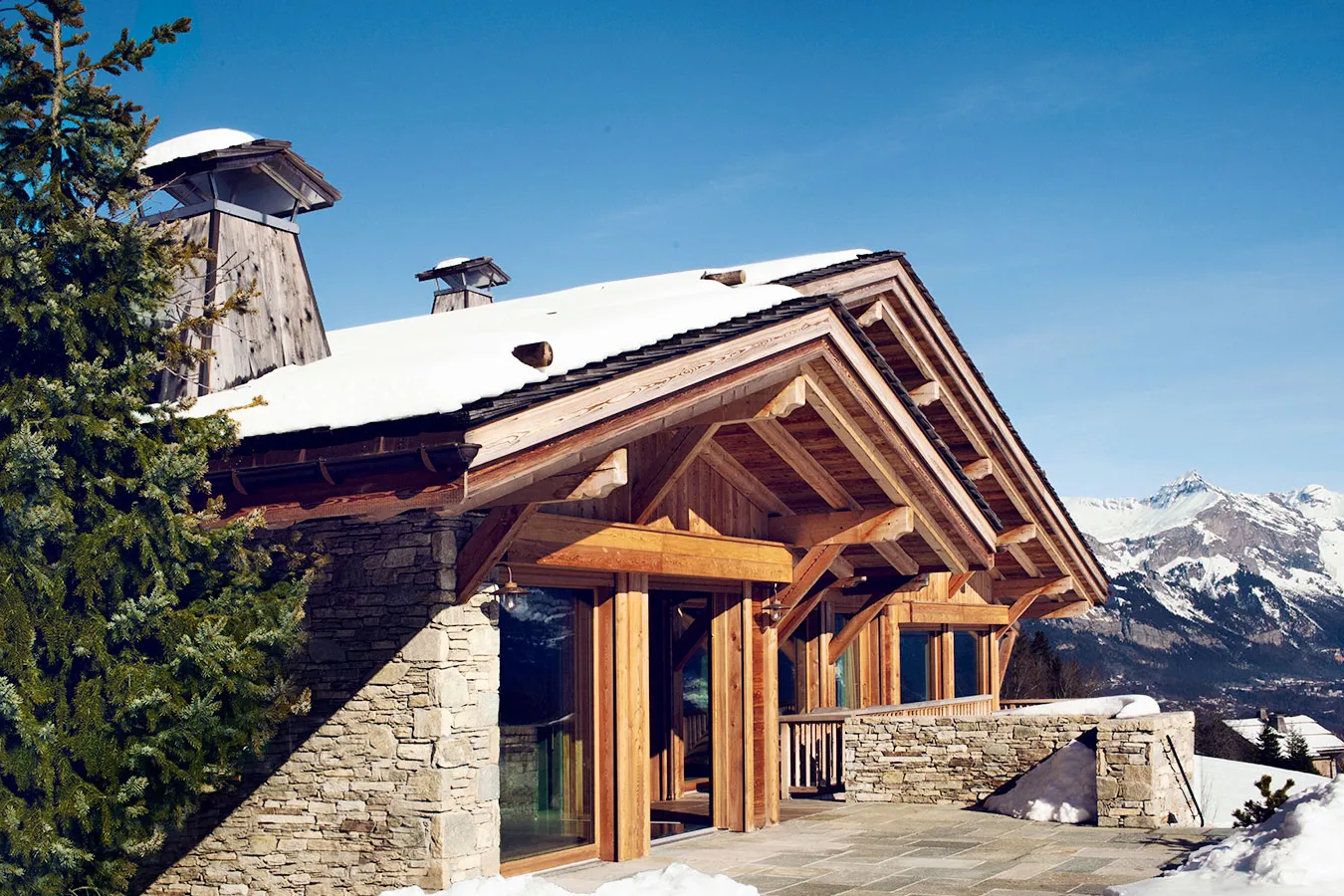
The Engadin Valley feels less like Switzerland and more like a state of mind: thin air, white peaks, and the kind of silence that makes cities feel like a fever dream. Into this landscape, Paris architect Luis Laplace has inserted something stranger than a luxury hotel. Chesa Marchetta, his seasonal refuge spread across four restored 16th-century chalets in the village of Samedan, functions as a private museum with beds.
Laplace’s reputation rests on restraint and curatorial precision. His Paris interiors have always felt like carefully edited collections rather than decorated rooms. At Chesa Marchetta, he’s applied that sensibility to an entire compound, layering Old Masters paintings directly into the architectural fabric. Canvas hangs beside hand-carved wood beams. A Flemish landscape catches light above a hearth. The effect is less “Swiss chalet meets collector’s estate” and more “what if a 16th-century master builder and a European museum director somehow collaborated across centuries.” Rooms exist as distinct chapters in a single narrative, each space calibrated to a specific mood and a specific painting.
The four buildings themselves were already weighted with history. Laplace has treated them as found objects, preserving their structural and material character while deepening their visual atmosphere. What could have read as pastiche instead feels inevitable. The architecture doesn’t pretend to be modern; the art doesn’t pretend to be casual. Both exist in genuine conversation, suggesting that a seasonal Alpine refuge in 2024 might actually be the ideal setting for a proper collection.
Chesa Marchetta opens seasonally, which reinforces what Laplace seems to understand: some places work only under specific conditions, when the outside world has already been simplified by snow and altitude.