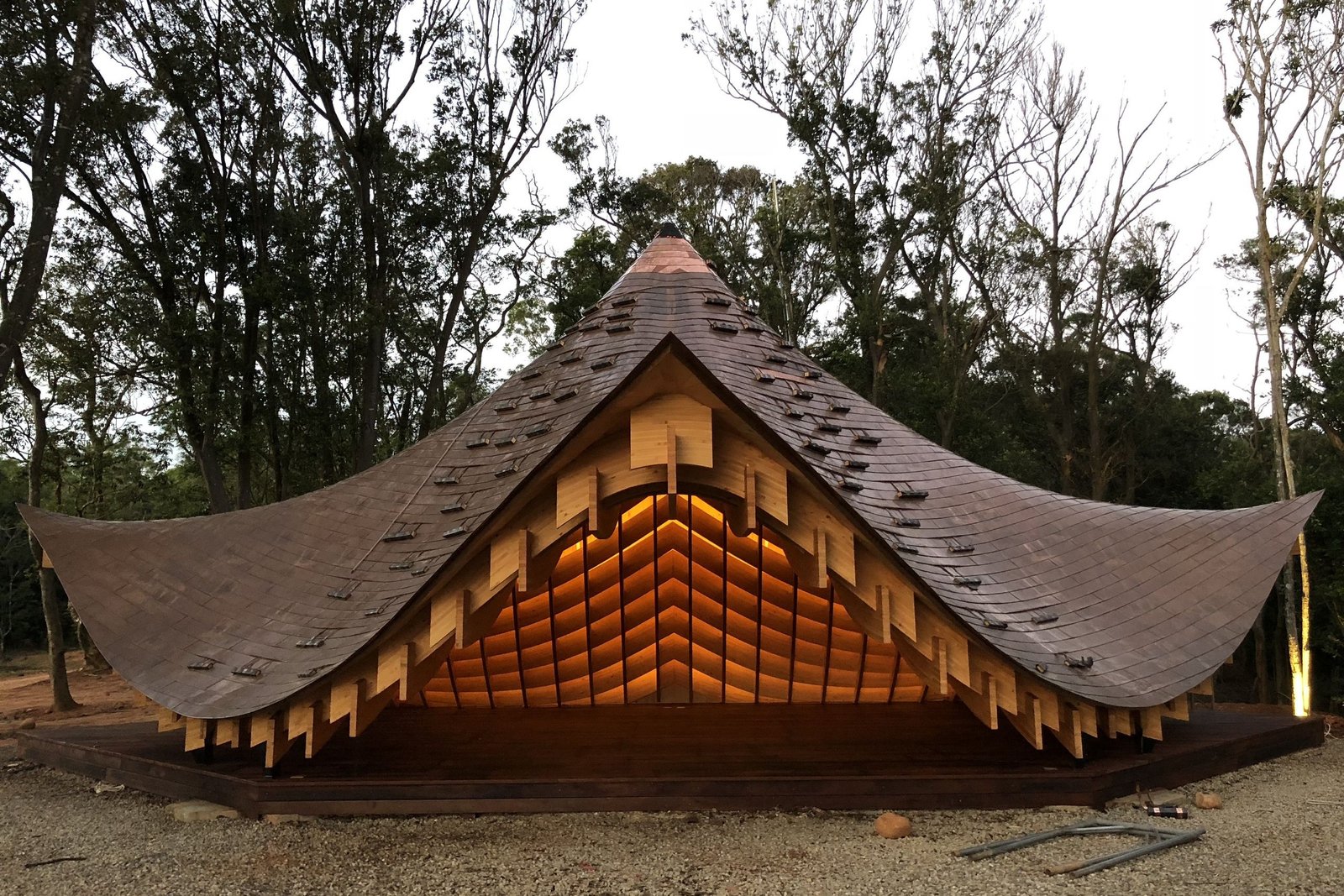
Asia’s largest design gathering returns to Bali with 250+ brands and a radical commitment to biophilic architecture that treats nature as co-curator.
The rice terraces around Ubud have seen plenty of wellness retreats and luxury resorts try to blend seamlessly into the landscape. Jia Curated 2026 is attempting something more ambitious: a design festival where the surrounding ecosystem isn’t just backdrop but active participant in how brands present themselves.
The festival’s curatorial premise, “Nature Weave,” isn’t a marketing flourish. Over 250 participating brands across art, design, and craft are working within a framework where biophilic principles govern spatial layout, material choices, and even how exhibitions breathe. Rather than the typical convention center grid, installations are positioned to work with existing topography, native plant growth, and water systems. Exhibitors are being encouraged to think of their booths not as isolated retail boxes but as nodes within a living, growing ecosystem.
For Bali’s design community and the broader Asian creative scene, the scale alone marks a shift. Jia Curated has become the region’s answer to European design weeks and international art fairs, but with an increasingly local sensibility. This iteration pushes further than previous editions, requiring designers and brands to engage seriously with environmental integration rather than simply declare green intentions. The result is less “design meets nature” Instagram moment and more fundamental rethinking of how thousands of people can gather, buy, and be inspired without treating the host landscape as scenery.
Brands ranging from established luxury houses to emerging local makers are recalibrating their presentation strategies. For some, that means rethinking packaging, sourcing, and supply chains visible to visitors. For others, it’s about designing temporary structures that actually improve soil health or create pollinator corridors. It’s not subtle, and it’s not optional. In a festival ecosystem where participation matters more than individual booth dominance, the constraint becomes the creative catalyst.