
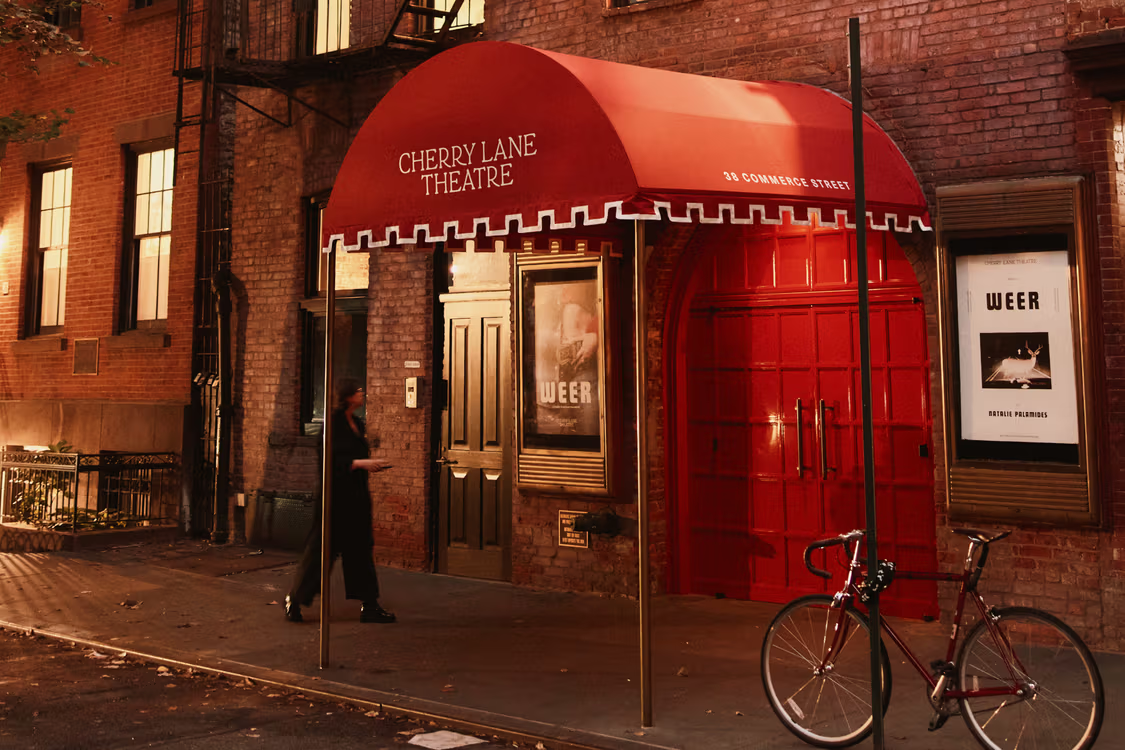
At a historic West Village stage, A24 is reviving an intimate space for risk taking art rooted in presence and experimentation.
A Night at Cherry Lane
On a winter evening in New York’s West Village, rapper MIKE stepped onto the Cherry Lane Theatre stage for a live three night run inspired by his Tiny Desk performance. Joined by his Band of the Century, the Brooklyn born artist guided the audience through a fluid set that moved between hip hop, jazz, funk, and gospel. The performance felt at home in the small room, with the crowd returning that sense of warmth and closeness in kind.
While experimental rap may seem unexpected for a traditional theater crowd, the moment captured the creative tension that has defined Cherry Lane since its founding. Now backed by A24, the downtown venue reopened its iconic red doors last September, marking a new chapter for the long standing theater.
A Century of Creative Risk
Located at the corner of Commerce Street and Cherry Lane, the venue is often referred to as the birthplace of off Broadway. Its exterior remains largely preserved, while the interior embraces a vintage atmosphere. Guests enter through a lobby featuring a retro concession stand stocked with merchandise, drinks, and show snacks, surrounded by photographs honoring the artists who once passed through. Just beyond sits Wild Cherry, an art house supper club offering a refined take on dinner and a show.
Since reopening, the theater has expanded its programming beyond traditional plays to include music, film, and comedy. The 166 seat space has hosted curated film screenings by Sofia Coppola, a showing of 25th Hour by Spike Lee, intimate performances from MIKE, Tame Impala, and Lizzy McAlpine, and appearances by Ramy Youssef. Upcoming productions include works by Clare Barron and Alia Shawkat, continuing the venue’s tradition of spotlighting distinctive voices.
A24 and the Power of Intimacy
For its first in person theatrical venture, A24 has chosen to emphasize intimacy over scale. While some questioned what a major film studio was doing in a small downtown theater, the company has made clear that the goal is cultural expansion rather than commercial dominance. Founded in 1923 by a group of artists, Cherry Lane has always served as a space for creative freedom, welcoming figures such as Barbra Streisand, Stephen Sondheim, Samuel Beckett, and James Dean.
Today, that ethos remains central. A24 has largely resisted turning the venue into a platform for intellectual property, instead allowing it to function as an independent space for discovery. As audiences exit through the glossy red doors, the experience feels deliberately fleeting. In an era defined by constant documentation and distribution, Cherry Lane stands as a reminder of the power of art meant to be lived in the moment, shared together, and remembered rather than replayed.