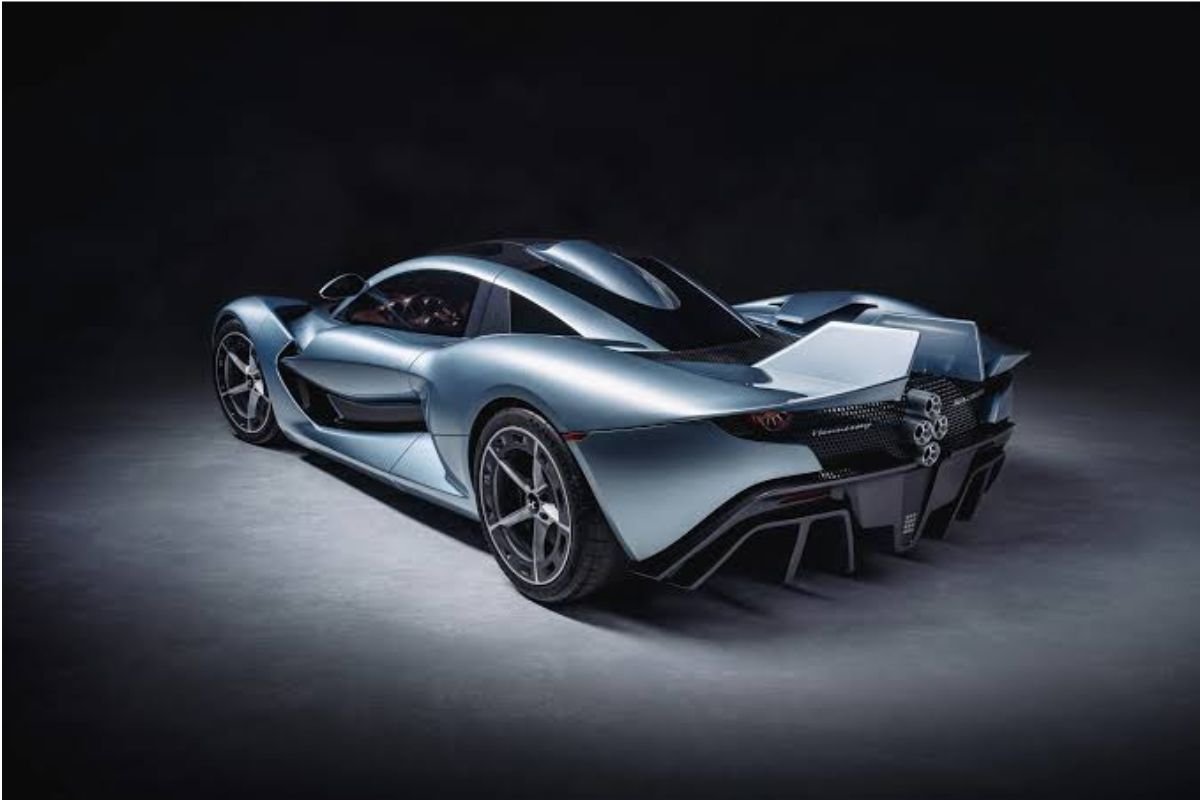
At 850 horsepower and stripped to pure mechanical controls, Hennessey’s new flagship rejects every digital shortcut.
Hennessey dropped the Blackbird at Monterey Car Week, and the spec sheet reads like a rejection letter to the entire automotive industry. Eight-hundred-fifty horsepower, a six-speed gated manual transmission, and a cabin so analog it might as well have been designed in 1995. No screens. No gesture controls. No software updates required to turn on the air conditioning.
The Blackbird exists in direct opposition to the Tesla-fication of hypercars. While McLaren, Ferrari, and Lamborghini have spent the last decade burying their dashboards under glass, Hennessey went the opposite direction. Every function lives on a switch, dial, or lever you can see and touch. The steering is hydraulic. The brakes are still hydraulic. This is a car that treats mechanical systems as features, not legacy cruft waiting to be deleted.
What makes this particular take register is timing. We’re deep enough into the EV transition that a high-powered stick-shift hypercar with zero digital intermediaries feels radical rather than nostalgic. Hennessey isn’t marketing this as a throwback; they’re positioning it as a corrective. There’s a growing cohort of buyers wealthy enough to own anything willing to pay extra for simplicity, and the Blackbird is built exactly for that gap in the market. No AI integration. No connectivity. No reason to ever negotiate with a steering wheel menu.
The real tell is the gated shifter. That mechanical detent between gears, the physical feedback when you slot into third, it’s the anti-gesture control. It demands active engagement instead of passive trust in software. For a segment obsessed with proving performance through data and telemetry, Hennessey just asked a different question entirely: what if we could just feel it instead?