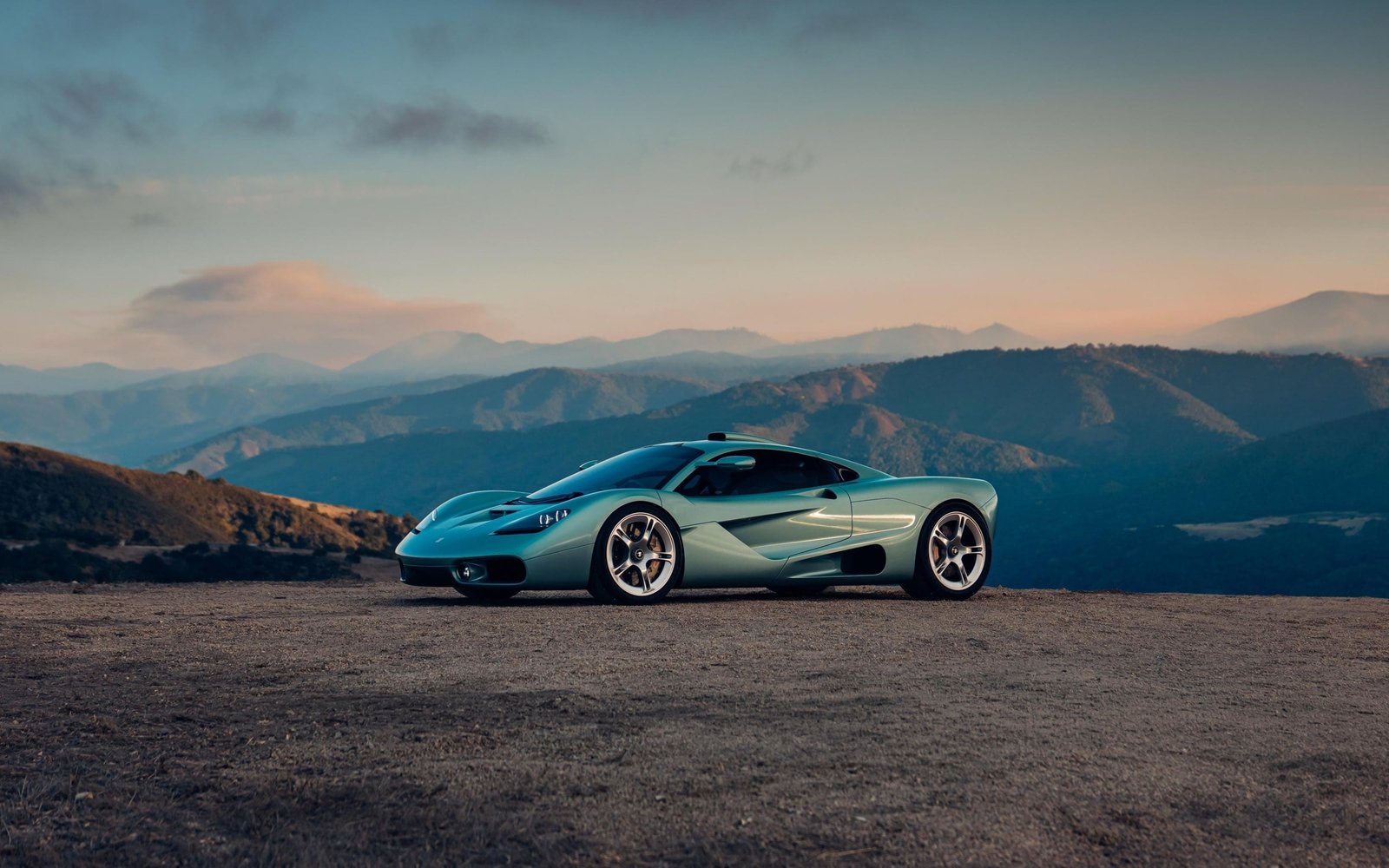
Gordon Murray S1: Gordon Murray Special Vehicles debuts a naturally aspirated, stick-shift grand tourer that rejects hypercar excess in favor of driver engagement.
Gordon Murray showed up to Monterey Car Week with a quietly radical statement: the Gordon Murray S1, a hand-built grand tourer powered by a naturally aspirated V12 and fitted with a manual transmission, in an era when hypercars have become battery-dependent sculpture. The S1, unveiled as the world premiere from Gordon Murray Special Vehicles, isn’t trying to be the fastest thing on the circuit or the most exclusive spec sheet in some billionaire’s garage. It’s engineered as a machine that demands attention through the steering wheel and through your right foot, not through a press release.
Murray’s career has always orbited around a singular obsession: extracting maximum performance from mechanical purity. The McLaren F1 established that gospel in the 1990s. The S1 carries that DNA forward, but positioned as a grand tourer rather than a stripped-down hypercar experiment. What makes this move significant isn’t nostalgia for analog driving (that’s been recycled as marketing for years now). It’s that a builder of Murray’s technical stature is doubling down on naturally aspirated architecture and traditional driver interfaces at a moment when the industry has collectively decided those things are obsolete. The naturally aspirated V12 produces power without turbo lag, without hybrid assistance, without electronic wizardry mediating between foot and throttle. The manual gearbox means no paddle shifters, no dual-clutch optimization, no algorithm choosing your ratios.
The Gordon Murray S1 isn’t positioned as a one-off or a limited run for collectors looking for an asset. It’s designed as a car you actually drive regularly, which frames it as something closer to a contemporary alternative to what Porsche or Ferrari offer, not a hypercar in the traditional sense. That distinction matters: Murray isn’t chasing the hype cycle. He’s building the Gordon Murray S1 as proof that naturally aspirated engines and mechanical engagement still belong on the road.