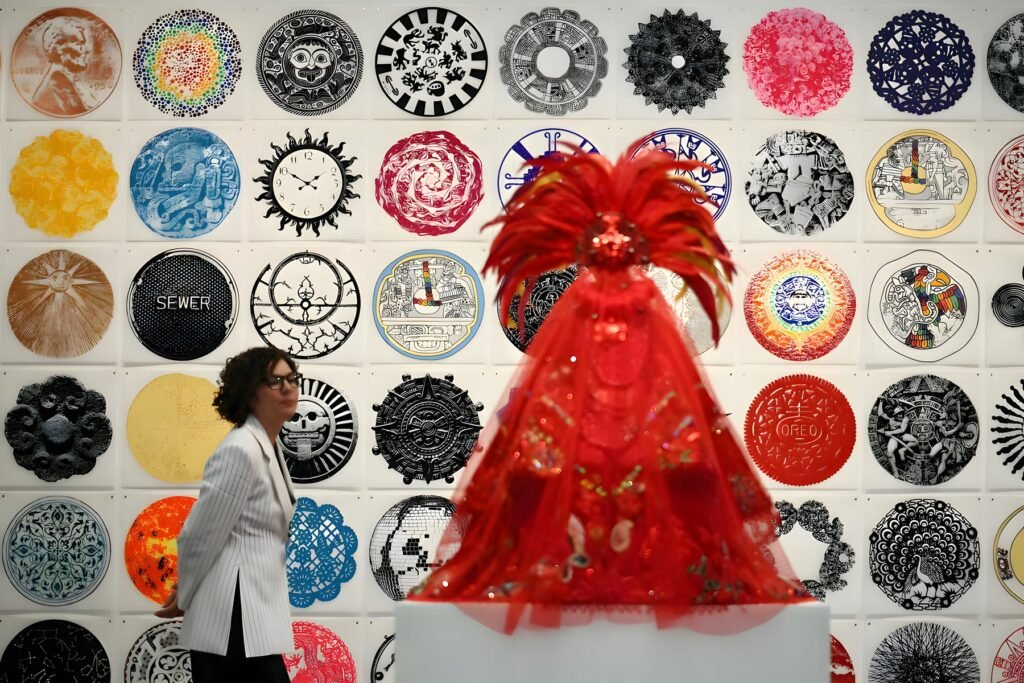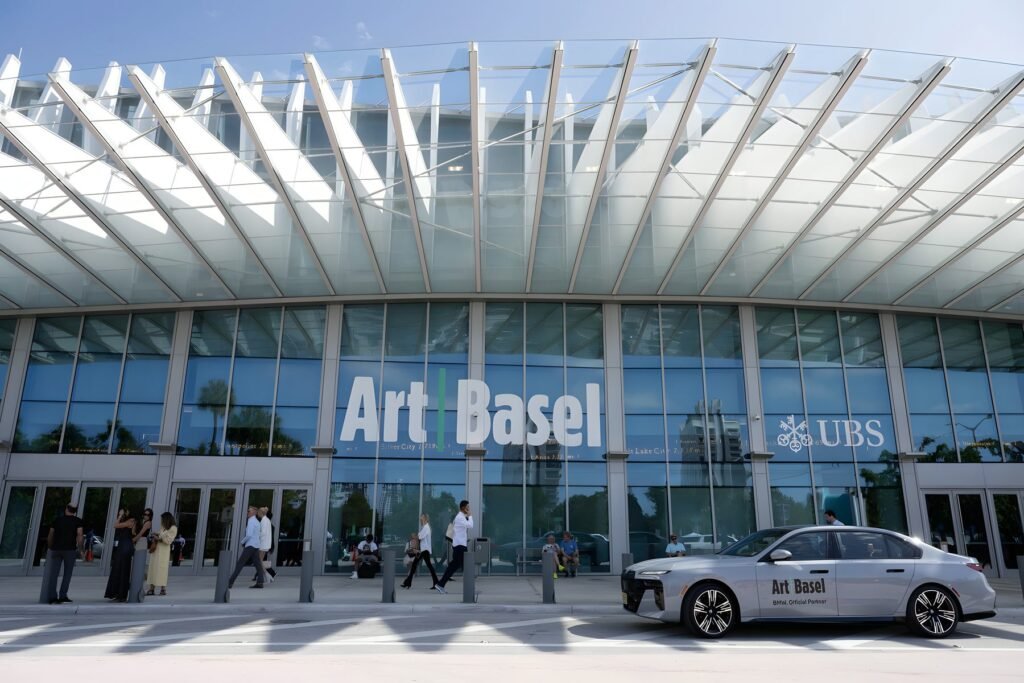
Frieze Abu Dhabi: The international art fair lands in the emirate this week, weeks before the Guggenheim’s 2026 debut transforms the region’s cultural weight.
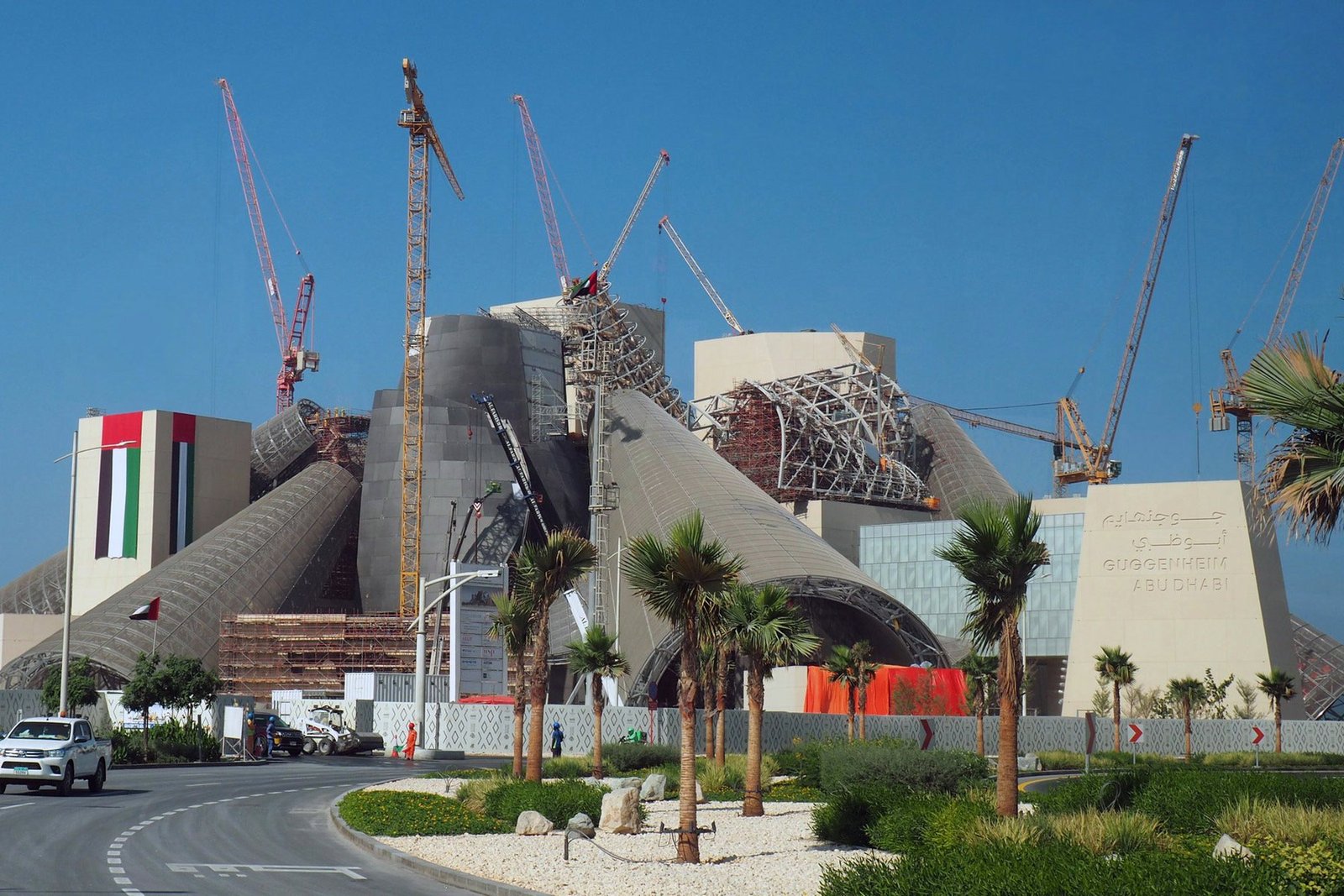
Frieze Abu Dhabi launches November 19 through 22, arriving in a moment of unprecedented institutional momentum in the emirate. The Guggenheim Abu Dhabi is expected to open by the end of 2026, joining three museums in the Saadiyat Cultural District that have already begun operations within the past 18 months. This convergence of a major international art fair and the most anticipated museum opening of the decade signals a tectonic shift in how Abu Dhabi positions itself within the global art market.
The timing is not coincidental. Frieze’s debut here comes alongside a broader cultural acceleration across the emirate. The Public Art Biennial and Nomad Abu Dhabi art and design fair are both running their second editions this month. Meanwhile, Miza, a new creative quarter in Mina Zayed, continues development. These initiatives layer on top of an art fair tradition in Abu Dhabi that stretches back nearly two decades, beginning as ArtParis Abu Dhabi in 2007 at the Emirates Palace before rebranding to Abu Dhabi Art and relocating to Manarat Al Saadiyat.
Frieze Abu Dhabi’s Pivot: From Western Canon to Global South
The early editions of Abu Dhabi’s art fair drew major galleries like Gagosian, White Cube, and Hauser & Wirth, who moved high-priced works by Western artists primarily to institutional buyers. That equation shifted dramatically in the 2010s. Many of these major galleries departed, and the fair recalibrated toward the Arab region and the Global South. Regional galleries such as Green Art Gallery and the Third Line from Dubai, along with Elmarsa from Tunisia, anchored the shifting identity.
This reorientation produced tangible results. Artists including Mandy El-Sayegh, Shaikha Al Mazrou, and Hamra Abbas, represented by Dubai-based Lawrie Shabibi, have built international profiles. Dala Nasser, the inaugural winner of the Frieze Abu Dhabi Artist Award, recently had solo exhibitions at Nottingham Contemporary in the UK and Kunsthalle Basel in Switzerland. Yet the market reality remains uneven. Art from the Arab world has remained underexposed and inexpensive relative to its cultural significance, with collectors overwhelmingly concentrated in the region.
Dyala Nusseibeh’s Pivot: Local Into Global
Dyala Nusseibeh, who became director of Abu Dhabi Art in 2016 and now directs Frieze Abu Dhabi, frames the moment with clarity. The UAE accounted for 45% of all buyers of MENA art in 2025, according to Nusseibeh. While collecting among younger Gulf generations is increasing and the number of private collectors in Abu Dhabi has grown over the past decade, most MENA artists still sell predominantly to regional buyers. That siloing is what the transition to Frieze is designed to break.
“We got to a point where we’d stretched as far as we could within our existing framework in building the market,” Nusseibeh said. “We’re now ready for that next step outward, integrating the local and the regional market far better into the global market.”
Nusseibeh describes the partnership between Frieze and Abu Dhabi’s Department of Culture and Tourism, which previously managed Abu Dhabi Art, as a “marriage” and an evolution rather than a displacement. “The fair is a celebration, you’re coming to the wedding,” she said.
Frieze’s Bet on Regional Growth
Simon Fox, Frieze’s chief executive, positioned the expansion into Abu Dhabi within a broader corporate strategy. “Our last new fair was in Seoul, and we just had our fifth edition, which was very successful,” Fox said. “We’ve been looking at how the art market is evolving, where collectors are, where there is growth. Unsurprisingly, this region is of great interest and becoming more so.”
The convergence of Frieze’s arrival and the Guggenheim’s imminent opening creates a particular gravity in the emirate. The museum will anchor Abu Dhabi’s cultural infrastructure while the fair provides the market infrastructure to move work at global scale. For artists, galleries, and collectors based in MENA, the window opening now may represent the most significant moment to shift from regional to international visibility since the emirate began its cultural project nearly two decades ago.