

For the New York photographer, memory lives inside the images themselves.
Building an Archive While Living Inside It
When Jacob Consenstein looks back on the late 2010s, his memories are less about dates and more about photographs. He recalls that period not as a straight timeline, but as a sequence of images that map his early adulthood and creative rise. Living in Harlem with close friends, working retail at Snow Peak in SoHo, and shooting constantly, his days blurred between making work and simply surviving New York. The store job unexpectedly became a creative hub, placing him in daily proximity to other artists and builders, even as commercial opportunities quietly began to grow around him.
Those years proved formative. In 2019, AT&T licensed nine of his photographs for its It’s a 212 Thing campaign, turning deeply personal images into citywide placements. He released a book tied to Wiki and Sage Elsesser’s Half God album, printed in Germany and backed by Warped Records. His work appeared in Agnès B’s Snap Cardigan series alongside names like David Lynch and Cheryl Dunn, while collaborations with Adidas, Carhartt WIP and Alife expanded his reach. Still, the contrast remained surreal, balancing brand work with clocking retail shifts and documenting his own scene at night.
Portraiture as Community Documentation
Alongside commercial projects, Consenstein was immersed in photographing friends, musicians and artists, capturing a New York moment charged with possibility. He describes that time as a collective gestation period, where peer groups were growing together creatively and emotionally. His first solo show, Glass Walls with Manual NYC, felt both validating and communal, arriving just before the cultural rupture of 2020. When the city shut down, the energy he had been documenting vanished overnight, forcing reflection and a recalibration of purpose.
That shift clarifies why intimate portraiture sits at the core of his practice. For Consenstein, photographing artists leans documentary, grounded in process and environment, while musicians pull his work toward editorial territory, including press imagery, album covers and tour documentation. Music has always shaped his visual instincts, from early exposure at home to touring with BadBadNotGood and photographing dozens of artists in their studios. His work amplifies others while preserving a truthful record of the creative ecosystem he grew up inside.
The Street as Teacher and Constant
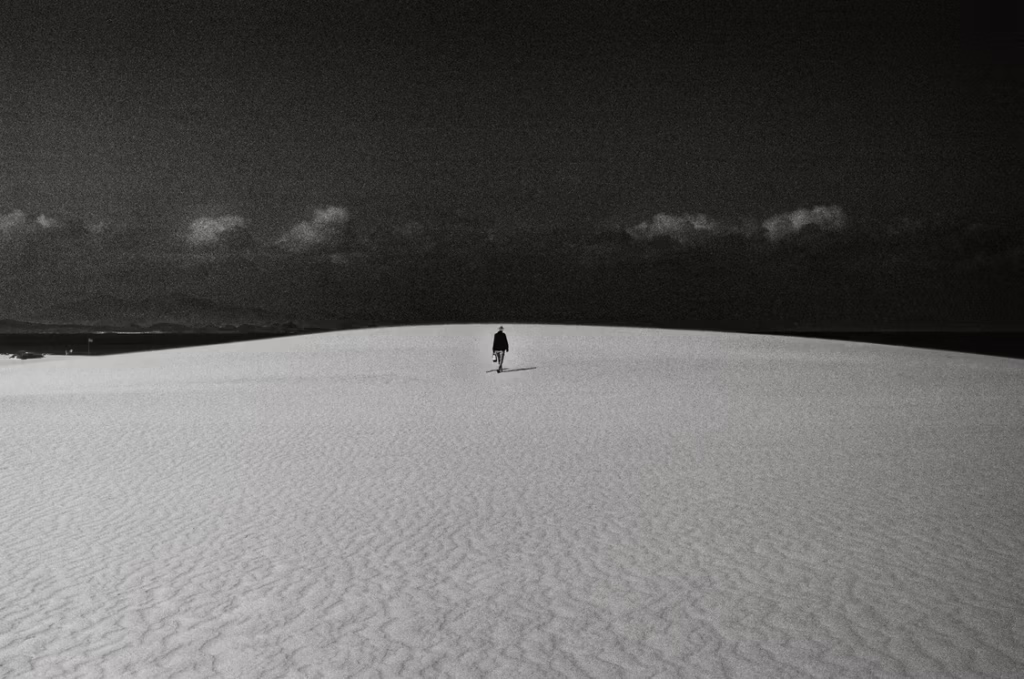
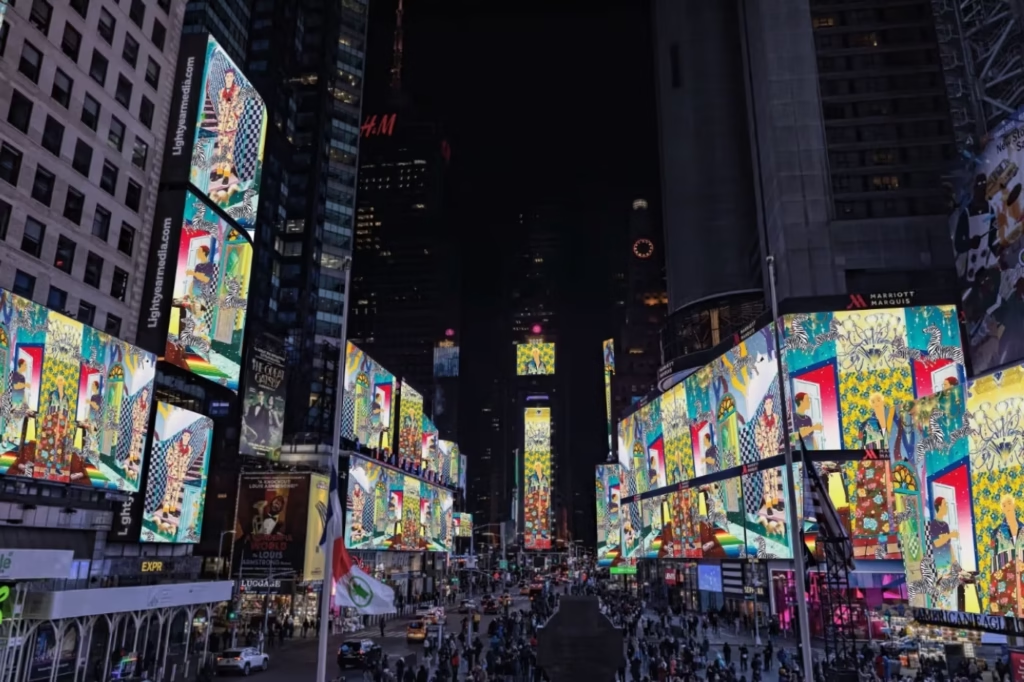
What distinguishes Consenstein’s photography is the ease people feel around him. He credits communication over gear or technique, believing the strongest photographers are those who read energy quickly and respond with intuition. That sensibility carries into his street work, where choices happen before the camera is raised and the best frame often arrives immediately. New York, he says, remains endlessly demanding and inspiring, forcing interaction and awareness the moment you step outside.
Key moments altered his trajectory, from photographing Virgil Abloh’s Met Gala afterparty to winning his first major directing bid for a footwear brand refresh. Those experiences expanded how he views authorship and scale. Now, he’s moving into longer narrative projects and commercials while preparing a street photography book drawn from tens of thousands of unpublished images shot between 2014 and 2019. Through every phase, New York remains inseparable from his identity. With family still nearby and memories etched into nearly every block, the city isn’t just a backdrop, it’s the living archive that continues to shape his work.