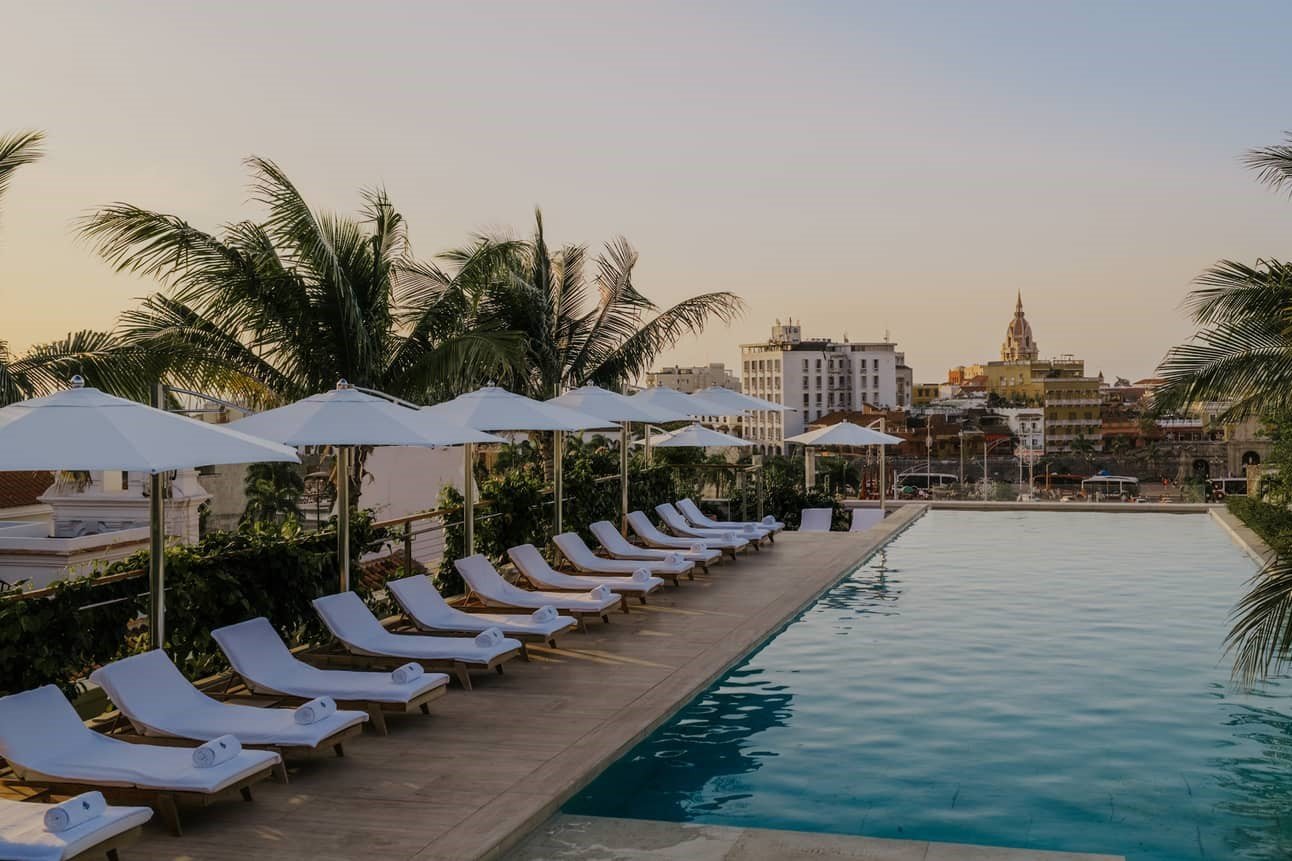
The cobblestone streets of Getsemaní have always whispered their own mythology. This neighborhood, tucked into Cartagena’s walled old city, was long the spiritual heart of colonial Colombia, a place where religious orders built imposing compounds, where music venues sprouted in converted warehouses, where street art now competes with crumbling pastel facades for attention. Now Four Seasons Cartagena has claimed one of its most significant properties, and the move signals something larger than another luxury opening: it’s a statement about how global hotel capital approaches buildings that refuse to be demolished.
The property anchors itself in a centuries-old religious complex, a sprawling structure that demanded architects and preservationists to think in layers rather than tabula rasa. Four Seasons didn’t erase what was there; instead, it threaded contemporary luxury through existing vaulted ceilings, original stonework, and spatial hierarchies designed by people who died generations ago. Performance spaces, likely concert halls or gathering rooms in a previous life, have been reactivated. The intervention is adamant without being aggressive, the kind of adaptive reuse that requires more restraint than demolition, more conversation with history than erasure of it.
For Four Seasons, the Cartagena opening reads as a deliberate geographic and philosophical move. South America has never lacked luxury hotels, but few at this scale have chosen to operate within the constraints of preservation. The brand is essentially saying: we can build the highest-end experience without starting from zero. Guests will find themselves in rooms where the bones of colonial architecture form the structure, where the neighborhood’s street-level energy (Getsemaní’s galleries, music scene, and working-class vitality) remains visible and accessible from the property. It’s not Four Seasons erasing a neighborhood to create a fantasy version of it. It’s Four Seasons accepting that the fantasy was already there, waiting.
For Four Seasons Cartagena, this opening reads as a deliberate geographic and philosophical move. South America has never lacked luxury hotels, but few at this scale have chosen to operate within the constraints of preservation. The brand is essentially saying: we can build the highest-end experience without starting from zero. Four Seasons Cartagena guests will find themselves in rooms where the bones of colonial architecture form the structure, where the neighborhood’s street-level energy of galleries, music venues, and creative spaces becomes part of the lived experience rather than a scenic backdrop.