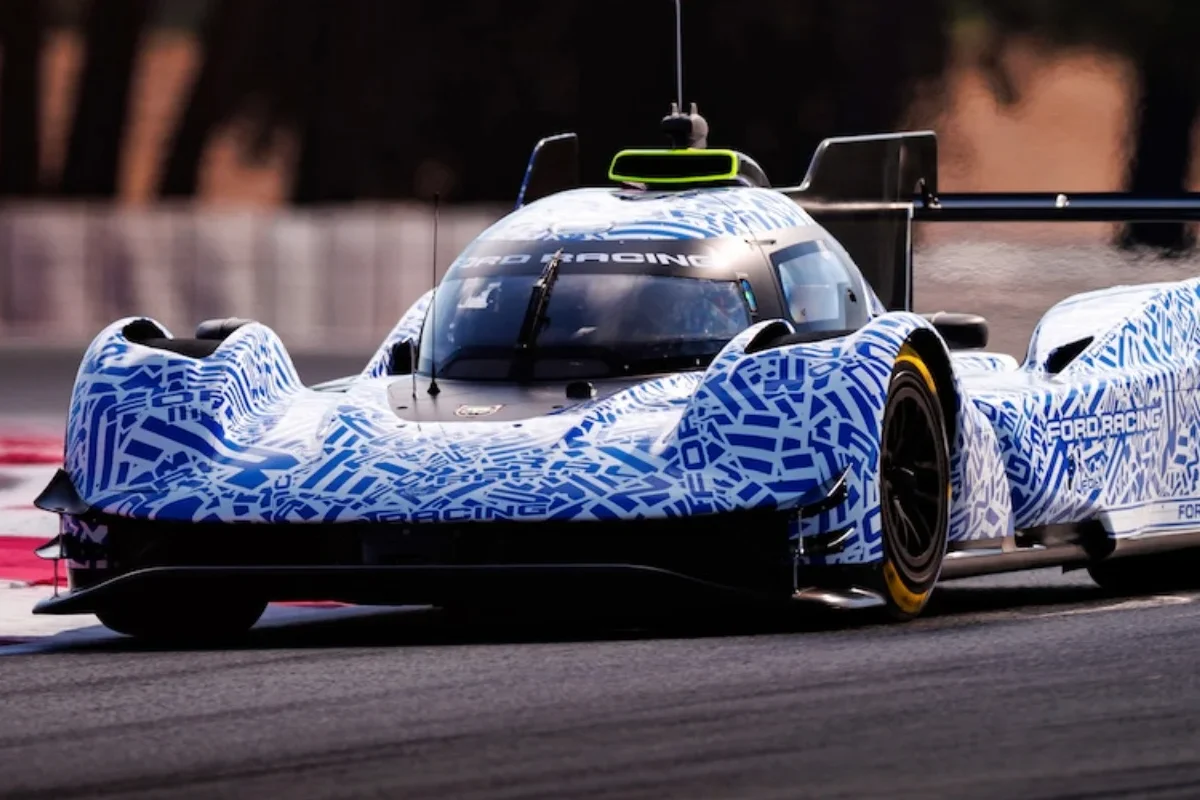
Ford Wec Hypercar: After years of silence, Ford unleashed its new LMDh prototype at Paul Ricard with serious pace and a design philosophy that could shake up endurance racing.
Ford just ended a 50-year absence from top-tier endurance racing, and the automaker isn’t easing back in quietly. The company’s brand-new Ford WEC Hypercar took to the Paul Ricard circuit for its first official test outing, marking the moment when engineering drawings and press releases became a real machine hunting lap times. The machine itself is a hybrid throwback and forward slash: it wears Ford’s iconic blue oval, references the legendary GT40 that dominated Le Mans in the 1960s, and packs a twin-turbocharged V8 engine mated to a hybrid system that screams 2027 rather than 1966.
The hypercar represents something deeper than nostalgia or a corporate rebrand. Ford’s engineering team built this thing to compete at the absolute peak of sports car racing, where milliseconds separate first place from the also-rans. The chassis combines cutting-edge aerodynamics with the kind of redundant safety systems that modern motorsport demands. What makes this moment significant isn’t just that the car runs, but that Ford returned to this arena at precisely the moment when the LMDh class has solidified as the de facto future of endurance racing. Toyota and Ferrari were already running these machines. Porsche had sealed its seat. Ford’s entry levels the field again.
Those data points become the foundation for everything from setup to pit strategy to whether the team can actually finish a 24-hour race without a mechanical meltdown. The Ford WEC Hypercar checked those boxes during its Paul Ricard debut, signaling that Ford’s return to endurance racing is serious business.