The Mies van der Rohe glass icon hosts a sweeping design history show that challenges whose story gets told in the modernist canon.
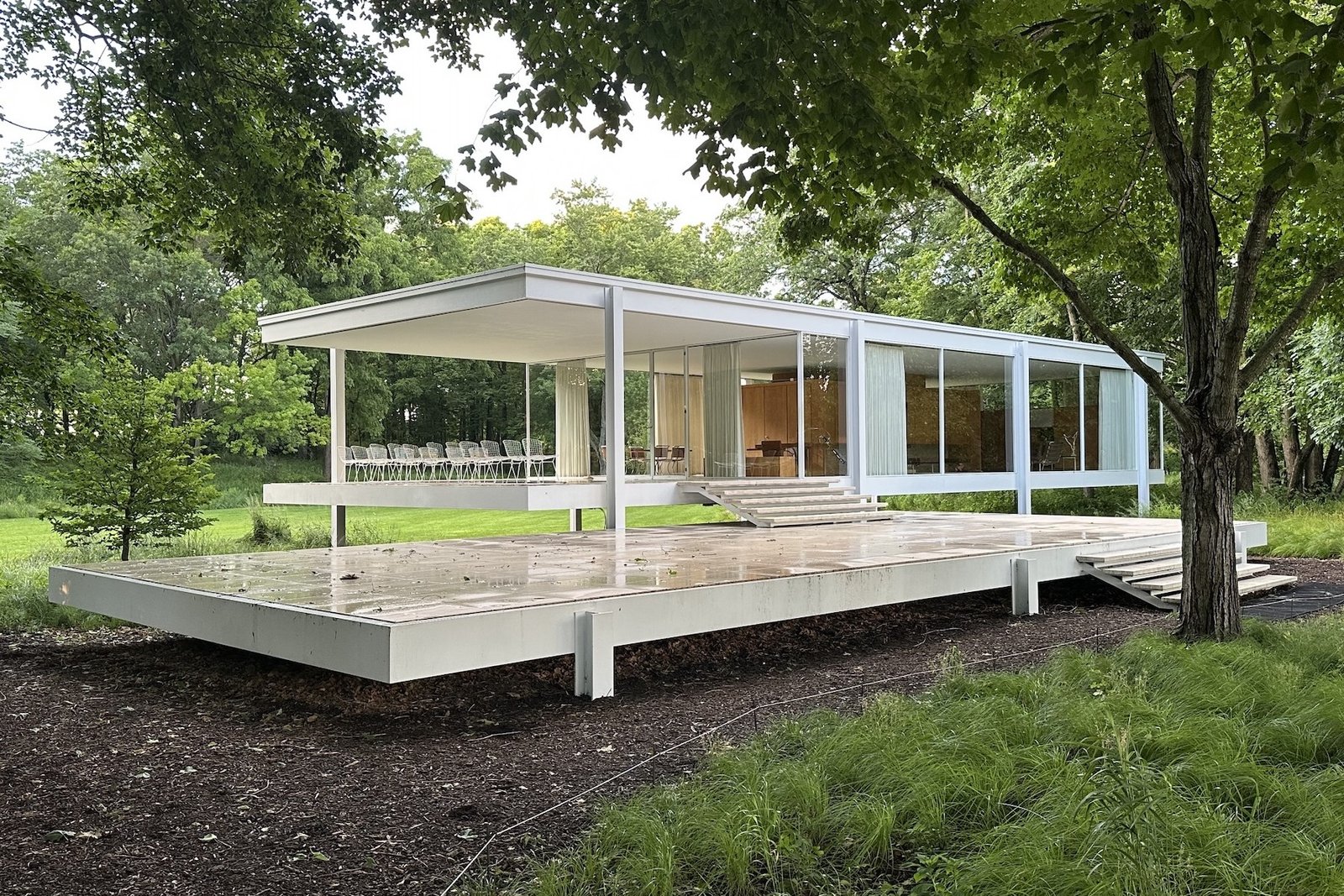
Three-quarters of a century after Ludwig Mies van der Rohe completed his crystalline masterpiece in Plano, Illinois, the Farnsworth House is stepping into a new role: cultural stage for a reckoning with architectural history. The landmark 1951 residence, defined by its skeletal steel frame and floor-to-ceiling glass planes that dissolve the boundary between interior and landscape, will host a major exhibition dedicated to Mexican modernism.
The show arrives at a moment when the design world is actively rewriting its canon. For decades, the narrative of modernism centered almost exclusively on European and North American figures, leaving a vast and equally rigorous body of Mexican architectural work sidelined or treated as regional rather than foundational. This exhibition flips that script, positioning Mexican modernist design as central rather than peripheral to the movement’s intellectual and aesthetic evolution.
The pairing is conceptually sharp: Farnsworth House itself represents the cool, reductive European modernism that dominated mid-century taste and education. Hosting an exhibition on the parallel, often more socially engaged modernist tradition that flourished south of the border creates an immediate dialogue. Visitors will encounter work that valued community, material honesty, and relationship to place alongside the iconic glass box that declared form follows function at its most austere.
The exhibition marks the 75th anniversary of the Farnsworth House while signaling a broader shift in how institutions are choosing to present design history. Rather than adding footnotes to existing narratives, the show claims a major venue and moment for a tradition that deserves equal standing in conversations about what modernism actually was and became.