A new Saudi dining concept translates equestrian heritage into a spatial experience that moves like the animals that shaped it.
Falwa Restaurant has arrived in Arabia as something between a cultural monument and a kinetic artwork. The concept takes the region’s deep historical relationship with horsemanship and distills it into dining space that doesn’t just reference that world, it embodies the movement and grace of it.
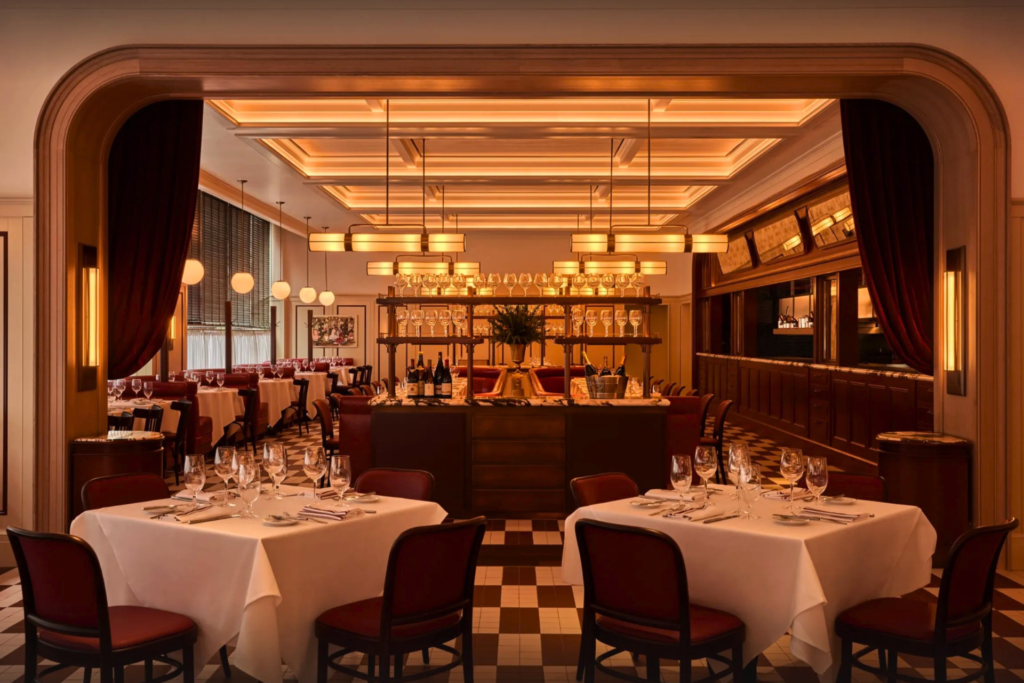
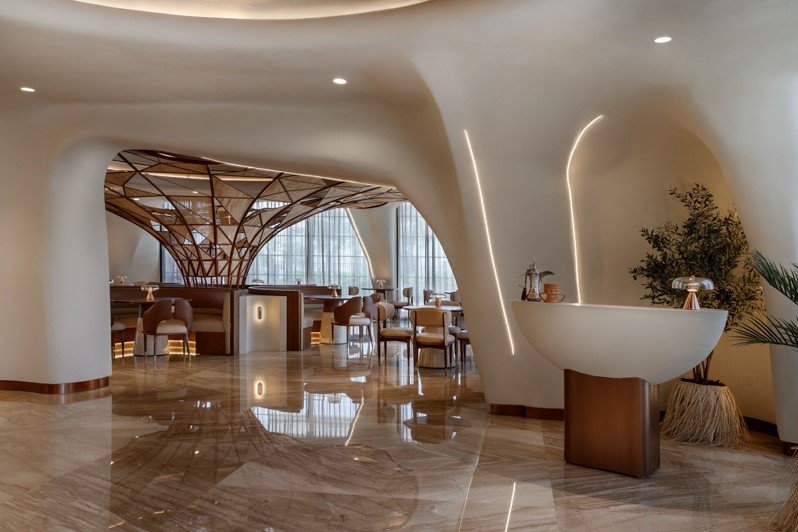
The architecture flows with intention. Rather than treating equestrian culture as a static heritage to display, the design team created interior volumes that mirror the rhythm of a gallop, the tension of a rein, the sculptural power of a horse at rest. Walls curve and sightlines shift as you move through the space. The progression from entry to table isn’t linear; it unfolds like a rider navigating terrain. Materials and spatial sequences encourage that feeling of motion even while you’re seated.
What catches most observers off guard is how the design avoids the expected visual clichés entirely. There are no horse sculptures mounted on walls, no saddle-inspired furniture, no literal representations at all. The translation is abstract and almost intellectual, which is exactly what makes it work. The restaurant speaks to horsemanship through proportion, sight-line manipulation, and the spatial grammar of control and flow. You feel the cultural reference rather than consume it as decoration.
The result is a dining venue that operates simultaneously as a design statement and a genuine expression of regional identity. It’s the kind of space that proves cultural architecture doesn’t require explicitness to carry weight.