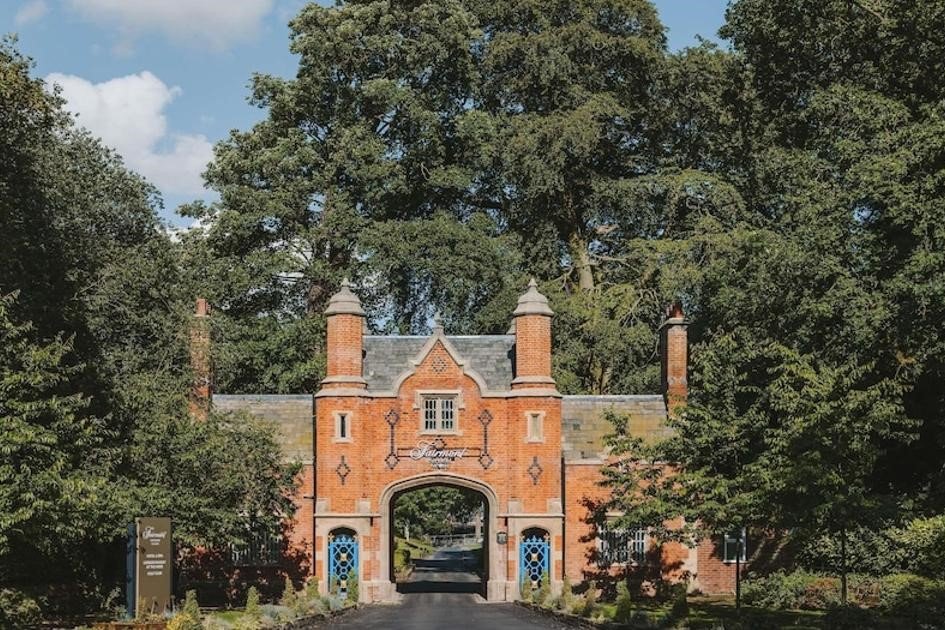
A £125 million debut signals the Swiss luxury giant’s turn toward bucolic escape over urban density.
Fairmont’s English countryside entry arrives at a cultural inflection point: after a decade of chasing dense city centers and heritage palaces, luxury hospitality is quietly retreating to acreage. The Mere, opening in Cheshire, represents something more deliberate than nostalgia. It’s a recalibration.
The property sits on 300 acres of manicured grounds, the kind of landscape that reads as accidentally timeless until you notice the fitness pavilion tucked into the tree line or the underground spa carved into the earth. Fairmont’s first standalone resort in England isn’t playing the country house card with cutesy chintz and four-posters; instead, it trades on restraint. Contemporary architecture meets centuries-old parkland. The rooms emphasize clean lines and light rather than floral maximalism. The design philosophy feels borrowed from Scandinavia, not the pages of Country Life.
What’s quietly radical here is the implicit admission that London fatigue is real. For years, every luxury brand rushed toward Mayfair, Knightsbridge, Shoreditch. The message was clear: distance equals irrelevance. But pandemic-era remote work rewired how wealthy travelers think about geography. A weekend in the Cheshire countryside, 30 minutes from Manchester, occupies a different mental space than another night in yet another five-star tower. It’s not retreat so much as recalibration, a luxury reset that happens to occur among hedgerows instead of skyscrapers.
The £125 million investment underscores that this isn’t a secondary play. Fairmont is betting that the next decade of luxury hospitality belongs to spaces that offer genuine separation, not just altitude. The Mere arrives with spa treatments, Michelin-adjacent dining, and all the infrastructure of a world-class resort, but the real product is permission to disappear into English acreage without irony or apology.