Design Mumbai 2026: South Asia’s leading international design fair returns for its third edition as the region’s creative economy reaches a critical inflection point.
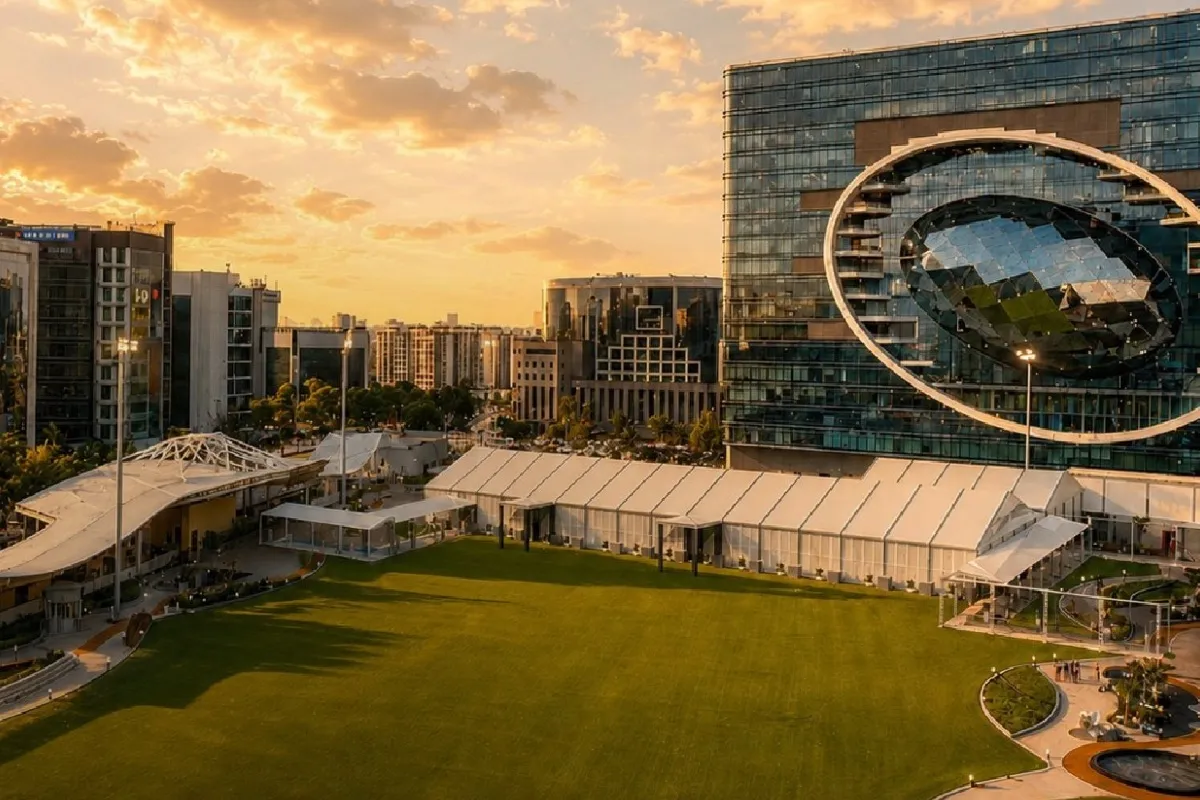
Design Mumbai is set to take over Jio World Garden from November 25 to 28, 2026, marking the third iteration of South Asia’s most significant platform for contemporary design discourse and commerce. The fair arrives at a moment when the subcontinent’s design sector is experiencing unprecedented momentum, with emerging talent, established practitioners, and international exhibitors converging on the city to shape the future of the discipline across the region.
The timing places Design Mumbai within a broader ecosystem of consequential design events unfolding globally in 2026. According to Dezeen’s Events Guide, the year will see Milan’s Salone del Mobile reassert its dominance through the city’s interconnected design districts, while Design Doha hosts its second iteration as a celebration of projects from the Middle East, North Africa, and South Asia (MENASA) region, drawing designers from 27 nations. Simultaneously, São Paulo marks the 15th anniversary of its annual design week with over 400 events distributed across eight design districts, and New York’s NYCxDesign festival enters its 14th year spanning Manhattan, Brooklyn, and Queens.
What distinguishes Design Mumbai’s positioning is its direct alignment with South Asia’s creative economy maturation. While international design weeks have long served as barometers of regional creative health, Design Mumbai operates as an accelerant for a geography that has historically remained peripheral to global design discourse. The fair’s expansion to a third edition signals both market validation and the consolidation of Mumbai as a command center for South Asian design thought and production.
The Jio World Garden location carries symbolic weight. The venue’s capacity and architectural presence anchor Design Mumbai within Mumbai’s expanding cultural infrastructure, positioning the fair as a destination event rather than a secondary offering. This placement also signals confidence from stakeholders that the fair’s audience and exhibitor base have matured beyond early adoption into sustainable market participation.
The 2026 edition arrives as other regional design events continue to signal renewed international attention to underrepresented geographies. Design Doha’s inclusion of the Arab Design Now exhibition and its deliberate focus on the MENASA region demonstrates a broader industry shift toward amplifying design narratives from outside the traditional Western cultural centers that have historically dominated international design calendars and commerce. Melbourne Design Week’s 10th anniversary programming around themes of biodiversity, circularity, and technology suggests a parallel global conversation about design’s role in addressing systemic challenges rather than functioning purely as aesthetic commodity.
For practitioners, manufacturers, and distributors operating across India and South Asia, Design Mumbai 2026 represents a consolidated moment to participate in an event framework that did not exist a decade prior. The fair’s growth trajectory reflects both the appetite within the region for formal design platforms and the increasing visibility of South Asian design practitioners internationally. The November dates position the fair outside the traditional spring design season anchored by Milan and New York, potentially offering exhibitors and visitors a less congested calendar window while maintaining proximity to year-end production and retail cycles.
The convergence of Design Mumbai 2026’s third edition with Design Doha’s deliberate regional positioning and global design weeks’ renewed focus on non-Western creative economies suggests 2026 will function as a testing ground for how the international design establishment incorporates and celebrates geographies that remain underrepresented in historical design narratives and market structures. For South Asia specifically, Design Mumbai 2026 appears less about aspirational inclusion in existing frameworks and more about the consolidation of an independent creative economy that commands attention on its own terms.
Sources: dezeen.com, dezeen.com