Michael Rider’s luxury house plants its flag on a working-class sneaker, and the message is impossible to miss.
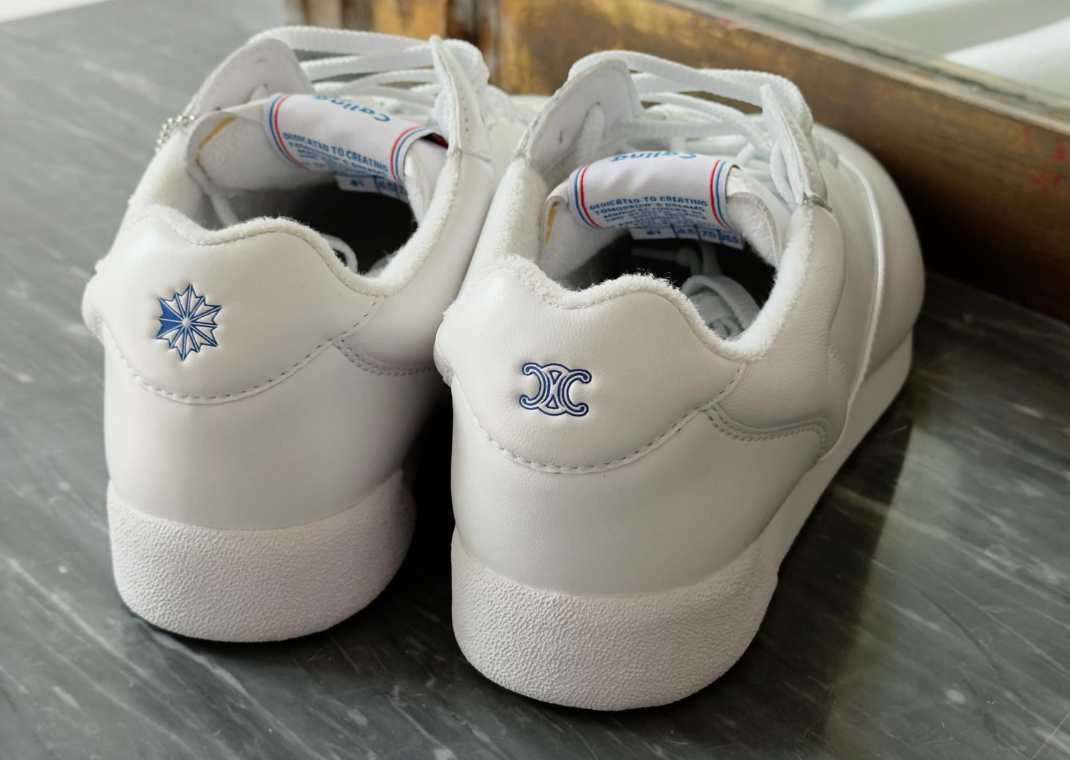
The Freestyle doesn’t need validation. The rubber-soled, ankle-strapped icon has survived three decades on the court and in the streets through sheer utility, never once chasing cool. So when Celine emerged from its Left Bank offices this season to slap its name across Reebok’s most pedestrian silhouette, the move read less like a rescue mission and more like surrender. The fashion establishment was watching, and that’s exactly the point.
Michael Rider’s crew dialed back the hallmarks that usually signal luxury intervention: no exaggerated proportions, no precious materials deployed just to justify a price bump, no architectural deconstruction for its own sake. The partnership stays faithful to the Freestyle’s DNA, a choice that feels almost radical in an era when collaboration often means bloat. Celine’s minimalist sensibility lands here not as constraint but as clarity. Clean leather, subdued branding, proportions that work at human scale. The sneaker doesn’t transform into something it isn’t. Instead, it gets the attention of people who never looked at Reeboks in a deliberate, considered way before.
Paris Fashion Week erupted over this because the collision point matters. High fashion has spent decades mining sportswear authenticity while keeping distance from actual utility. This partnership erases that gap. The Freestyle remains accessible, remains honest about what it is, and now it carries the institutional weight of a house that doesn’t do democratization lightly. It’s not that luxury is becoming casual. It’s that the Freestyle doesn’t have to apologize for being made for everybody, and Celine isn’t trying to fix that. That restraint is what’s actually radical.