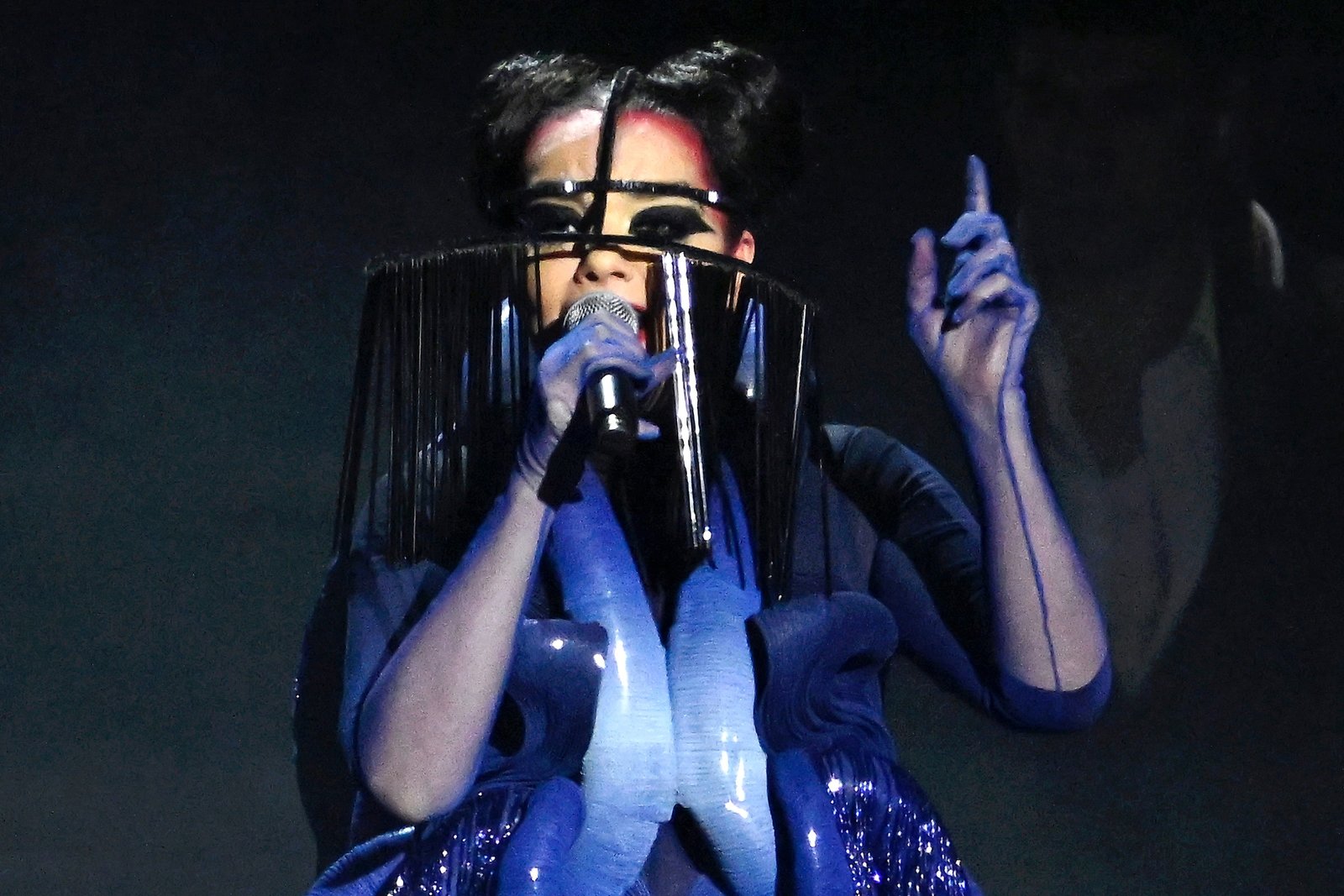
BjöRk Orkestral: The Icelandic artist transforms her iconic catalog through orchestral arrangements in a career-defining new album.
Björk is reshaping her artistic legacy with the arrival of Orkestral on November 27, a landmark project that positions the Icelandic icon’s catalog within sweeping orchestral frameworks. The record represents a deliberate pivot toward cinematic grandeur, moving away from the electronic and experimental textures that have defined much of her recent work.
The album marks a significant moment in Björk’s nearly four-decade career. Rather than creating entirely new compositions, the project takes her existing body of work and reconstructs it through the lens of classical instrumentation and symphonic arrangement. This approach sits apart from standard reissues or acoustic reimaginings. The orchestral rendering fundamentally reshapes how these songs communicate, stripping away electronic processing in favor of strings, woodwinds, brass, and percussion that operate at a scale beyond Björk’s typical sonic palette.
Björk Orkestral: A Compositional Reinvention
The conceptual foundation of Orkestral rests on a simple but ambitious premise: examining what happens when Björk’s distinctive melodic voice and harmonic sensibility are presented without the mediation of production technology. Her material, often constructed through layered vocals, synthesizers, and digital effects, becomes something altogether different when rendered by orchestral instruments. The transformation illuminates compositional choices that may have remained obscured in their original contexts.
Björk has long been fascinated with classical music and orchestral writing. Her previous work has occasionally incorporated strings and brass sections, but never at the scale or consistency that Orkestral appears to pursue. The project signals a maturation of interests that have simmered throughout her catalog, from the string arrangements on Post through her collaborations with composers like Arca and references to Johann Sebastian Bach and Peder Nørregård-Nielsen in her recent interviews.
Timing and Legacy Context
The November 27 release date places Orkestral in a calendar that already featured significant retrospective and anniversary releases across the industry. According to Consequence, 2026 brought reissues and archival projects ranging from George Martin orchestral recordings to anniversary editions of landmark albums from Bad Brains and Motörhead. Björk’s entry into this space feels less nostalgic and more forward-facing, however, using orchestration not to preserve past work but to reinterpret it through evolved artistic vision.
This timing also coincides with broader industry attention to orchestral reimagining as a serious artistic pursuit. The presence of projects like the Behemoth Collective’s original motion picture soundtrack and various classical reissues suggests a market moment where orchestral interpretation reads as culturally significant rather than purely commercial. Björk’s participation elevates the practice from novelty to statement.
The Visual and Experiential Dimension
While Orkestral exists as a recorded album, its title carries visual and spatial implications. The project appears designed to function both as intimate listening experience and as a potential staging ground for live performance. Björk has consistently used album releases as catalysts for elaborate visual presentations and concert conceptualization. An orchestral album necessitates reconsideration of how these songs might move through performance spaces, how the artist might occupy stages designed for both solo performers and ensemble work.
The orchestral arrangement also presents practical questions about how Björk will present these songs in live contexts. Full orchestra tours require logistical commitments, venue partnerships, and financial structures that differ substantially from her typical touring model. Whether Orkestral serves as a recorded artifact, a staging ground for select performances, or a full touring enterprise remains to be seen in the weeks following its release.
Whether Björk Orkestral serves as a recorded artifact, a staging ground for select performances, or a full touring enterprise remains to be seen in the weeks following its release. What is clear is that the album signals a maturation of classical interests that have shaped her artistic trajectory, positioning Orkestral as both a definitive statement and an invitation to experience her most iconic material anew through symphonic reinterpretation.