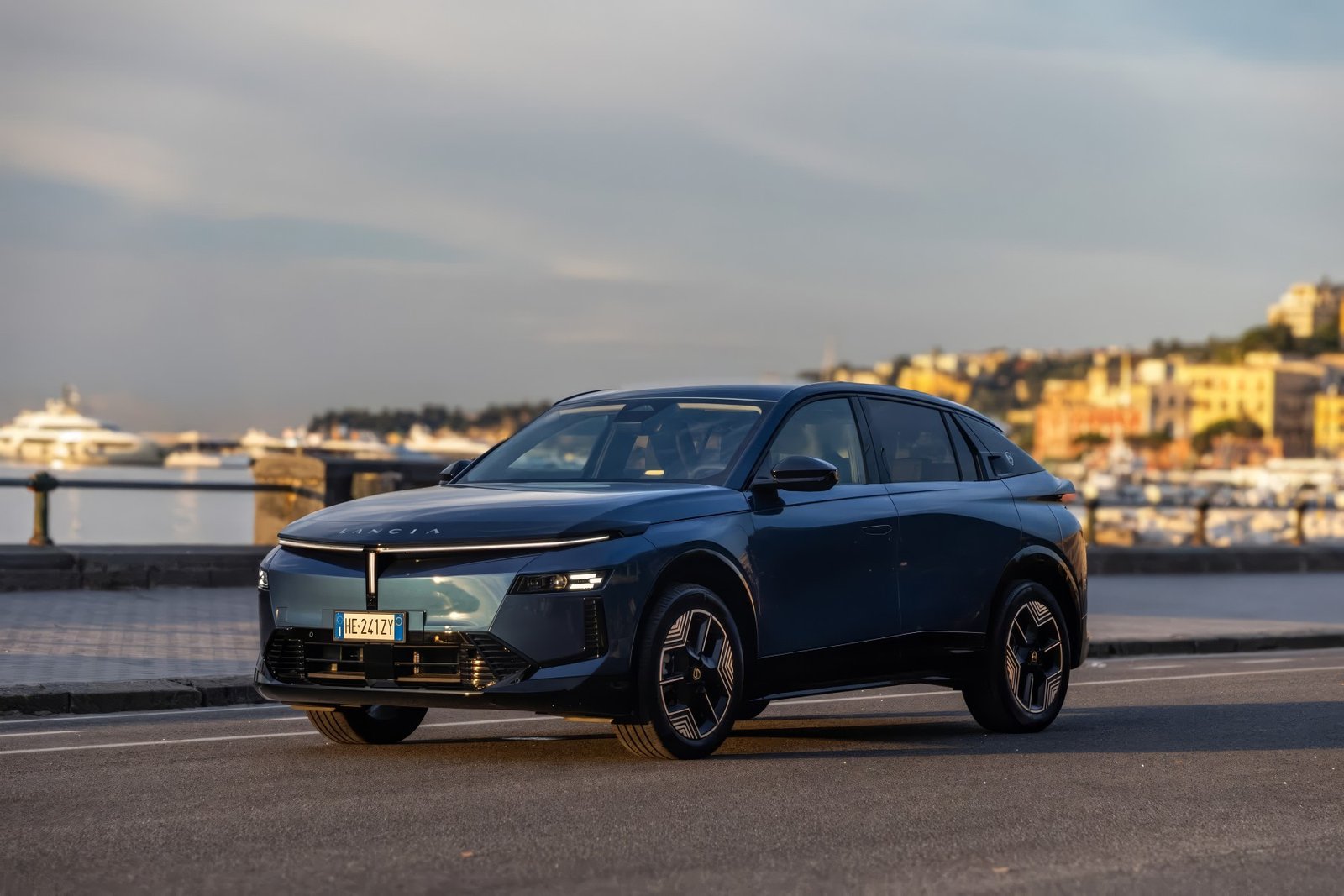
Lancia Gamma Ev: Fifty years after the original icon, Lancia is reborn as a luxury electric crossover with a heritage performance variant that takes cues from rally history.
On May 26, 2026, Lancia pulled the wraps off the Lancia Gamma EV, a compact luxury crossover SUV that marks the Italian marque’s most significant moment in decades. The timing is deliberate. This year marks two milestones simultaneously: the 50th anniversary of the original 1976 Gamma, the nameplate that defined a generation of European sophistication, and Lancia’s own 120th anniversary. The new Gamma isn’t a nostalgic callback or a retro exercise. It’s a full recharged entry into the EV era, arriving in November at a moment when legacy European brands are racing to prove they can still move culture forward.
Built in Melfi, Italy, the new Gamma sits on Stellantis’ STLA Medium platform, a modular architecture designed to support multiple powertrain configurations. That flexibility means the Gamma lineup spans battery electric vehicles, plug-in hybrids, and mild hybrids, giving buyers options depending on their market and charging infrastructure. This isn’t a one-note EV play. Lancia is hedging its bets across the electrification spectrum, understanding that the European transition to full battery power remains uneven across regions.
Lancia Gamma EV Returns as a Statement
What caught enthusiasts off guard was the July 6 reveal of the Lancia Gamma HF Integrale, a performance-focused variant that channels the brand’s legendary rally heritage. The HF nameplate carries serious weight in automotive culture. When Lancia last deployed HF (High Fidelity, though enthusiasts read it as pure aggression), it was attached to some of the most feared rally machines ever built. The original Lancia Delta Integrale, with its symmetrical all-wheel drive and turbocharged four-cylinder, became a cultural artifact of the 1980s and early 1990s. Bringing that nameplate back on an electric crossover signals that Lancia isn’t interested in being a footnote. It’s declaring intent.
The HF Integrale got its official debut two months later at the 2026 Turin Auto Show on September 11, during Lancia’s 120th anniversary celebrations. Turin, not some international motor show circuit, was chosen as the stage. That’s deliberate geography. Turin is where Fiat, Lancia, and Italian automotive innovation have roots deeper than most brands can claim. Making the HF Integrale’s coming-out happen there, in the presence of journalists and executives gathered to celebrate 120 years of Lancia, was a statement about where this car belongs in the cultural conversation.
Production, Availability, and Market Reality
Production of the Gamma, alongside its STLA Medium platform siblings the DS No. 7 and DS No. 8, happens at the Melfi factory in southern Italy. That’s crucial context. Melfi isn’t a secondary plant or a low-cost production hub. It’s a Stellantis facility that produces other premium European product. Placing the Gamma there, rather than outsourcing or moving production elsewhere, signals confidence in the brand and the product. Lancia is positioning this car as a serious Italian premium player, not a budget alternative wearing an old name.
November’s launch window means the Gamma arrives during the final stretch of 2026, hitting dealerships and customer driveways just as the automotive industry enters its most critical year yet. By then, the competitive landscape around luxury electric crossovers will have crystallized. BMW’s iX will be established, Mercedes’ EQE will be in market, and Tesla will have refined its pricing and positioning. Lancia arrives into a crowded segment with product that appeals to a specific sensibility: buyers who care about European design DNA, Italian craftsmanship, and the idea that an electric car doesn’t have to feel cold or corporate.
The HF Integrale variant exists in that liminal space between heritage and future. It acknowledges that driving enthusiasts still exist in a world of autonomous vehicles and silicon valley design. By pairing the HF nameplate with modern EV architecture, Lancia is making a cultural bet: that nostalgia for mechanical rallying can coexist with acceptance of electric powertrains. Whether that gamble pays off depends on execution, pricing, and whether the global market is ready to care about Lancia again after years of absence from most markets outside Europe and Turkey.
What most observers are missing is that this Gamma revival isn’t really about reviving the 1976 original. It’s about Lancia proving it can design a car that appeals to 2026 luxury sensibilities while carrying 50 years of accumulated brand equity. The HF Integrale does that work symbolically. The multimodal powertrain strategy does it practically. November will tell us whether anyone actually wants to buy it.