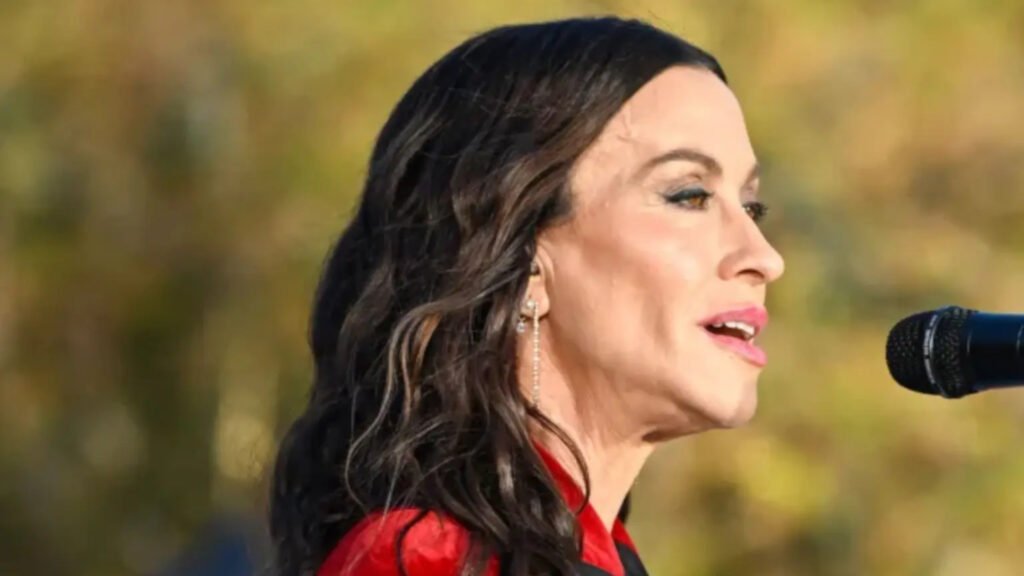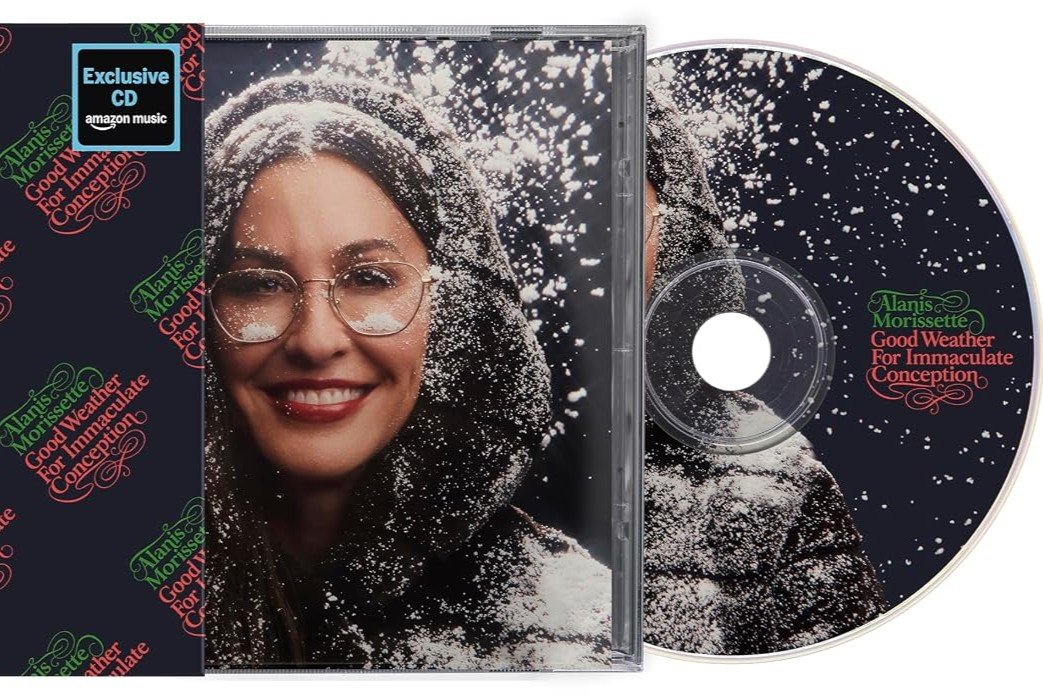
Alanis Morissette Christmas Album: The alt-rock icon enters the holiday canon with 14 tracks, two originals, and a guest list that includes Brandi Carlile, Steve Martin, and a UK trans choir.
Alanis Morissette just made a move nobody quite expected: she’s released a full-length Christmas album, and it’s a legitimately ambitious one. Called “Good Weather for Immaculate Conception,” this new Alanis Morissette Christmas album dropped November 6 through Epiphany/Virgin Records as a 14-track collection that sits somewhere between reverent holiday tradition and Morissette’s distinctly personal artistic vision. For an artist who built her reputation on confessional alt-rock anger and introspection, a Christmas record might seem like an odd pivot. But the guest roster and track selection suggest she’s not interested in coasting through festive covers.
How Alanis Morissette’s Christmas Album Blends Holiday Standards With Her Vision
The album moves through terrain that feels both familiar and complicated. It includes readings of the expected canon: “O Holy Night,” “What Child Is This?,” “Ave Maria,” and “Little Drummer Boy” all show up, alongside Joni Mitchell’s “River” and Wham!’s “Last Christmas.” These aren’t curiosities plucked at random. Mitchell’s “River,” in particular, carries the weight of wintry melancholy that most Christmas albums actively avoid, which tracks with how Morissette has always approached her catalog. But the album doesn’t lean entirely on covers. Two original compositions anchor the project: “To an Empath at Christmas Time” and “Christmas on the Dancefloor,” which suggest she’s thinking about how holiday tradition intersects with her own emotional and creative language. The “Dancefloor” track especially hints at something less reverent than the album’s title might suggest.
A Collaboration Strategy Built on Unexpected Guests
What immediately sets this apart from standard celebrity Christmas records is who Morissette invited into the studio. Brandi Carlile shows up on “Beautiful Star of Bethlehem,” a pairing that makes immediate sense given both artists’ ability to draw emotional depth from material that could easily flatten under less careful hands. Steve Martin, the actor and banjo player, duets with Morissette on the same track, adding a layer of cultural weight that moves beyond the typical guest-vocalist logic. Martin Short handles “Merry Christmas,” Joy Oladokun takes “Silent Night,” and Amythyst Kiah appears on “Momma Mary.” That’s a cross-genre lineup that refuses easy categorization.
The most culturally specific choice might be the inclusion of Trans Voices, a UK-based professional trans choir, on “O Tannenbaum.” In an era when holiday music is typically the most conservative corner of the music industry, this feels like a deliberate statement about who belongs in the Christmas conversation. It’s not performative inclusion tacked onto a traditional project. It’s built into the tracklist as a core part of how Morissette is thinking about the album’s emotional and social landscape.
The Detail That Reveals the Whole Strategy
The thing most listeners will probably miss: this album exists at a moment when artist-led Christmas records have become increasingly rare. Major label Christmas albums tend to come from either legacy artists doing a contractual obligation or younger artists seeking adult contemporary radio play. Morissette released this through Epiphany/Virgin, which suggests some label infrastructure, but the guest list and original compositions indicate she’s not chasing radio airplay. “To an Empath at Christmas Time” is a title that could only come from an artist still thinking about emotional specificity rather than broad appeal. She’s not trying to become a holiday standard herself. Instead, she’s using the Christmas album format to explore something about how tradition, vulnerability, and community might coexist, which is a fundamentally different project from what most artists attempt in this space.
Morissette’s career has always been defined by her refusal to stay in one lane. She went from alt-rock superstardom to acting to producing to advocating publicly for mental health. The Alanis Morissette Christmas album isn’t a detour from that logic. It’s a continuation of it, proof that even in the most traditional musical format, an artist with something genuine to say can reshape the conversation entirely.
Sources: inmusicblog.com