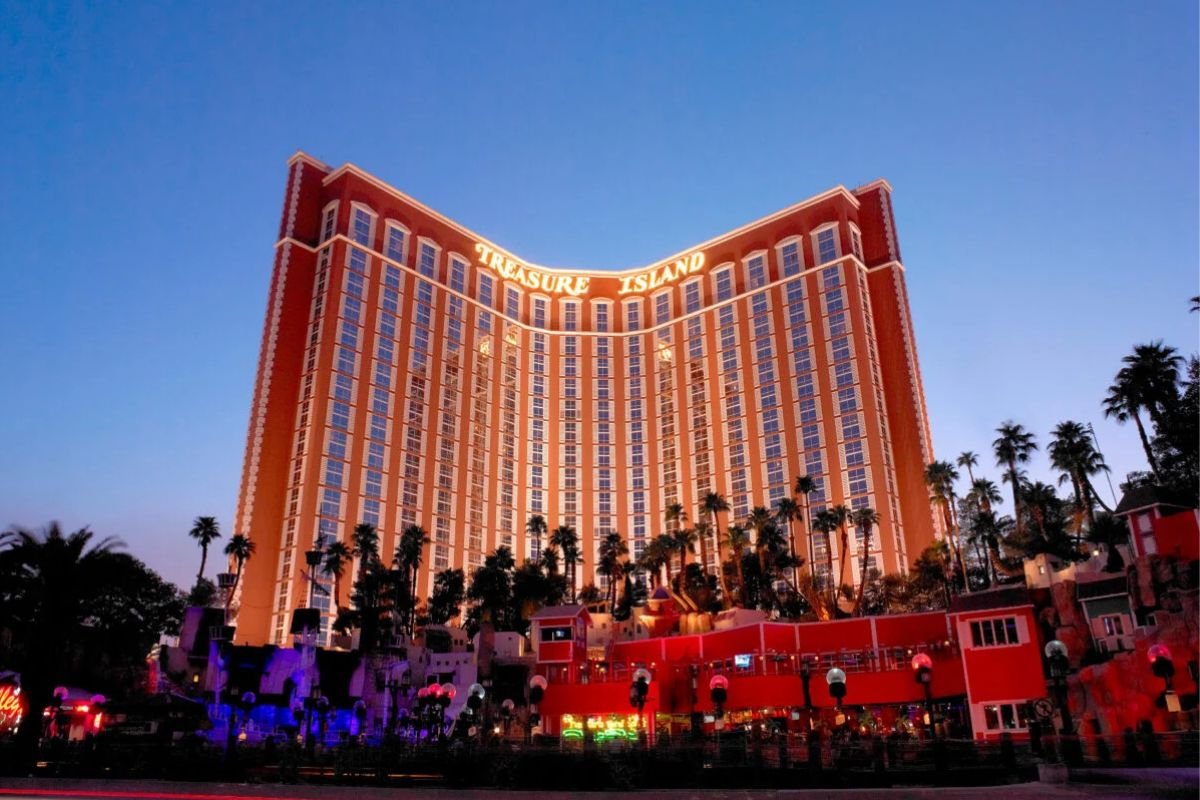
The French hospitality empire’s first Las Vegas property signals a seismic shift in how the Strip operates.
For decades, Las Vegas’s casino-hotel ecosystem was locked between a handful of domestic mega-operators. That cartel just cracked. Accor, the Paris-headquartered hospitality conglomerate that already owns thousands of properties worldwide through Sofitel, Nobu Hospitality, and Fairmont, is now officially a Strip player after acquiring Treasure Island this week. It’s not a small footnote in Vegas history, it’s a structural rupture.
What makes this move genuinely disruptive isn’t just scale. Accor runs luxury, lifestyle, and ultra-luxury brands simultaneously. That means Treasure Island, historically a mid-tier resort with aging infrastructure and a pirate-themed aesthetic locked in 1993, is about to be recalibrated. The company could strip the property down and rebrand it entirely under one of its prestige labels, or, more likely, position it as a lifestyle-focused counterpoint to the mega-resorts that dominate the north Strip. Either way, expect renovation budgets that the previous operator either couldn’t justify or wouldn’t attempt.
For the Vegas market specifically, Accor’s arrival changes negotiation power. Major casino operators like MGM Resorts and Caesars Entertainment have controlled room inventory, convention pricing, and labor dynamics for years. A genuinely global hospitality player with zero sentimental attachment to Vegas tradition brings operational discipline and international capital that forces the incumbents to actually compete on service quality, not just slot machine rake. That’s genuinely new.
Whether Treasure Island becomes a luxury play, a design-forward lifestyle property, or something between, Accor’s move announces that the Strip’s old guard isn’t untouchable anymore. Vegas hospitality just stopped being a closed system.