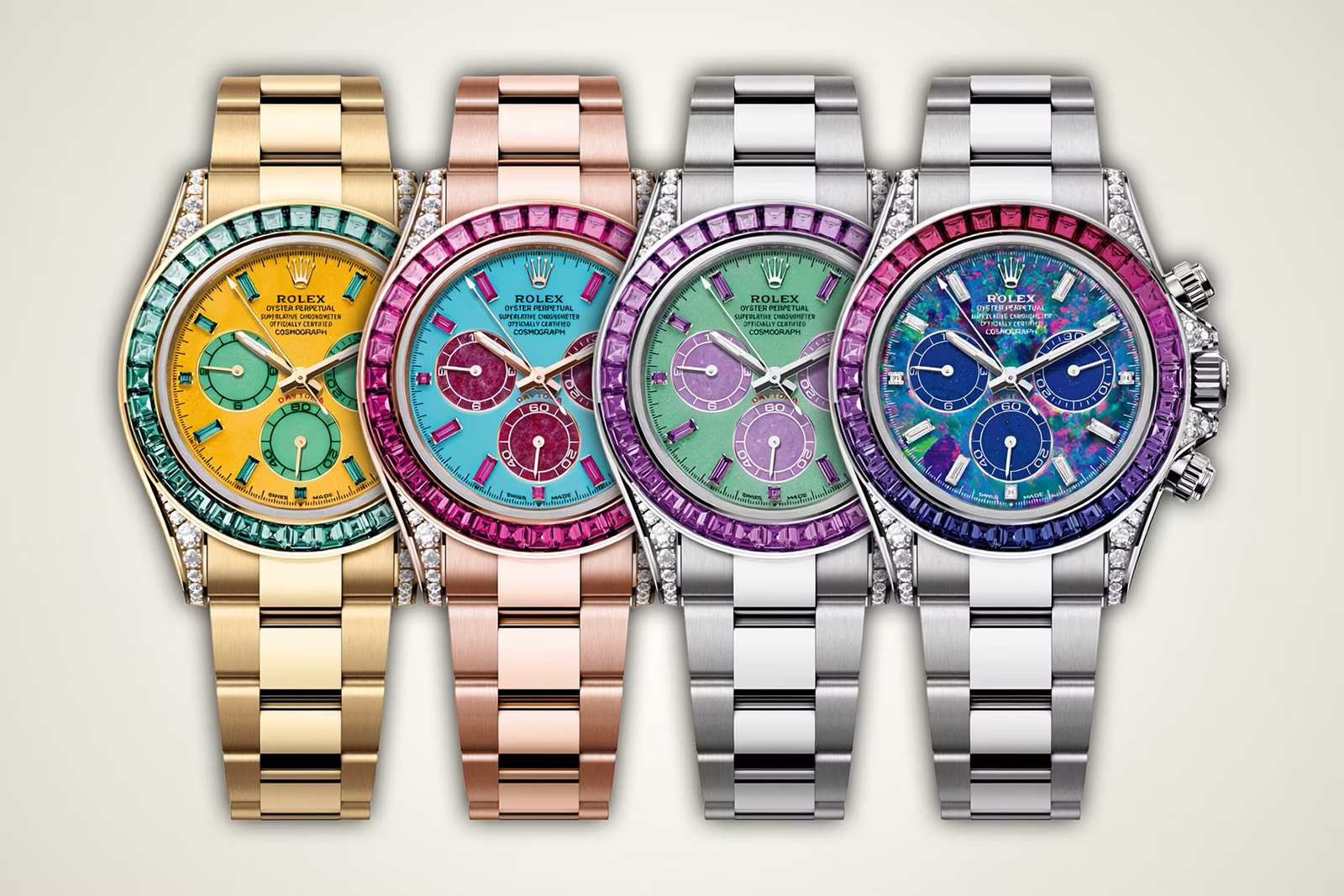
Rolex Four Seasons Daytona: The Four Seasons collection shatters Rolex’s golden rule about custom one-offs, signaling a seismic shift in how the watchmaker thinks about exclusivity.
For seventy years, Rolex has built its entire empire on the principle that watches are products, not art objects. That philosophy just fractured with the Rolex Four Seasons Daytona collection. The brand’s refusal to accommodate collector whimsy, to produce bespoke variations, or to acknowledge that someone might want something slightly different from the next person’s has been armor and strategy rolled into one. The Four Seasons collection releases in 2026 as four individual Cosmograph Daytona chronographs, each crafted in a different precious metal, each tied to a distinct seasonal aesthetic.
The collection’s genius isn’t novelty for novelty’s sake. Each watch corresponds to a season with deliberate material and design choices that read as earned rather than gimmicky. The precious-metal construction across all four pieces ensures they’re not experimental or limited in the way that contemporary luxury brands peddle exclusivity. They’re permanent, collectible, and undeniably rare. For a brand that has historically treated customization as heresy, this represents a controlled but unmistakable step toward the notion that ultra-high-net-worth collectors deserve recognition. The Daytona, already a watch with mythic scarcity built into its DNA, becomes something more complicated: a platform for personal expression within Rolex’s historically rigid framework.
What makes this moment genuinely significant isn’t that Rolex suddenly cares about your feelings. It’s that the company is acknowledging the secondary market’s reality and the power of the Rolex Four Seasons Daytona to reshape expectations. Steel Daytonas trade for five, six, sometimes seven figures. The waitlists, the secondary market premiums, the mythology surrounding simple steel sports watches, Rolex has finally conceded that these forces are real, and that a controlled, precious-metal response legitimizes them rather than diminishing the brand.