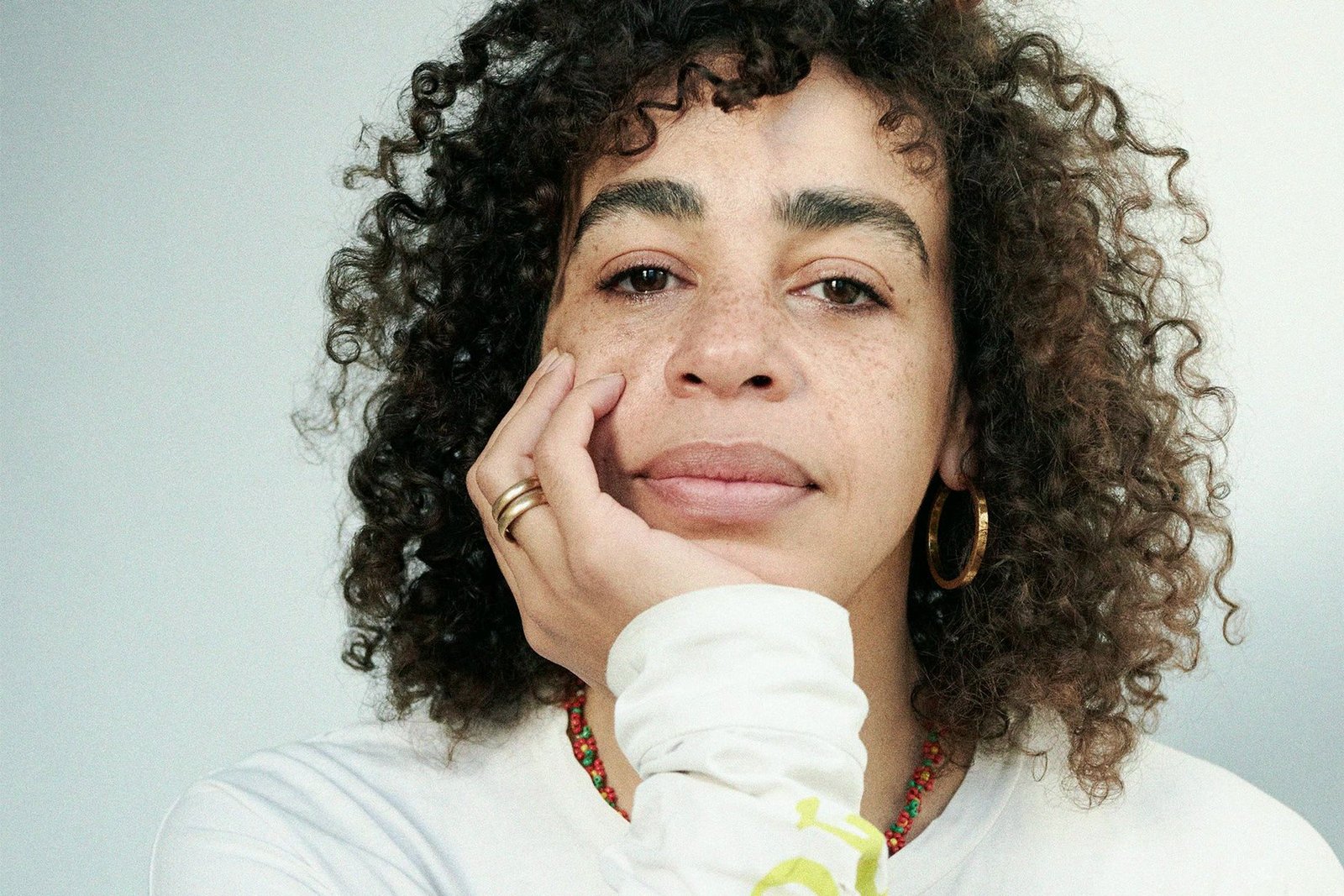
Martine Rose Balenciaga: The founder of one of Britain’s most influential independent labels takes the helm at Kering’s storied Paris house, marking a seismic shift in how legacy fashion recruits its next guard.
Martine Rose’s appointment as Balenciaga’s creative director, effective November 16, marks a seismic shift in luxury fashion’s power structure. Rose, who started her eponymous label in 2007 and spent nearly two decades building it into one of London’s most distinctive and intellectually rigorous design voices, now inherits the role after Pierpaolo Piccioli’s departure from one of Paris’s oldest heritage houses. This is not a sideways move or a stepping stone. This is a British streetwear native, someone whose brand emerged from the same London creative ecosystem that birthed Palace, Corteiz, and Trapstar, now steering one of the most historically significant silhouettes and techniques in European fashion.
Balenciaga’s appointment of Rose comes at a moment when London-based designers are systematically moving into the top creative posts at Paris and global heritage houses. Grace Wales Bonner, another London designer (she co-founded Wales Bonner in the same streetwear-adjacent sphere), recently took on a top role at Hermès. These aren’t tokenistic hires or diversity plays announced in press releases and then quietly sidelined. These are fashion’s largest conglomerates betting their brand DNA on the sensibility that emerged from skate shops, MySpace networks, and borrowed sofas across East and South London. Rose herself acknowledged the weight of the moment in her statement about the appointment: “It is a true privilege to be appointed Creative Director of Balenciaga, a House with an extraordinary heritage and a fearless creative spirit. Balenciaga has been shaped by remarkable creative talents before me. I am committed to honouring this legacy and look forward to creating the next chapter in this rich and beautiful story.”
How Martine Rose Built a Label Outside the System and Redefined Luxury
Rose’s brand, like most of the significant London labels now entering major luxury positions, was never designed to follow the traditional apprenticeship path through LVMH or Kering ateliers. The London streetwear cohort, which includes Corteiz (founded by Clint Ogbenna in 2017 from his sister’s Stamford Hill flatshare), Palace (started in 2009 by Lev Tanju and Gareth Skewis after they met in the Southbank skate scene), and Trapstar (launched around 2006 by Mikey Aryee, Lee Langaigne, and Will Thomas with T-shirts hand-delivered in pizza boxes and washing powder boxes), built their brands outside traditional distribution and institutional gatekeeping. They operated in password-locked drops, pop-ups announced via GPS coordinates, and the skate shops that served as cultural incubators. This created a generation of designers who understood tension, restraint, and cultural specificity in ways that fashion’s older guard often lacked.
Rose’s appointment represents something deeper than simply hiring a name with credibility among younger consumers. It’s an acknowledgment that the aesthetic and strategic intelligence required to build a sustainable brand in an era of fragmentation, direct-to-consumer distribution, and cultural fluidity is precisely what the independent London designers possess. These are people who learned to navigate changing consumer behavior, global markets, and shifting taste hierarchies without the safety net of conglomerate infrastructure. When Balenciaga, a house founded in 1917 by Cristóbal Balenciaga in San Sebastián, Spain, needs to evolve in 2026, it’s not looking to hire a designer trained in the conventional luxury factory system. It’s hiring someone from outside the building entirely.
What This Moment Signals About Luxury’s Structure
The timing of Rose’s appointment, alongside Wales Bonner’s move to Hermès, reflects a broader recalibration in how conglomerates evaluate creative leadership. For decades, the luxury industry operated on a circuit: designers would apprentice, move through several houses, build a reputation, and eventually land at a top post. The movement was largely contained within the system. What’s happening now is a direct recruitment from the independent sphere, the place where the most culturally engaged designers are actually working. It suggests that Kering, which owns Balenciaga as part of a portfolio that includes Gucci, Alexander McQueen, and Bottega Veneta, recognizes that the next era of luxury requires the sensibility and discipline that only comes from building something with your own hands, without institutional backing.
London’s streetwear cohort, the ecosystem from which Rose emerged, has also demonstrated an ability to work at scale with major partners while maintaining creative autonomy. Palace, for instance, has held collaborations with adidas since 2014 and Gucci in 2022. The brand’s first Nike collection dropped in October 2025, and that same partnership involved converting a Victorian bathhouse at 33 Manor Place, Elephant and Castle into a free public skatepark with an underground football pitch, which opened on 11 November 2025. These are brands that understand how to move between independent credibility and large-scale commercial partnership without losing core identity. Rose’s move to Balenciaga carries that same DNA: someone who knows how to maintain intellectual integrity within institutional frameworks, because she’s already done it.
The timing of Martine Rose’s appointment to Balenciaga, alongside Grace Wales Bonner’s move to Hermès, reflects a broader recalibration in how conglomerates evaluate creative leadership. For decades, the luxury industry operated on a circuit: designers would apprentice, move through several houses, and eventually land at a top post. The shift toward Martine Rose and other London streetwear natives signals that the future of luxury creative direction lies not in traditional apprenticeship pathways, but in the independent vision and market intelligence cultivated outside the conglomerate system.