Marimekko Tokyo Retrospective: Helsinki’s design powerhouse opens a sweeping exhibition of 60 dresses, archive textiles, and factory footage as the Finnish brand hits peak cultural momentum in Japan.
The Marimekko Tokyo retrospective brings the Finnish design house’s complete archive to Japan for the first time, mounting an exhibition that traces six decades of printmaking innovation through fashion, textiles, and documentary material. The show features 60 dresses spanning the brand’s history alongside archival fabrics and a film component documenting the Helsinki factory’s production methods and creative process. The exhibition positions Tokyo as a crucial testing ground for how Western modernist design circulates through Asian markets, and arrives as Marimekko experiences a surge in cultural visibility across Japan’s fashion and home goods sectors.
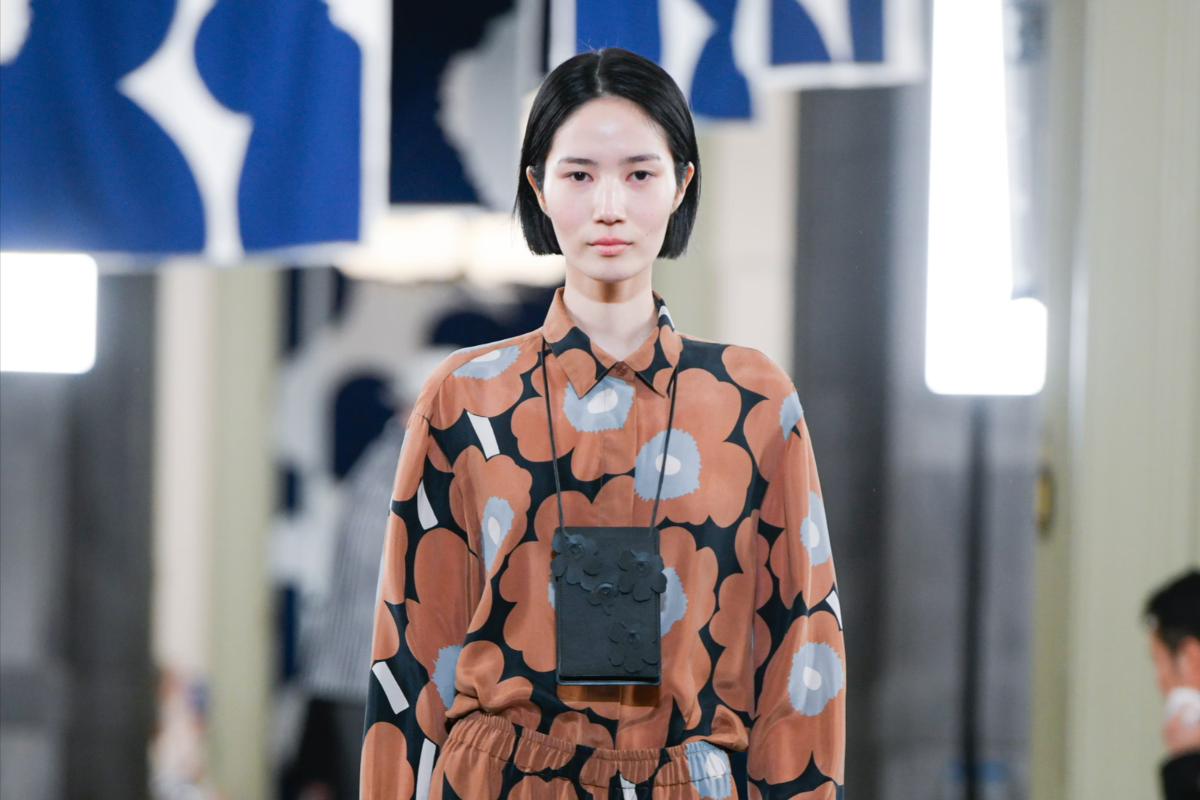
The collection centers on Marimekko’s foundational relationship with pattern and its radical approach to scale. The dresses function as three-dimensional canvases for the brand’s most iconic prints, including the Unikko pattern that became a symbol of design rebellion when founder Armi Ratia created it in defiance of a critic’s claim that the brand couldn’t design florals. By displaying garments chronologically alongside the source textiles and production documentation, the exhibition creates a narrative around Marimekko’s philosophy of functional beauty. The factory film offers viewers access to the technical and artistic decisions that underpin each collection, demystifying the gap between concept and finished object.
The Tokyo presentation reflects broader momentum for Marimekko in Japan, where the brand’s minimalist ethos and distinctive graphic language resonate with local design sensibilities and consumer preferences for Scandinavian modernism. Contemporary fashion and home interiors across Tokyo increasingly feature Marimekko’s bold geometric forms, suggesting that the Marimekko Tokyo retrospective arrives at a moment when the brand’s visual vocabulary has become integral to how Japanese consumers understand modernist design and functional beauty.