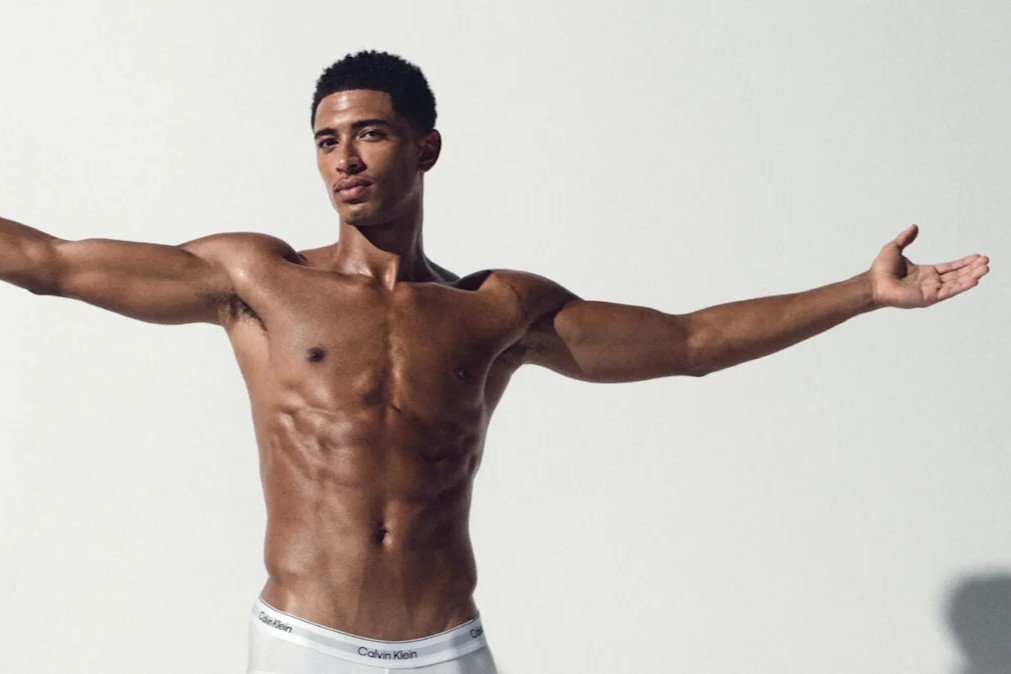
Jude Bellingham Calvin Klein: The footballer’s suggestive new ads for the brand went viral in hours, cementing his status as one of his generation’s most influential faces.
Within hours of dropping, Calvin Klein’s latest campaign had already claimed its place in the internet’s short attention span. The brand tapped English footballer Jude Bellingham for a series of photographs so deliberately charged with tension that the viral math worked itself out instantly. These weren’t your typical athlete endorsement shots. The images, lensed across a vestiaire and studio photo setup, leaned hard into suggestion and aura, letting Bellingham’s already magnetic presence do the heavy lifting.
What made this land differently than the usual sportswear crossover was the deliberate staging. Calvin Klein didn’t position Bellingham as an athlete first. Instead, the brand framed him as a cultural figure, someone whose influence extends far beyond the pitch. At an age when most footballers are still figuring out their public image, Bellingham has already been absorbed into the machinery that determines who matters in contemporary culture. The campaign recognized this shift and leaned into it completely.
Jude Bellingham and Calvin Klein’s Bet on the Next Generation
The brand has built a consistent playbook around identifying figures at the exact moment their cultural weight tips into the mainstream. This campaign isn’t an outlier in that strategy. According to Numéro, Calvin Klein has demonstrated a knack for creating buzz by selecting faces that tap into what people are already talking about, then amplifying that conversation through carefully constructed imagery. The suggestive quality of Bellingham’s shoot works because it treats him as an object of fascination rather than simply a uniform-wearing endorser.
Bellingham’s positioning as “one of the most influential faces of his generation” matters here because it signals how the athlete economy has shifted. He’s not being sold as a footballer who happens to look good. He’s being sold as someone whose mere presence carries cultural currency, the kind that translates across fashion, music, and lifestyle spaces. The campaign taps into that existing gravity rather than trying to build it from scratch.
The Mechanics of Modern Campaign Virality
What separates a campaign that gets shared from one that actually breaks through is often the details that signal intentionality. The vestiaire and studio photo framing suggests something intimate and backstage, the kind of access that feels stolen rather than granted. That narrative tension, combined with Bellingham’s already-significant social media footprint and fan base, created the conditions for rapid spread. People didn’t just see the images; they felt like they were seeing something they weren’t supposed to.
The timing also mattered. This dropped during November 2026, in the middle of holiday campaign season when major fashion houses were flooding feeds with their seasonal pushes. Mariah Carey was out there for Gucci, Moncler was running André 3000 through experimental layering for their Re/Icons series, and yet Bellingham’s Calvin Klein shoot cut through because of its directness and the simplicity of its appeal. No narrative complexity, no conceptual wrapping. Just suggestive imagery and a face that already carries weight.
Why This Moment Belongs to Bellingham
The campaign’s success hinges on something often overlooked in athlete endorsements: permission. Bellingham has already earned enough cultural credibility that a fashion brand can position him in a way that would seem risky for a younger or less-established figure. He can carry the suggestiveness without it reading as desperation or misstep. The images work because they assume the audience already knows who he is and already cares enough to look closely.
What most people will miss is how this represents a fundamental shift in how luxury brands approach athlete partnerships through campaigns like Jude Bellingham’s Calvin Klein shoot. This isn’t about selling performance or aspiration in the traditional sense. It’s about recognizing that a footballer in 2026 can operate in the same cultural space as musicians, actors, and modes of influence that once felt entirely separate from sports.
Sources: numero.com