Two decades later, the sneaker that defined rap’s peak commercialization returns to remind us why 50 Cent owned the culture.
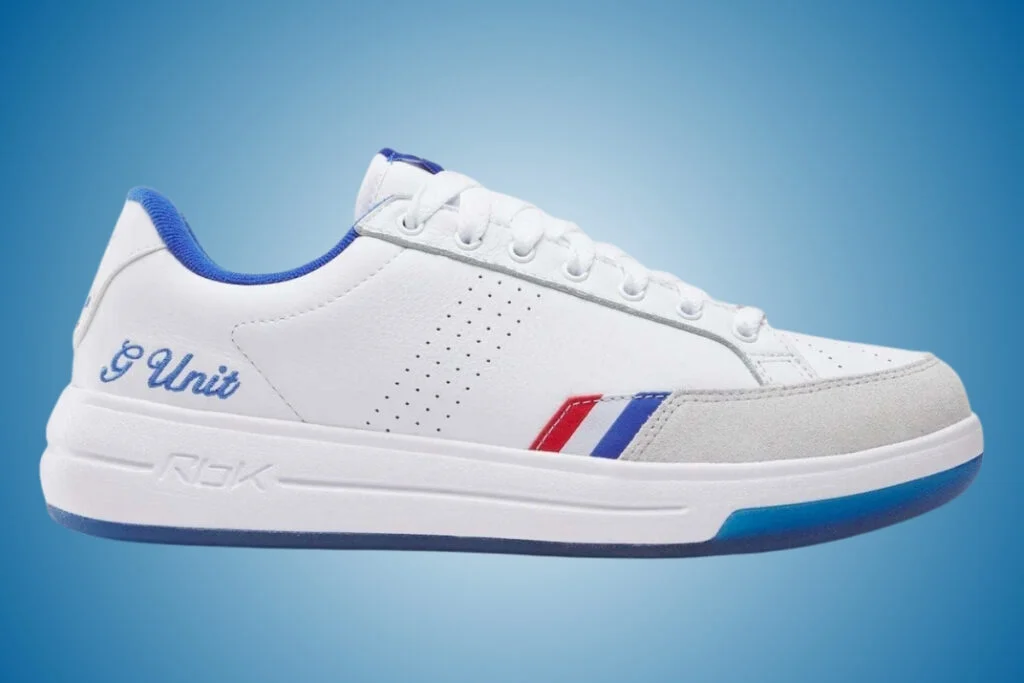
The G6 is back. That’s not hyperbole or nostalgia bait; it’s the actual return of the sneaker that sat at the center of one of hip-hop’s most calculated power moves. When 50 Cent signed with Reebok in the early 2000s, he wasn’t just getting a shoe deal. He was validating a specific vision of rap success: one where the genre’s biggest star could move product, sell aspirations, and build an empire on the back of a single silhouette. The G6 was that silhouette.
What made the G-Unit collab work then, and what makes its return interesting now, is how aggressively uncool it was willing to be. The sneaker was chunky, logo-heavy, and unapologetically commercial in a way that felt almost defiant. In an era when sneaker culture was still finding its footing, 50 didn’t apologize for making something that looked expensive rather than refined. He made something that announced itself. The G6 wasn’t subtle; it was a status symbol wrapped in rubber and marketing instinct, and it moved millions of units because the culture followed 50, not the other way around.
This retro drop matters because it arrives in a moment when early-2000s excess is having a genuine cultural reckoning. We’re past the point of ironic nostalgia. Brands and collectors are actually revisiting that era’s aesthetic values again, and the G6 sits perfectly in that sweet spot between genuinely loved sneaker and artifact of a very specific moment in rap history. Whether this becomes a sustained reissue or a one-off anniversary play remains to be seen, but the fact that Reebok is willing to resurrect the deal at all suggests someone at corporate level understands what 50 actually built here: a template for how a rapper becomes a brand.