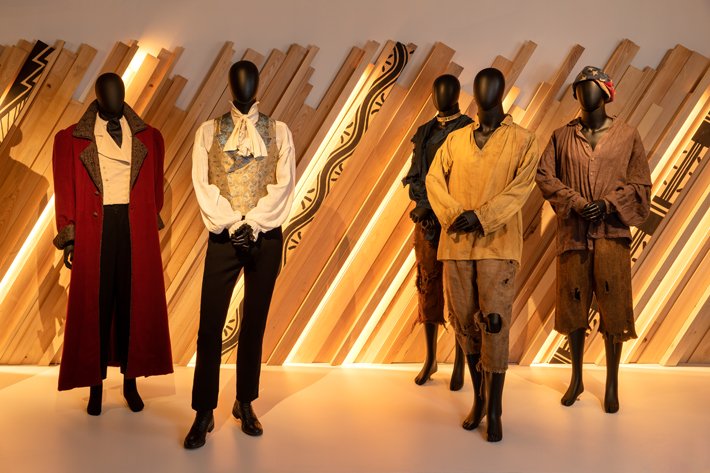
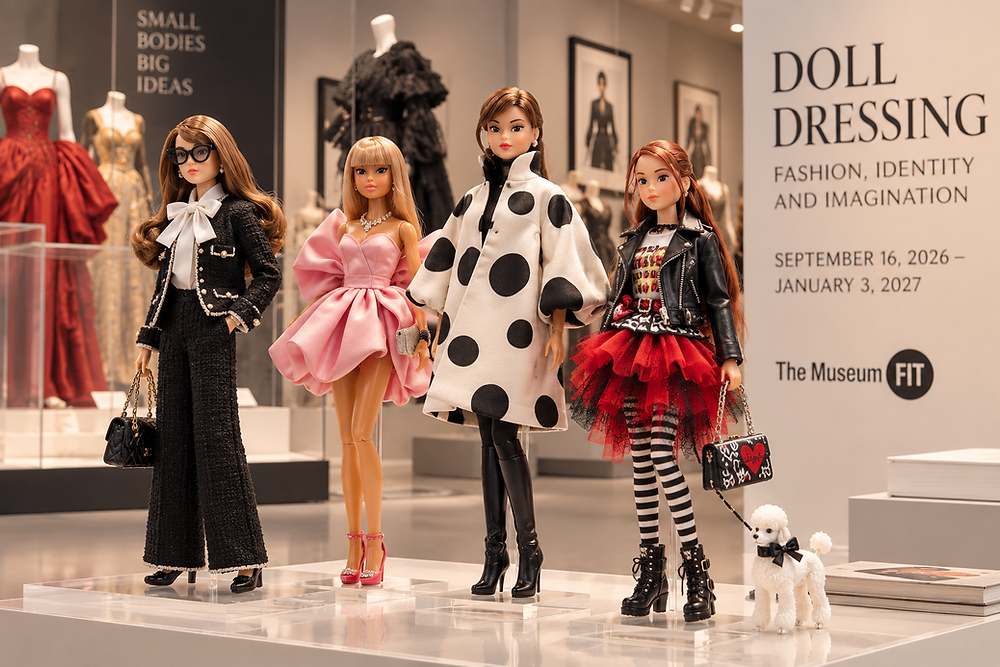
Doll Dressing: Balenciaga, Loewe, Comme des Garçons, and Maison Margiela showcase miniature pieces that reveal how designers used dolls as laboratories for radical silhouettes and construction.
The Fashion Institute of Technology launches “Doll Dressing” on September 16, a sweeping exhibition that positions the doll not as fashion’s afterthought but as its precursor. The show assembles 170 objects spanning from 18th-century precedents to contemporary haute couture, documenting the moment designers realized that miniature bodies could serve as testing grounds for ideas too ambitious or risky to risk on human runways first. Among the anchors: Balenciaga’s precisely engineered pocket-scale silhouettes, Loewe’s hand-tooled leather miniatures, Comme des Garçons’ deconstructed doll-wear, and Maison Margiela’s trademark precision at every scale.
The exhibition reframes a familiar cultural hierarchy. Where collectors and children’s literature have long treated fashion dolls as fashion’s imitations, “Doll Dressing” argues the inverse: that haute couture has consistently borrowed the doll’s function as prototype. Designers worked at miniature scale to solve construction problems, test proportions, and visualize fabric behavior in three dimensions before committing to full-size production. The doll became a laboratory coat. Balenciaga’s architectural ballgowns, for instance, exist in doll versions that show how the house engineered volume and support in fabric; Maison Margiela’s meticulous deconstruction methodology, which requires understanding every seam and stitch, found natural expression in pieces small enough to hold in one hand.
The exhibition also traces how certain designers have treated doll-dressing as its own artistic medium rather than mere merchandising. Comme des Garçons created pieces for dolls that reflect the same conceptual rigor applied to human collections. Loewe’s leather artisans have approached doll-scale accessories with the same material finesse as their adult lines. The show positions these miniatures not as toys or collectibles but as finished artworks in their own right, pieces that belong alongside the couture archives that inspired them.