
From racetracks to city streets, the “mobile museum” continues to evolve.
From Track Icon to Public Canvas
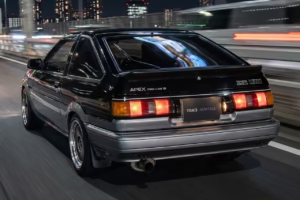
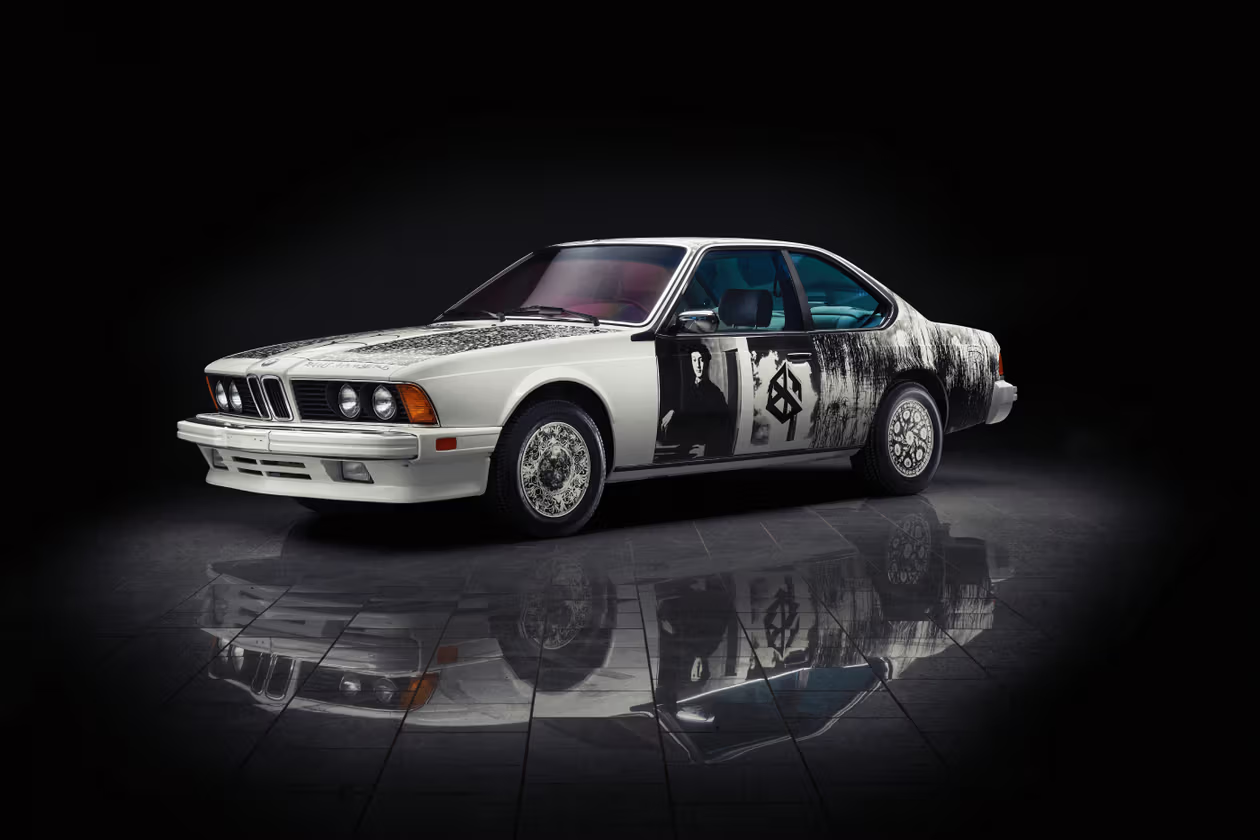
As BMW brings Robert Rauschenberg’s 635CSi to Art Basel Hong Kong 2026—its first time in Asia—the Art Car program feels as relevant as ever. Originally conceived as race machines transformed by artists, the series has expanded over time to include street-legal models that bring art into everyday life. Rauschenberg’s vision of a “mobile museum” helped shift that direction, making art more accessible by literally putting it in motion.
Art, Technology and Total Freedom
Over the past five decades, the program has embraced new technologies while maintaining a core principle: complete artistic freedom. From hand-painted designs to augmented reality and AI-assisted concepts, BMW continues to give artists access to cutting-edge tools without interfering in their vision. As Prof. Dr. Thomas Girst explains, technology is simply another material—something artists can explore, not something that replaces their creativity.
A Global Platform for Cultural Exchange
Beyond the cars themselves, the Art Car program has grown into a broader cultural initiative. Projects like workshops, exhibitions and collaborations across continents extend its impact far beyond the automotive world. Whether it’s appearing at major art fairs or supporting creative communities globally, the Art Car remains a symbol of how art can move—physically and culturally—connecting people across disciplines and borders.