
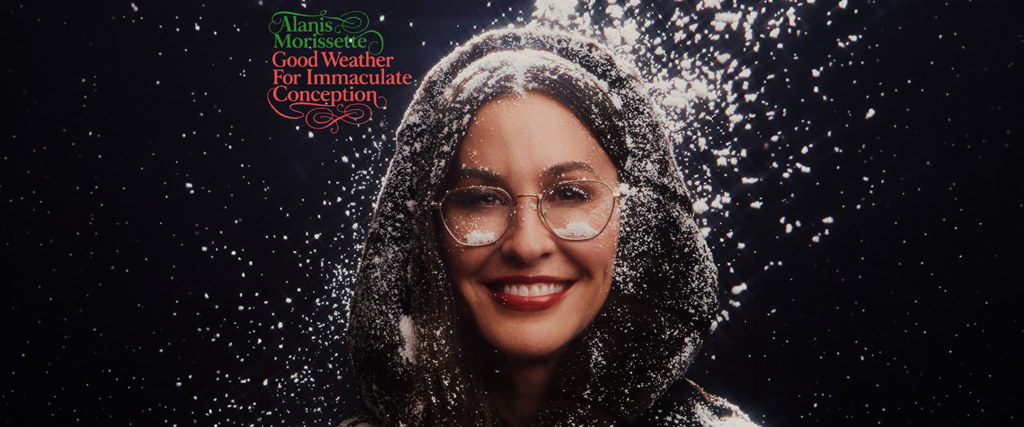
Alanis Morissette Holiday Album: After three decades of zero Christmas records, the alt-rock icon delivers 14 tracks featuring Brandi Carlile, Steve Martin, and a guest list that feels genuinely uncalculated.
There’s a particular kind of cultural relief that comes when an artist who’s spent 30 years declining to make a holiday album finally decides to do it. On November 6, Alanis Morissette releases her first Christmas record ever, ‘Good Weather for Immaculate Conception,’ and the sheer tardiness of the move feels almost punk in its own way. The title alone suggests this Alanis Morissette holiday album isn’t a soft-focus nostalgia play or a label-mandated cash grab. It’s a Morissette statement, laced with her particular brand of irreverent wit, positioned as something that exists on her own terms and timeline, not the music industry’s.
The roster of collaborators reads like someone actually thought about who belonged in the room rather than phoning in favors. Brandi Carlile appears across multiple tracks, her voice a natural complement to Morissette’s weathered contralto. Steve Martin, the musician and writer, shows up not as a novelty but as a legitimate creative presence. These aren’t names dropped for Instagram clout. They’re artists who’ve maintained their own eccentric relationships to convention, which is precisely why they belong on a Morissette Christmas record. The album stretches across 14 songs, ambitious in scope without feeling bloated, a record that suggests Morissette wanted to actually explore the season rather than dash off a four-track EP and call it a day. At 50, she’s arrived at the holiday tradition on her own schedule, and that autonomy is baked into every choice.
The timing matters here too. We’re living in an era where legacy acts have largely mined every available revenue stream, yet Morissette avoided the obvious one for her entire career. This wasn’t about resistance or principle necessarily; it was simply never her move. Now, with the Alanis Morissette holiday album that sounds conceived by people who actually belong in the room together, she’s reclaimed the season on her own terms, proving that arriving late to tradition can feel more authentic than showing up on schedule.